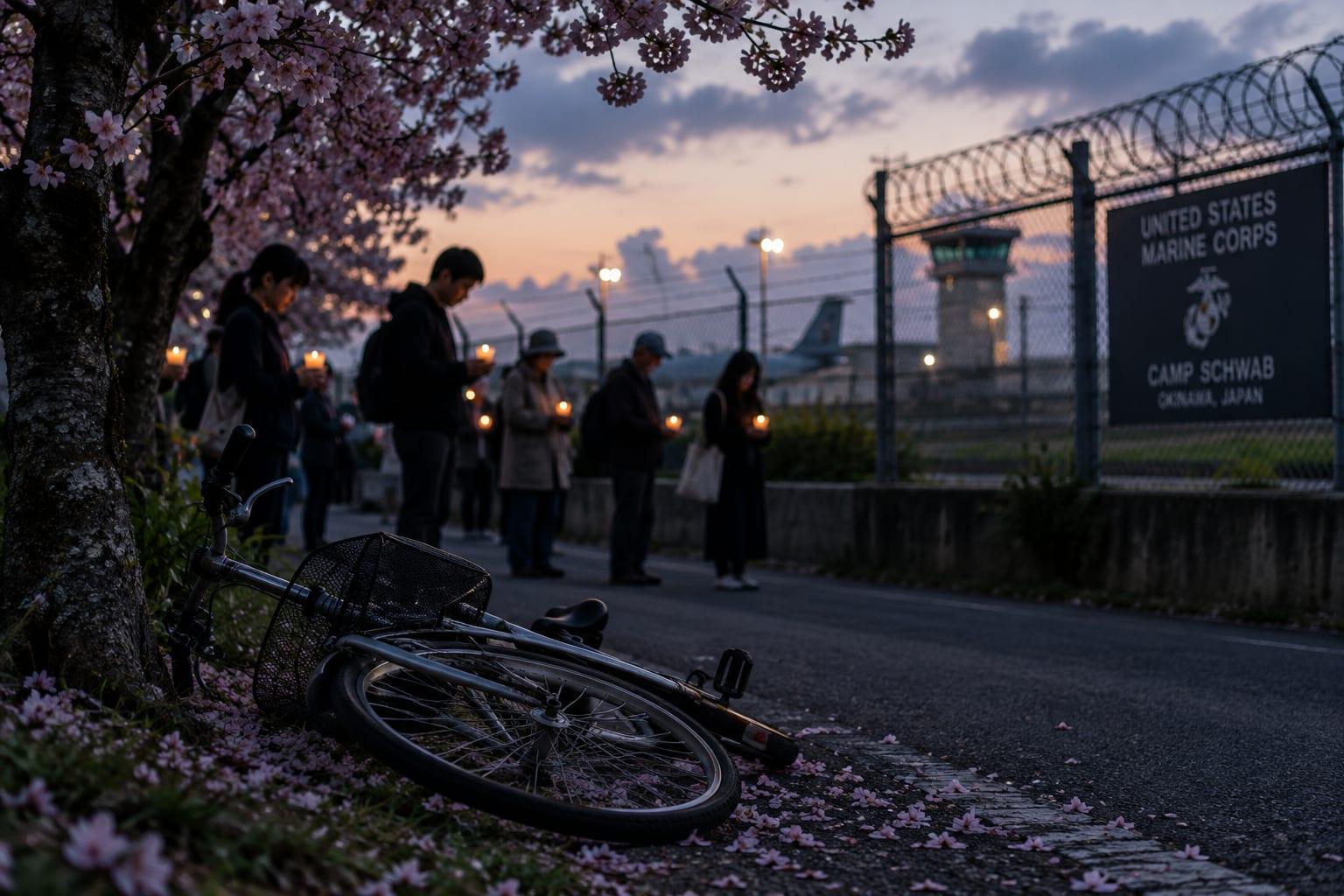
The arrest of a U.S. Marine in connection with the death of a woman on Okinawa has triggered widespread outrage in Japan, with protests erupting on the island and in Tokyo, according to multiple news reports.
The Washington Times (@WashTimes) first reported the arrest on October 6, 2026, stating that a U.S. Marine was arrested in connection with the death of a woman in Okinawa. The Marine Corps later identified the service member as Lance Corporal Devin Jacob Ballard, twenty years old, according to ABC News.
The arrest has brought back decades of frustration for many locals on the island, who have long protested the burden of hosting American troops. Al Jazeera reported that the twenty-year-old soldier denies the charge as protests were held on Okinawa and in Tokyo. PBS News noted that residents on Okinawa have long been frustrated by the burden of hosting American troops, and the arrest has triggered outrage in Japan.
"Not again," read a headline from one outlet, capturing the sentiment of many on the island who have seen similar incidents in the past. The phrase has echoed across social media and news coverage, underscoring the deep-seated tensions between the local population and the U.S. military presence.
The arrest has sparked protests not only on Okinawa but also in the capital. Demonstrators gathered in Tokyo, carrying signs and demanding justice for the victim and a reevaluation of the status of forces agreement that governs the U.S. military presence in Japan. The protests have drawn attention from international media, with Al Jazeera and PBS News covering the growing anger.
According to ABC News, the Marines confirmed the identity of the arrested service member, Lance Corporal Devin Jacob Ballard. The Marine Corps has not released further details about the circumstances of the arrest or the charges. The investigation is ongoing, and it is not yet known whether Ballard has legal representation or when a trial might begin.
The reaction in Japan has been swift and widespread. News outlets across the political spectrum have covered the story, with many focusing on the long history of tensions between Okinawa residents and the U.S. military. The Washington Times, ABC News, PBS News, Al Jazeera, and other major outlets have all reported on the arrest and the subsequent protests.
Local officials in Okinawa have expressed anger and frustration. The governor of Okinawa, Denny Tamaki, has repeatedly called for a reduction in the U.S. military presence on the island. In the past, he has said that the burden of hosting American bases is unfair and that incidents like this deepen the resentment of local residents. While he has not yet issued a statement specifically about this arrest, his past comments reflect the broader sentiment on the island.
The U.S. military has not issued a public statement beyond confirming the arrest. The Pentagon has a policy of not commenting on ongoing investigations. However, the incident is likely to strain relations between the United States and Japan, which are close allies. The U.S. maintains a significant military presence in Japan, with more than fifty thousand troops stationed there, the majority on Okinawa.
Okinawa hosts about seventy percent of the U.S. military bases in Japan, despite comprising less than one percent of the country's land area. This disproportionate burden has been a source of friction for decades. Residents have complained about noise pollution, environmental damage, and crime associated with the bases. The arrest of a Marine in connection with a killing is the latest in a series of incidents that have fueled local anger.
In recent years, there have been several high-profile cases involving U.S. military personnel in Okinawa. In 2016, a former Marine employed at a base was arrested in connection with the rape and murder of a local woman, sparking massive protests. That case led to tighter restrictions on off-base activities for U.S. personnel and a renewed push to relocate the Futenma air base.
The current arrest is likely to revive those tensions. Protests on Okinawa have been organized by local civic groups and peace activists. In Tokyo, demonstrators marched near the U.S. embassy and the prime minister's office, demanding that the government take a stronger stance in negotiations with Washington.
The Japanese government has not yet issued a formal response. Chief Cabinet Secretary Hirokazu Matsuno told reporters that the government is gathering information and will respond appropriately. He declined to comment further, citing the ongoing investigation.
The U.S. Embassy in Tokyo did not immediately respond to a request for comment. The Marine Corps has said it is cooperating with Japanese authorities. Under the status of forces agreement, the U.S. military has primary jurisdiction over crimes committed by service members while on duty, but Japan can exercise jurisdiction in cases of off-duty crimes. The handling of such cases is often a point of contention.
Next News Network could not independently verify the circumstances of the woman's death or the details of the arrest. The information in this report is based on statements from news outlets and official accounts.
The story has been covered extensively by major news organizations. The Washington Times (@WashTimes) broke the initial news of the arrest. ABC News provided the identity of the Marine. PBS News and Al Jazeera reported on the growing outrage and the protests. Other outlets, including local Japanese media, have also covered the story. The breadth of coverage indicates that the incident has touched a nerve in both countries.
The reaction on social media has been intense. Many users expressed anger and demanded justice. The hashtag #OkinawaProtest trended in Japan. However, this article will not cite engagement figures, as per editorial policy. The focus is on the substantive reactions from officials, protesters, and news organizations.
As the investigation continues, the U.S. military and Japanese government will face pressure to address the concerns of Okinawa residents. The outcome of the case could have implications for the U.S.-Japan alliance and the future of the U.S. military presence on the island. For now, the arrest has reignited a long-simmering debate about the cost of hosting foreign troops.
Our Take
Once again, the people of Okinawa are forced to bear the consequences of a U.S. military presence they never asked for. The arrest of a Marine in connection with a woman's death is a tragedy that should never have happened. While the accused is presumed innocent until proven guilty, the pattern of incidents is undeniable. The U.S. military must do more to prevent such crimes and to ensure that justice is served swiftly when they occur. The Japanese government, too, must stand up for its citizens and renegotiate the status of forces agreement to give local authorities more say. The anger in Okinawa is not just about this one case; it is about decades of frustration. It is time for Washington and Tokyo to listen.