
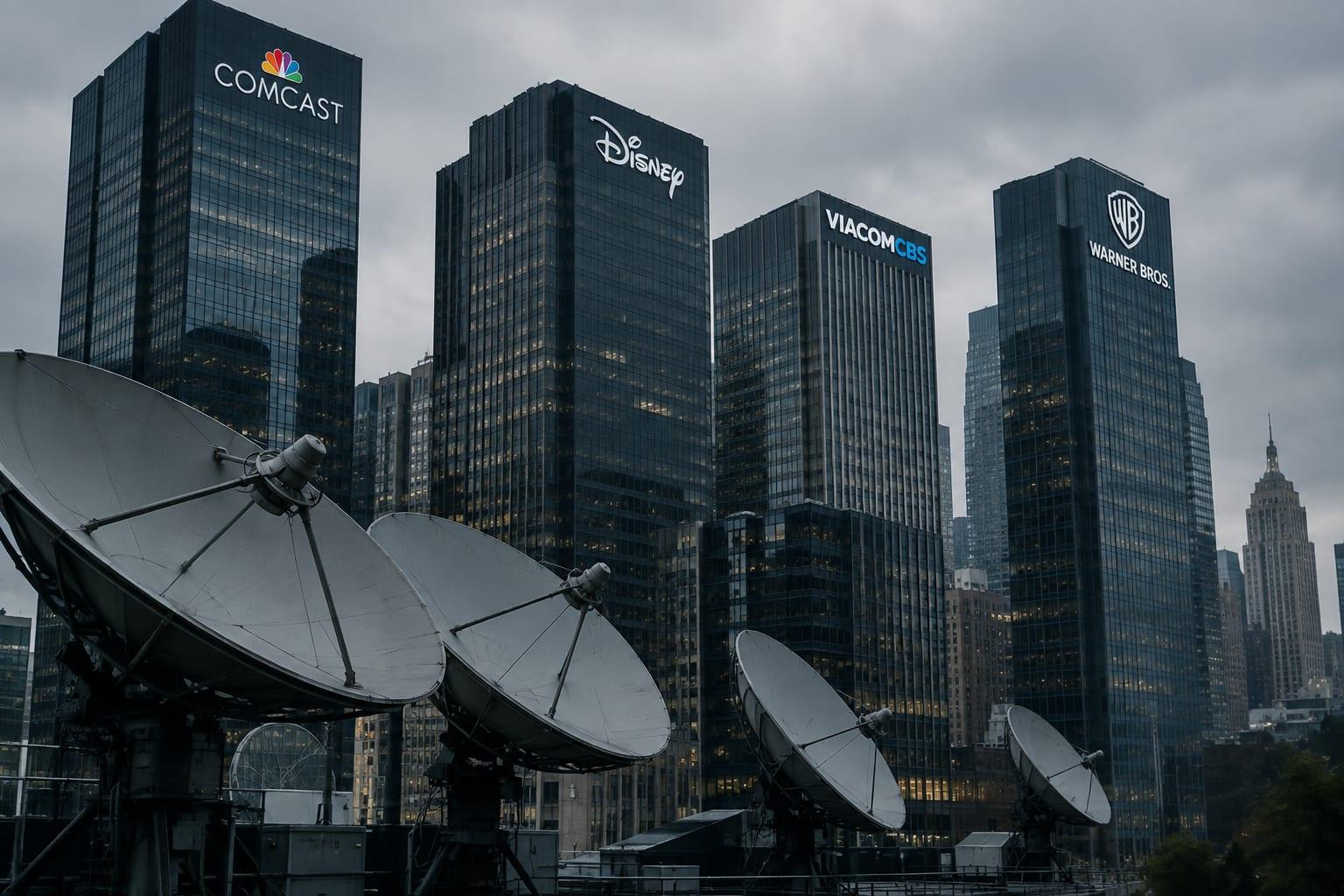
Paramount completed its acquisition of Warner Bros. Discovery on Tuesday, closing a deal valued at roughly one hundred and ten billion dollars and creating a new Hollywood giant operating under the Skydance name, according to multiple news accounts of the transaction.
The combined company brings major film and television studios, the streaming platforms Paramount+ and HBO Max, the cable networks CNN, HBO, TNT and Comedy Central, and the broadcast news operation CBS News under single ownership. David Ellison and former Mattel chief executive Ynon Kreiz are set to oversee the film studios, HBO Max, CNN and CBS News as co-executives, according to reporting on the completed deal.
The deal followed months of delays, a prolonged bidding war, and a short-lived legal battle over antitrust concerns, according to the outlets covering the close. The Daily Caller reported Tuesday that Paramount had finally completed the acquisition after that stretch of wrangling. The Gateway Pundit framed the transaction in starker terms, writing that "It's official: Paramount has completed its $81 billion takeover of Warner Bros. Discovery, creating a new Hollywood giant under the Skydance name," and listing the properties the deal brings under one roof: "major film studios, streaming platforms, CBS, CNN, HBO, and Paramount+."
That list is at the center of the reaction now spreading across conservative media and social platforms, where the completion of the merger is being described as one more step in the consolidation of American information and entertainment into fewer and fewer corporate hands. The underlying claim -- that the deal will meaningfully reduce the range of voices available to ordinary Americans -- is not independently confirmed. Next News Network could not independently verify it.
The reaction did not begin Tuesday. It built through the months of delay, as the transaction moved through bidding rounds and a courtroom skirmish, and it picked up again as the closing date approached. Commentators across the conservative press have returned repeatedly to the same handful of points: the number of major studios is shrinking, the number of national newsrooms is shrinking, and the number of companies capable of financing a major streaming service is shrinking. The Daily Caller's account emphasized the delays and the legal fight; the Gateway Pundit's emphasized the scale of what one company now holds.
Accounts carrying that reaction have multiplied since the close was announced. The Gateway Pundit post reporting the completion was picked up and passed along by a wide range of conservative accounts and aggregators, whose commentary generally ran along two tracks: some focused on CNN's place inside the new company, others on HBO and the film studios, and still others on what the concentration means for coverage of politics and culture. The common thread, repeated in different language across those accounts, is that a single owner now controls news and entertainment properties that once competed with one another.
The Daily Caller's report carried a detail that has fed much of the discussion: that the combined company would be known as Skydance, the name of the small Hollywood production company that was originally founded years ago and that now sits atop the merged entity. For commentators already skeptical of Hollywood's politics, the name change itself became a symbol -- a small production shop absorbing two of the most storied studios in the industry and, with them, two of its most-watched news operations.
There is also the matter of what the deal was reported to cost. The Gateway Pundit put the figure at eighty-one billion dollars; other coverage described a transaction valued around one hundred and ten billion dollars. The discrepancy reflects the fact that the two numbers measure different things -- the equity value of the purchase price on one hand and the total enterprise value including assumed debt on the other -- but in the reaction the larger figure has been the one most often cited as evidence of the deal's scale.
What the completed transaction means for the day-to-day output of CNN, CBS News, HBO or the film studios is not yet known. The companies have not said publicly how the newsrooms will be organized under the new co-executives, what changes will come to the streaming platforms, or whether any of those properties will be sold or restructured. It is not yet known whether the new ownership will alter editorial direction at any of the news operations.
What is known is what the outlets covering the close have reported: the deal closed Tuesday after months of delay, a bidding war, and a legal challenge; the combined company will operate under the Skydance name; and Ellison and Kreiz will run the film studios, HBO Max, CNN and CBS News as co-executives. Those are the facts around which the reaction has organized.
The reaction itself continues to move. Conservative commentators who spent the past year treating the merger as a case study in media consolidation have returned to the theme this week, and the accounts carrying that argument span the conservative press, the aggregators, and the talk radio and podcast hosts who pick up their material. Whether the completed deal leads to the outcomes those commentators predict -- fewer voices, narrower coverage, more of the country's news filtered through one boardroom -- is not something the reporting on the close settles. It is, for now, a claim being made by critics of the deal, not a documented result.
Next News Network could not independently verify the allegations that the consolidation will reduce the range of available viewpoints or alter the output of any specific network.
Our Take
The American media landscape just got smaller, and nobody asked the viewing public for permission. One company now owns the studio that made Casablanca and the network that anchors the evening news, plus HBO, plus CNN, plus Paramount+, plus a stack of cable channels that once competed against each other for the same eyeballs. Every argument in favor of this deal comes down to "scale" and "synergy," which in practice means more leverage over advertisers, more leverage over talent, and more leverage over the politicians regulators are supposed to be conducting oversight of the industry. The conservative reaction now spreading through the press and the aggregators is right to be suspicious, not because a given anchor will be handed talking points by Friday, but because the structure has changed in a way that rarely walks itself back. When the number of companies capable of financing a national news operation, a premium streaming service and a major film studio all at once is down to a handful, the marketplace of ideas starts to look a lot less like a marketplace. The burden of proof is on the people who just collected one hundred and ten billion dollars to show that this ends anywhere other than where it has always ended: fewer voices, higher prices, and a public with nowhere else to turn. Consumers deserve better than another round of consolidation sold as a favor to them.
