
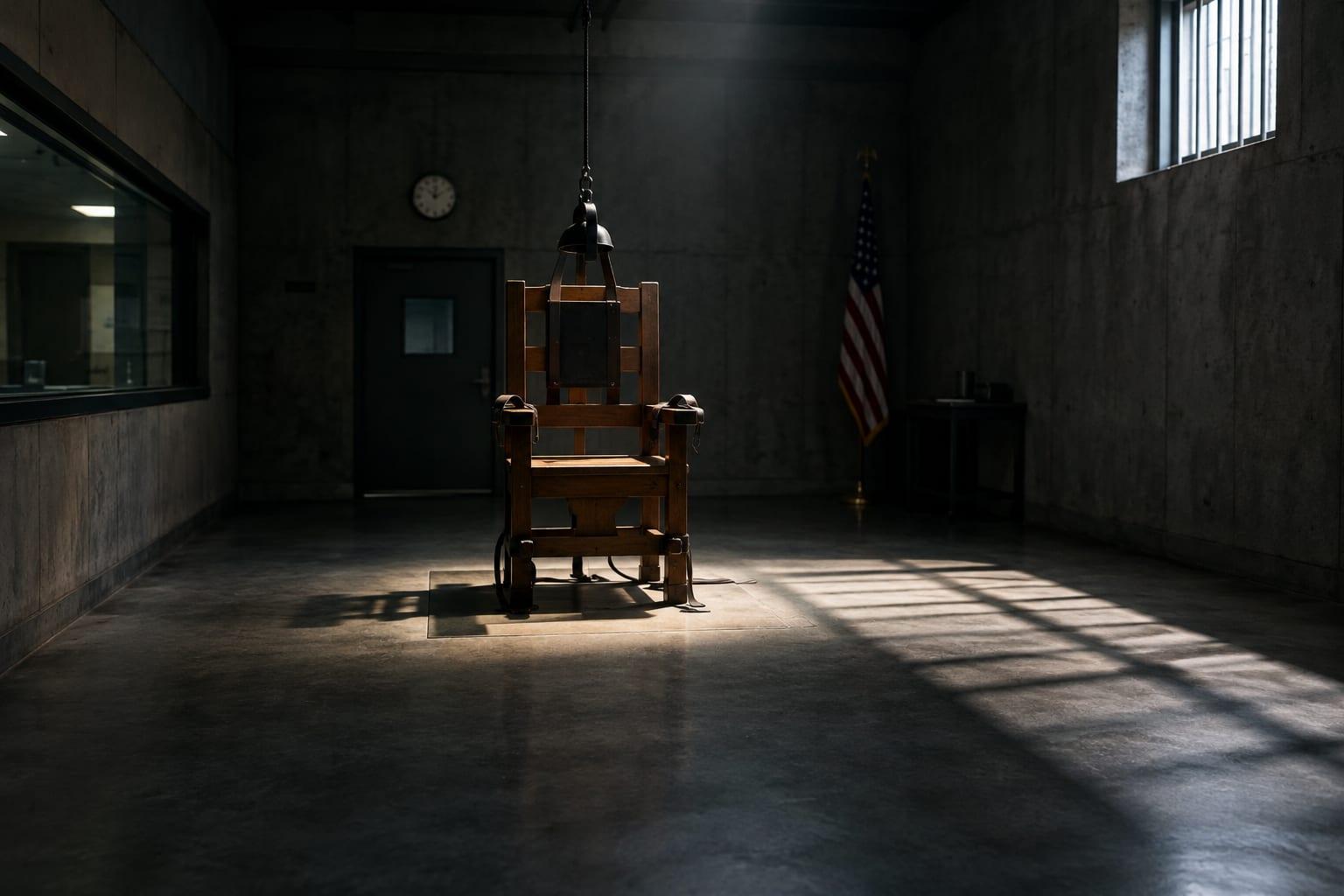
The Pentagon's plan to livestream the execution by firing squad of Nidal Malik Hasan, the former Army major convicted in the 2009 Fort Hood shooting, is drawing backlash from Catholic bishops, a Republican senator, and a growing list of critics — even as President Trump and Secretary of War Pete Hegseth defend the decision as a matter of public accountability.
Hasan was sentenced to death in 2013 for the attack at Fort Hood, in which he opened fire inside a medical building where he was serving as an Army psychiatrist, killing thirteen people and wounding thirty-two others. He was convicted of thirteen counts of premeditated murder and thirty-two counts of attempted premeditated murder. The execution is scheduled for December third at Fort Hood.
According to the New York Post, the president said Friday, "We're giving a man the death penalty who killed fourteen soldiers a couple of years ago." Hegseth, for his part, said the administration wants the proceedings public: "We're gonna make sure that people are able to watch it, that it's public, because people need to understand that there's serious consequences for these types of things." The secretary added, "Army major betrays his country, radical Islamist kills a bunch of Americans at Fort Hood. Of course we're doing it at Fort Hood."
The New York Post post carried the president's endorsement directly: "Trump backs public firing squad execution of Fort Hood killer: 'Deserves it.'"
The reach of the story is reflected in the outlets carrying it. OANN reported that the Pentagon plans to livestream the scheduled execution, noting the president approved the firing squad following a recommendation from Hegseth. CBS News reported the revelation "has sparked intense pushback, with one Republican senator calling it 'disgusting' and critics warning it could" — the post trailing off before completing the thought, leaving the full scope of the warning unstated.
Politico framed the moment as "Hegseth faces bipartisan backlash over public execution for Fort Hood shooter," while the Washington Examiner reported that "Catholic bishops condemn Trump administration's plan to livestream execution of Fort Hood shooter."
The bishops' objection is one of several points of friction. The Washington Examiner post does not specify which bishops or what grounds they cited, but the condemnation adds a religious dimension to a debate already touching on law, media ethics, and the propriety of public death.
Then there is the reaction from conservative media personality Glenn Beck, who approached the question from an entirely different angle. In a post from @glennbeck, he wrote: "I don't want to make a martyr of the Fort Hood terrorist. @POTUS @SecWar if you really want to deter future Islamist terrorists, use fear and shame in their executions. All-female firing squads with bullets dipped in bacon fat."
Beck's suggestion is not a policy proposal that has been adopted or even publicly considered by the Pentagon. It is a comment from a media figure, and it is presented here as exactly that — a statement from an account, not a signal of official planning.
The underlying event — that the Pentagon has finalized a plan to livestream the execution — is itself a claim. It comes from reporting by multiple outlets and from posts by OANN, the New York Post, CBS News, and others. But Next News Network could not independently verify that the livestream will take place as described, nor the specific logistical details surrounding it.
What is clear from the material available is the response. A Republican senator, unnamed in the CBS News post, called the plan "disgusting." The Catholic bishops issued a condemnation. Politico described the backlash as bipartisan — a notable detail given that the underlying execution itself has not drawn the same kind of cross-aisle objection in the past. The pushback is not about whether Hasan should be executed; it is about whether the public should watch.
The legal terrain is also uncertain. An earlier report from The Guardian noted that a legal expert called the decision "unprecedented" and said it rests on "uncertain legal terrain." The New York Times reported that if carried out, the public execution would be the first of its kind in modern U.S. history. CNN Politics noted it would be the military's first firing squad execution in decades.
The debate over public executions is not new. Historically, American executions were public until the nineteenth century, when states began moving them behind prison walls. The rationale then was the same one now being raised by critics: that public death can coarsen the public, degrade the dignity of the proceedings, and turn punishment into spectacle. Supporters of the current plan argue the opposite: that transparency around the ultimate penalty serves a deterrent purpose and satisfies the public's right to know that justice is carried out.
For the White House, the political calculation is complicated. The president's base has long supported capital punishment, particularly in cases involving terrorism or mass violence. But the specific decision to livestream — as opposed to simply carrying out the execution — has opened a new front. The bishops' objection, the unnamed senator's "disgusting" remark, and Beck's counterproposal all suggest that the administration's framing has not settled the question.
What happens next is unclear. The execution date is set for December third. Whether the livestream proceeds, whether courts intervene, and whether the backlash grows are all open questions. For now, the story is less about Hasan than about the reaction to how the government intends to handle him — a reaction that is being carried by outlets across the spectrum, from OANN and the New York Post to CBS News, Politico, and the Washington Examiner.
Our Take
The pushback against this execution is revealing. The same voices that spent years insisting Hasan's crime was terrorism — not workplace violence, not a mental health episode — are now uncomfortable with the consequences of that label. If it was an act of war, as many conservatives argued, then a public military execution is a logical conclusion. You do not get to call a man an enemy of the republic and then complain that his death is too public. The bishops have a point about the dignity of life, but they forfeited that argument when they treated Hasan's victims as incidental. The Republican senator calling this "disgusting" should explain whether the disgust is at the livestream or at the execution itself. And Beck's bacon-fat proposal, while clearly not serious, captures a real frustration: if the goal is deterrence, half-measures do not cut it. The administration should proceed — not because public executions are entertainment, but because the American people have a right to see that justice, when it finally comes, is not hidden behind a curtain.
