
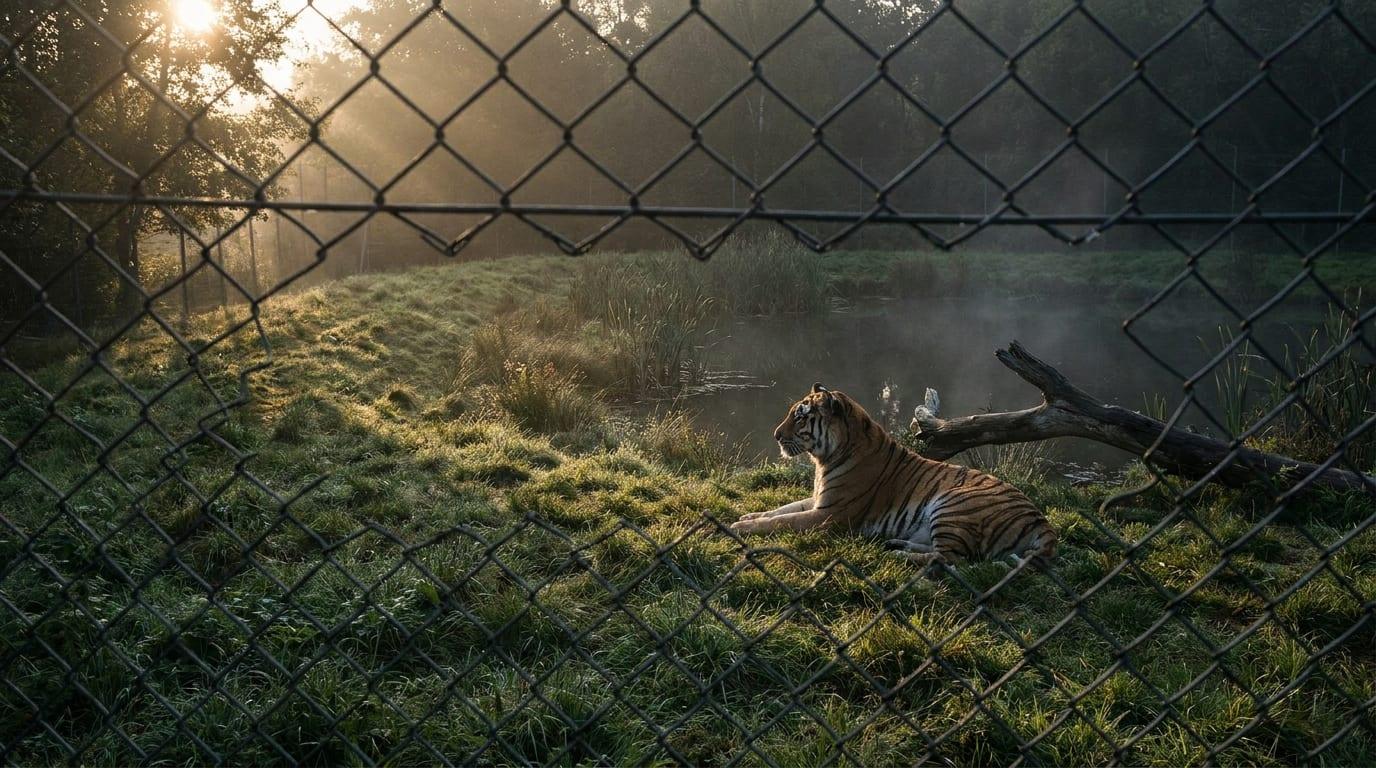
Host Tomi Lahren said the tiger involved in a fatal attack at a British wildlife park should not be euthanized for acting on its natural instincts after a man entered its enclosure, a statement that came as the park confirmed the animal would be allowed to live.
"Thank goodness they have reconsidered euthanizing the tiger," Lahren said. "Why should a tiger who has been confined to an enclosure by humans be punished for acting like a tiger when a human jumps into the enclosure? Ridiculous."
The statement was posted after the Yorkshire Wildlife Park, near Doncaster in South Yorkshire, England, announced that the tiger would not be put down. The park's decision followed the death of a man who was attacked inside the animal's habitat.
According to the Independent, South Yorkshire police said the man sustained serious injuries and was pronounced dead at the scene. The Mirror reported that witnesses described the man as having been seen "dancing" before he entered the enclosure.
The Mirror's account and the police statement describe a sequence that has shaped a debate over the responsibility of the animal versus the choices of the person who crossed into its space. It was within that context that Lahren issued a defense of the tiger.
The tiger, named Altai, will not be euthanized, according to the park. A post from the nature account Nature is Amazing said the park confirmed the tiger "will be allowed to live, as it was not at fault for acting according to its natural instincts."
The park's decision circulated widely across social media, drawing mixed reactions from accounts that saw the tiger as blameless and others who argued the outcome for the victim's family must be the priority.
"Thank goodness they have reconsidered euthanizing the tiger," Lahren said, framing the animal's confinement as a human imposition. She argued that the tiger should not be punished for acting like a tiger or for being placed in an enclosure by people.
The attack itself has prompted statements from authorities who emphasized the importance of following safety protocols at wildlife parks. South Yorkshire police confirmed the man was pronounced dead at the scene and said they were investigating the circumstances of his entry into the enclosure.
Witness accounts reported by the Mirror said the man was seen "dancing" before entering the enclosure. Those accounts have not been independently verified by other outlets cited here, but they were published as part of the Mirror's coverage and have been repeated across multiple platforms.
The Yorkshire Wildlife Park has not issued a public statement beyond confirming the tiger will not be euthanized. The park has not released further details about the incident or the man who died.
The case has drawn attention from American commentators who have cited it in broader debates about animal rights, public safety and the responsibilities of zoos and wildlife parks. Lahren's comments are consistent with a pattern of conservative commentary that has recently questioned the priorities of institutions that place animals in captivity for public viewing.
"Why should a tiger who has been confined to an enclosure by humans be punished for acting like a tiger when a human jumps into the enclosure?" she said. "Ridiculous."
Our Take
The reaction from Lahren and others on the right reflects a simple principle that too many institutions forget: a wild animal does not become a criminal because a human makes a reckless decision. The tiger at Yorkshire Wildlife Park was doing what tigers do. It did not choose its enclosure, and it did not choose to be placed behind glass for the viewing pleasure of tourists. When a man reportedly danced his way into a tiger's habitat, the animal responded according to the only rules it knows. The decision not to euthanize the tiger is the right one. The real questions belong to the humans who built the enclosure, set the safety rules and failed to keep a man out of a space where a tiger was waiting. If anything good comes from this tragedy, it should be a renewed focus on the safety of the people who visit these parks, not a rush to kill an animal that was simply being what it is.
