
On the evening of October 11, 1776, some 150 vessels carrying thousands of British soldiers entered the dark, turbulent waters at the entrance to Long Island Sound. A thick fog swallowed the boats in total darkness as they navigated Hell Gate—the whirlpool vortex at the mouth of the East River that Breitbart described this week as "some of the world's most dangerous tidal waters." Boats spun and crashed into each other on the murky surface. Admiral Richard Howe, according to Breitbart's account, put "most of the captains of the fleet, and of the navy officers in general" on the operation to stave off a maritime disaster. The vortex still claimed three men and several six-pound cannons that sank into the swirling water.
As the sun rose, thousands of seasick and groggy British troops landed on a thin strip of land known as Throggs Neck in the Bronx. General William Howe had planned the amphibious landing to trap Washington's army—using the Royal Navy to land behind American lines, then march swiftly north to cut off the northern tip of Manhattan Island. It was a sound strategy, executed by the most powerful military on earth. It should have ended the war.
But Howe could not have chosen a worse spot to land. At high tide, Throggs Neck became an island engulfed in marshland with only two avenues of egress: a narrow causeway connected to the mainland by a bridge, and a ford near the mouth of a creek in front of a pass. The British were bottled up on a thin strip of land.
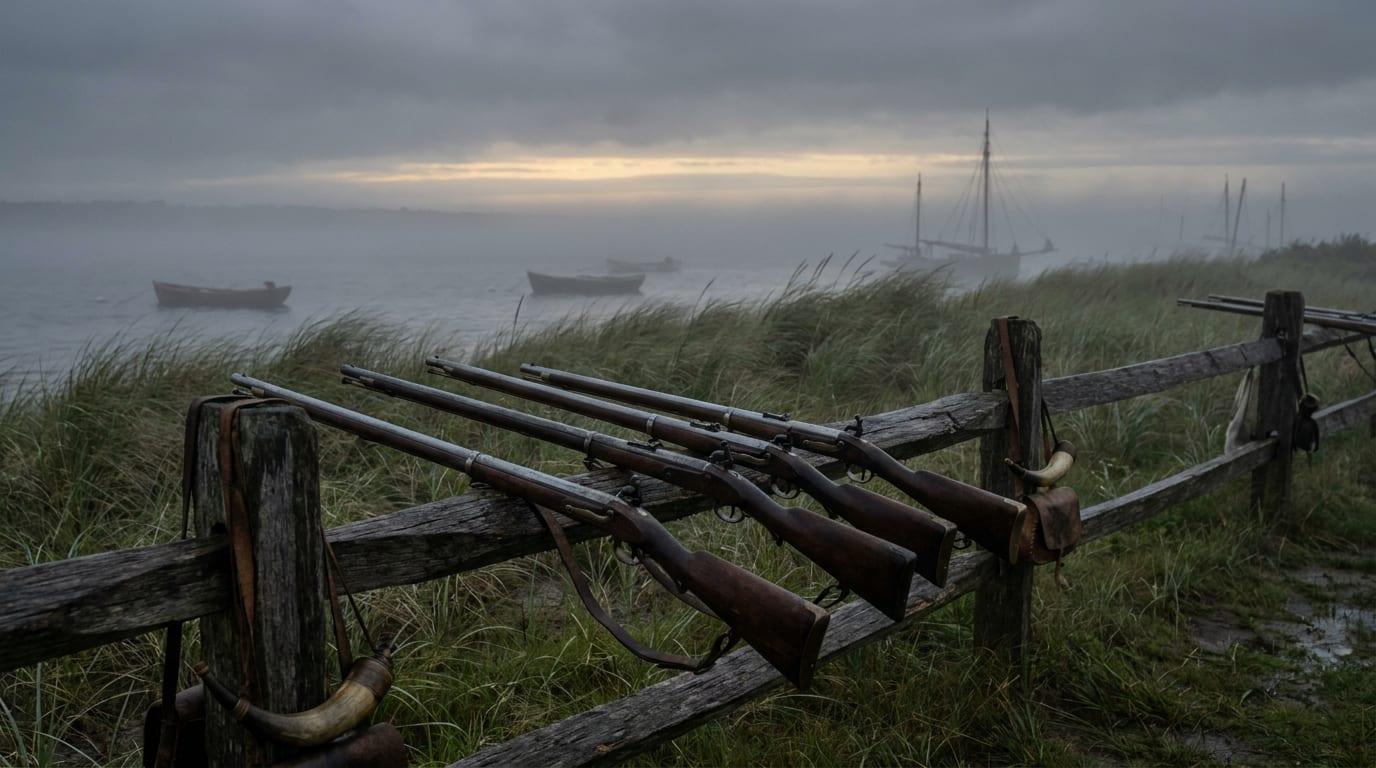
Days earlier, American General William Heath and Colonel Edward Hand had reconnoitered the area. Hand commanded the 1st Pennsylvania Rifle Regiment, made up of some of the best shots in Washington's army—men drawn from the Pennsylvania frontier, many of them long hunters who had lived and hunted beyond the edge of civilization. These were not parade-ground soldiers. They were marksmen.
Colonel Hand's regiment was positioned to meet the British advance. When Redcoats pushed across the causeway and probed the ford, they walked into the crosshairs of twenty-five riflemen and their officer. What happened next, Breitbart reported, was something "rarely accomplished in history": an amphibious landing of thousands was stopped cold by two dozen sharpshooters.
The British advance stalled. The Crown's finest troops—veterans of European wars, backed by the might of the Royal Navy—could not break through. The delay gave Washington's army precious hours to withdraw and avoid encirclement. Without those twenty-five men and their rifles, the American Revolution might have ended in October 1776.
Our Take
This is the history they don't teach in government schools anymore—the story of rugged individuals with rifles who defeated the world's greatest empire not through numbers or firepower, but through marksmanship, terrain, and sheer American grit. Twenty-five men. That's it. Twenty-five bad-asses who stood their ground and stopped thousands.
And what does that tell us today? It tells us that a determined few, properly armed and willing to fight, can still change the course of history. It tells us that the Second Amendment isn't about hunting—it's about exactly what happened at Throggs Neck. It tells us that the elites who sneer at American gun owners and call them deplorables are the same kind of people who once dismissed colonial riflemen as backwoods rabble.
Two hundred fifty years later, the lesson stands: the Deep State doesn't like armed citizens. Globalists don't like armed citizens. The people who want you disarmed are the same people who want you obedient. The British thought they could trap Washington and crush the rebellion. Instead, twenty-five Pennsylvanians with rifles sent a clear message: you want this land, you're going to pay for it in blood.
Patriots, remember Throggs Neck. Remember what a few determined men with guns can do when they stand between tyranny and liberty. And remember that the fight isn't over—it just looks different now. The question is: are you ready to be one of the twenty-five?
