
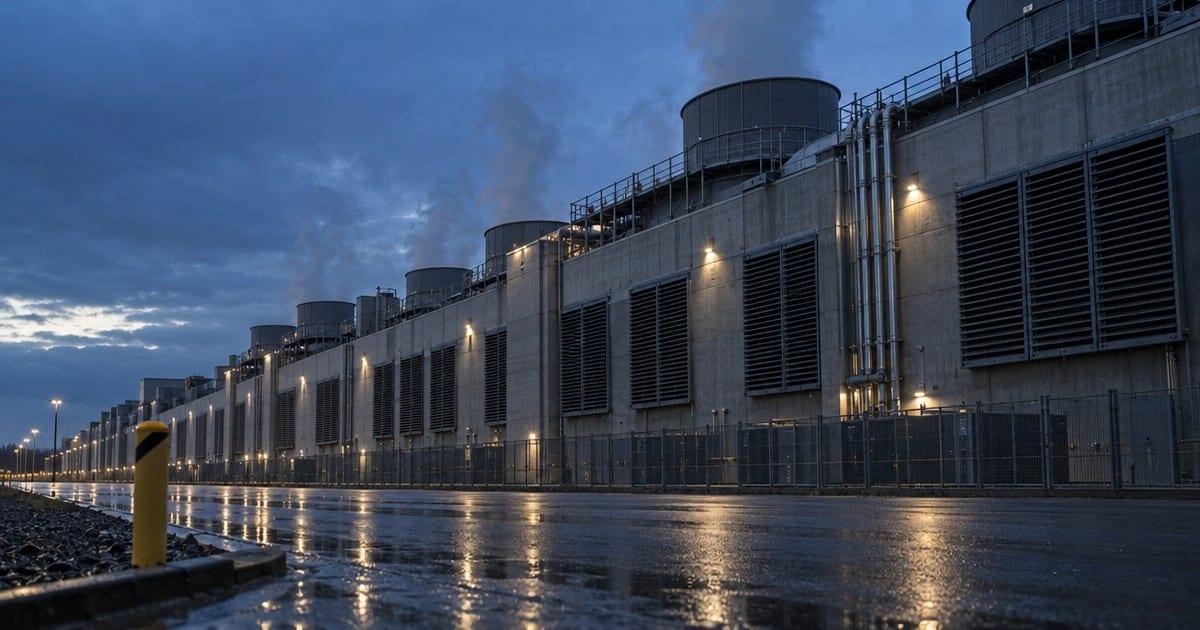
Nasdaq is reporting a network disruption at its Carteret, New Jersey data center that is causing intermittent data gaps across all of its US equities markets, according to a system status message from the exchange operator.
In a post on X, the account @zerohedge wrote that the "NASDAQ CURRENTLY EXPERIENCING A NETWORK DISRUPTION," adding that the disruption was "AFFECTING MULTIPLE MULTICAST GROUPS" and "ORIGINATING FROM CARTERET."
Reuters reported that the technical issue at the Carteret facility, located in New Jersey, was producing intermittent data gaps across all of Nasdaq's US equities markets. Reuters cited a system status message from the exchange operator in its report.
The exchange has advised clients to use feeds from Chicago as a backup while the disruption persists, according to reports carried by multiple outlets. Nasdaq, home to some of the biggest US tech companies, operates the Carteret facility as a key hub for its market data infrastructure.
The account @zerohedge posted about the disruption at 15:31:38 UTC on October 15, 2026, writing in bullet-point form: "*NASDAQ CURRENTLY EXPERIENCING A NETWORK DISRUPTION," "*NASDAQ: DISRUPTION AFFECTING MULTIPLE MULTICAST GROUPS," and "*NASDAQ: DISRUPTION ORIGINATING FROM CARTERET."
ZeroHedge, a financial commentary site, also published a separate piece titled "After Jensen Saves The World, Nasdaq Breaks," in which it asked whether Nasdaq "should have used a CoreWeave data-center." That referenced Nvidia chief executive Jensen Huang, who goes by the first name Jensen, and CoreWeave, a cloud computing provider.
Reuters reported the disruption at 34 minutes before the ZeroHedge post was published, according to the account's timestamp. Reuters wrote that the exchange operator said the technical issue is affecting its US equities markets.
Nasdaq's own system status message warned customers of the disruption, according to multiple outlets. The exchange advised clients to use feeds from Chicago as a backup while the disruption persists, according to reports.
The claim that the disruption is affecting multiple multicast groups originating from Carteret is being carried by @zerohedge, Reuters, and a number of local and syndicated outlets, including 102.7 WBOW in Terre Haute, Indiana, which carried the Reuters report on its website.
Multicast groups refer to the method by which market data is distributed to multiple recipients simultaneously over a network. A disruption affecting multiple multicast groups would mean that data feeds to multiple subscribers are affected at once, rather than a single point of failure.
The Carteret data center is a major facility for Nasdaq's US equities market data. Nasdaq operates the exchange for some of the largest technology companies in the United States.
Reuters described the impact as "intermittent data gaps across all of its US equities markets." The exchange operator's system status message, as cited by Reuters, said the disruption was at the Carteret facility.
The account @zerohedge has been carrying the claim in its characteristic bullet-point format, which is used for breaking market news. The post did not include any additional sourcing or attribution.
ZeroHedge's separate article questioned the timing of the disruption, asking whether the exchange should have used a CoreWeave data center instead. CoreWeave is a cloud infrastructure company that provides computing services.
The reference to Jensen Huang, the chief executive of Nvidia, is a reference to the artificial intelligence boom and Huang's role in the technology sector. Nvidia has been a major beneficiary of the AI investment wave.
Nasdaq is home to some of the biggest US technology companies, including Nvidia, Apple, Microsoft, Amazon, and Alphabet, though the disruption's impact on individual stocks was not immediately clear from the reports available.
The disruption was reported by Reuters at 34 minutes before the ZeroHedge post. Reuters is a global wire service that provides financial news to subscribers around the world.
102.7 WBOW, a radio station in Terre Haute, Indiana, carried the Reuters report on its website. The station's description is "The Valley's Greatest Hits."
Next News Network could not independently verify the claim that Nasdaq is experiencing a network disruption originating from Carteret, or the claim that the disruption is affecting multiple multicast groups.
The exchange operator has not issued an additional statement beyond the system status message cited by Reuters, according to the reports available. No timeline for restoration of the affected feeds was included in the reports.
Nasdaq's Carteret facility is one of the primary data centers for its US equities markets. The exchange operates multiple data centers to distribute market data to traders, brokers, and other market participants.
The disruption comes as US equity markets continue to trade. The impact on trading operations, if any, was not detailed in the reports available.
ZeroHedge's article title, "After Jensen Saves The World, Nasdaq Breaks," suggests a connection between the AI-driven market rally and the disruption, though no such connection was asserted in the reports available.
The reports did not specify the cause of the disruption. Nasdaq's system status message described the disruption as originating from Carteret, according to Reuters.
Market data feeds are critical infrastructure for US equities trading, as they provide the price and volume information that traders use to make decisions. A disruption in those feeds can affect trading across multiple venues.
The reports available describe the disruption as ongoing at the time of publication. No updated status message from Nasdaq was included in the reports available.
Our Take
The silence from the corporate media on this one is predictable. When Nasdaq's data feeds hiccup, the same outlets that spent years breathlessly covering every minor technical glitch at a certain social media company suddenly discover the virtue of patience. The Carteret facility going down is not just a technical hiccup — it is a reminder that the entire US equities market is running on infrastructure that can fail, and nobody in the financial press wants to ask why.
ZeroHedge, to its credit, at least asked the question that matters: should Nasdaq have been running this on a more resilient setup? The reference to CoreWeave and Jensen Huang is not a joke — it is a pointed observation that the AI boom has created massive computing infrastructure that the legacy exchanges are not using, even as they ask investors to trust their data feeds with trillions of dollars in trades.
Meanwhile, the same people who told you that the 2020 election was the most secure in history and that the vaccines were safe and effective want you to believe that a network disruption at the primary data center for US tech stocks is just routine. It is not routine. It is a warning. And the fact that the only places carrying this story are ZeroHedge and a handful of local radio stations should tell you everything you need to know about where the corporate media's priorities actually lie.
