
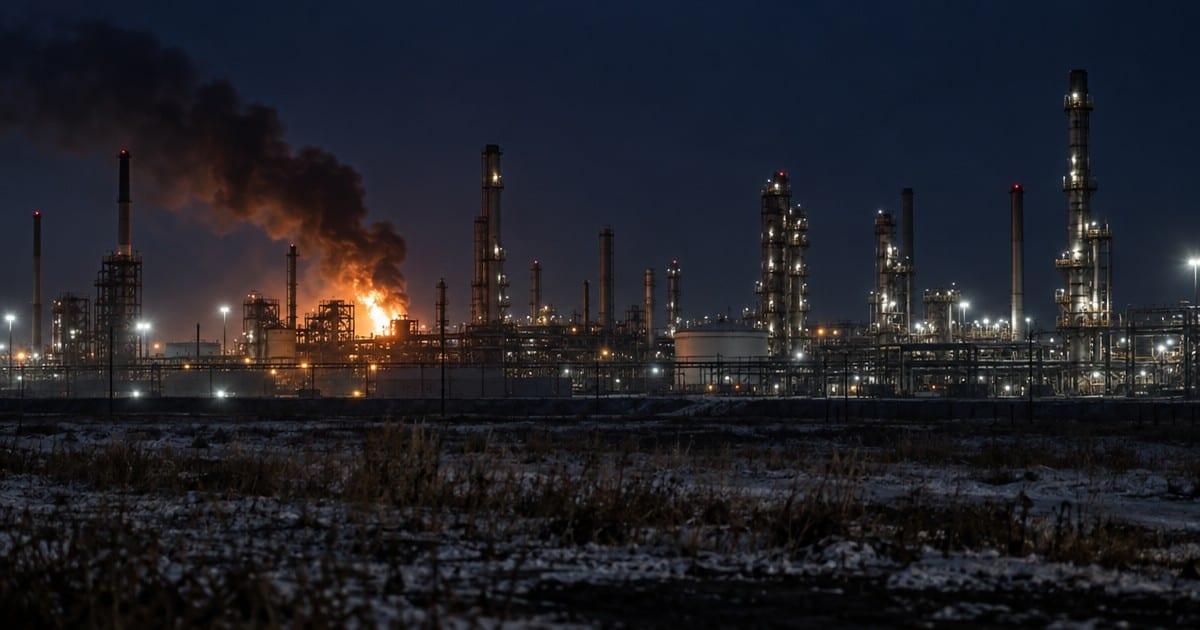
Ukrainian President Volodymyr Zelenskyy said Ukraine has resumed strikes on Russian oil refineries, ending a brief pause that followed President Donald Trump's unilateral "energy ceasefire" announcement, and accused the United States of a "dangerous" withdrawal of support critical to Kyiv's defense against Russia.
"The block (on attacking refineries) is out. We're done," Zelenskyy told the Financial Times in an interview published early Thursday, according to NBC News. The Ukrainian leader's frustration, per that reporting, stems from what he described as Moscow's repeated attacks on Ukraine's power grid during the truce, alongside gaps in U.S. intelligence sharing on Russian attacks and restrictions on the Starlink satellite internet service.
NBC News reported Thursday that satellite internet functionality while in motion via Starshield — the military version of the SpaceX service — had been restored that morning, according to a source in Ukraine's defense ministry speaking on condition of anonymity. The account, as carried by @NBCNews, framed the development bluntly: "Ukraine resumes strikes on Russian oil refineries as President Volodymyr Zelenskyy angrily accuses the U.S. of the 'dangerous' withdrawal of support critical to its defense against Russia."
The pause itself lasted three days. According to NBC News, Ukraine held off on attacks after Trump's unilateral "energy ceasefire" announcement, even as Kyiv accused Russia of repeatedly striking its power grid. That sequence — a Ukrainian stand-down met, in Kyiv's telling, by continued Russian attacks — is what Zelenskyy cited as the reason the block came off.
Behind the immediate exchange sits a broader rupture in the U.S.-Ukraine relationship. NBC News reported that Trump struck a diesel deal with Russia in an apparent bid to relieve pressure at the pump ahead of the Midterm elections, then demanded that Ukraine stop attacking Russian oil facilities and called for Zelenskyy to be replaced as leader. The "energy ceasefire" appeared to take both sides by surprise, per that reporting. Trump has blamed the Ukrainian campaign for fueling a rise in energy prices, despite the impact of his own war with Iran.
The moves, as described by NBC News, caused frustration and confusion in Ukraine and Europe, intensifying concerns over how much of an ally the United States remained in the fight against Russia. That worry was exacerbated Wednesday, NBC News reported, when Kyiv said it was facing the slowing down of Elon Musk's Starlink satellite terminals, disrupting battlefield missions and its ability to intercept Russian drones attacking Ukrainian positions.
Other outlets moved on the same story within hours. @politico carried the headline "Ukraine will resume strikes on Russian oil refineries, Zelenskyy says." @NBCNews followed with the account of the resumption and the accusation against Washington. Bloomberg reported under the headline "Ukraine to Resume Russia Oil Refinery Strikes, FT Reports," citing the Financial Times interview. OilPrice.com framed the same development as a consequence of a failed ceasefire: "Ukraine to Resume Russian Oil Refinery Strikes After Failed Energy Ceasefire," noting that Zelenskyy accused Moscow of ignoring Trump's energy ceasefire announcement and continuing attacks on Ukrainian infrastructure. Al Jazeera, quoting the Russian side, reported "Russia says Ukraine resumes attacks on oil refineries," and noted that Ukraine's president had earlier said Kyiv was "done" with the energy ceasefire. The Financial Times' own headline described Zelenskyy expressing anger in the interview at the "dangerous" withdrawal of U.S. intelligence sharing and the weakening of the Starlink satellite internet service.
Officials, speaking to other outlets, said Ukraine had launched a drone and missile attack on a Russian oil refinery, with the strikes coming hours after Zelenskyy said the brief energy infrastructure truce — spurned by Moscow, in his account — was over, amid deepening tensions with Washington.
Taken together, the coverage depicts a Ukrainian leadership that agreed to a pause at Washington's request, concluded that pause was being violated, and is now openly accusing its principal backer of pulling away at the moment of maximum need. The diesel deal, the demand to halt refinery strikes, the call for a change in Ukraine's leadership, the intelligence gaps and the Starlink restrictions are the specific grievances in that account, as reported by NBC News.
What is being claimed by Zelenskyy and by Ukrainian officials is the resumption of refinery strikes and the deteriorating state of U.S. support. Next News Network could not independently verify the claims.
The reaction did not stay confined to Ukraine or to Washington. European capitals, already anxious about the durability of American backing, watched the exchange play out publicly through a Financial Times interview and a burst of wire and broadcast coverage within a single news cycle.
Our Take
Zelenskyy's decision to take the refinery campaign off pause and say so on the record to the Financial Times is a signal aimed less at Moscow than at Washington. Three days of standing down bought him nothing in his own telling — the power grid kept getting hit — and now he is betting that visible escalation forces the White House back to the table rather than further away. It is a gamble, and it may backfire.
The Trump administration's position has a logic to it: diesel prices at the pump ahead of the Midterms are a domestic political fact, the war with Iran is already pressuring energy markets, and the president has never hidden his preference for ending the Ukraine war quickly rather than funding it indefinitely. Demanding a halt to refinery strikes is a direct attempt to keep oil and refined product prices down. Calling for a change in Ukraine's leadership is a blunter message: Washington wants a counterpart willing to negotiate on terms it can sell.
But the execution is what has European allies rattled. A unilateral ceasefire announcement that surprised both sides, followed by intelligence gaps and Starlink restrictions Kyiv says are degrading its ability to intercept Russian drones, hands Moscow a battlefield advantage at no cost. If the goal is to force Ukraine to the table, weakening its defenses first only reduces its incentive to trust any deal Washington brokers.
For American readers, the through-line is the one that never seems to change: U.S. taxpayers have poured enormous sums into this war, and the president is now openly testing whether the fighting can be wound down. That is a legitimate priority. But doing it by squeezing Kyiv while Moscow keeps striking the grid is not peacemaking — it is pressure applied to the wrong party, and it may only lengthen the war it is meant to end.
