
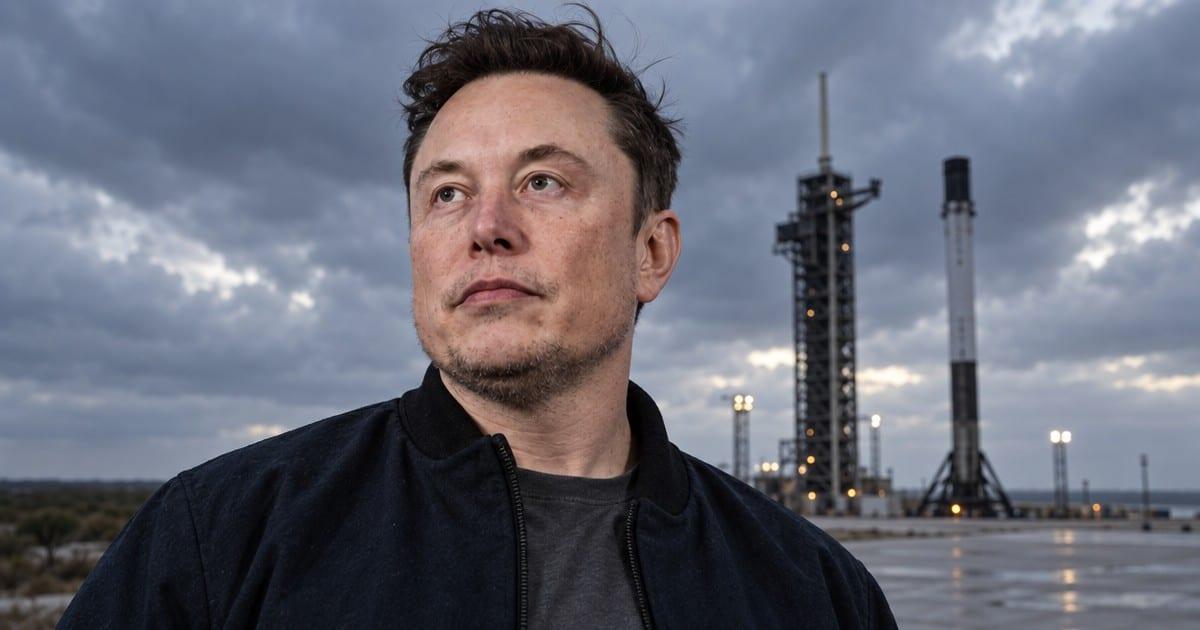
Elon Musk says he will give one of his SpaceX shares to every child in the United States next year, a promise that would be worth roughly ten and a half billion dollars at current market prices if carried out as described.
The claim was carried first by First Squawk, a financial news account with 567,000 followers, which reported shortly before eight in the morning Eastern time that Musk had said: "Next year, I will give one of my SpaceX shares to every kid in America." The wording circulated almost immediately through market and business outlets, including Newsquawk, which attributed the line to SpaceX and tagged the company under the ticker SPCX, and Times Now, which framed the remark under the headline "First Of Many."
Business Insider reported that the plan, as Musk described it, would amount to roughly ten and a half billion dollars at current market prices, a figure that assumes a per-share valuation and a count of American children that the announcement itself did not spell out. The outlet characterized the remark as a plan to gift SpaceX shares to U.S. children in 2027.
What followed was not a corporate filing or a press release but a rapid, sprawling argument across social media, as commentators, parents and political accounts picked the promise apart. The reaction is the story: a single sentence from Musk, relayed by a financial wire account, became within the hour a referendum on whether the offer was real, how it would work, and what it said about the man making it.
The announcement arrived without accompanying paperwork. There was no registration statement, no trust structure, no eligibility rules and no explanation of how a privately held SpaceX share, which is not freely tradable, would be delivered to a minor. Those absences did not slow the reaction. They supplied its fuel.
Much of the early conversation focused on the arithmetic. Ten and a half billion dollars spread across the roughly seventy-three million children in the United States works out to a little over one hundred forty dollars per child at current prices, a sum that commentators on several sides noted is smaller than it sounds when described as a share of a rocket company. Others pointed out that the value of a private share is notional until a liquidity event, meaning the gift, if it happened, would be a paper asset delivered to people who cannot sell it.
The political reaction split along familiar lines. Supporters of Musk treated the announcement as an act of generational generosity and a signal that the country's wealthiest entrepreneur intended to share the upside of private spaceflight with ordinary families. Critics described it as a publicity stunt timed for maximum attention, and questioned why a promise of stock to children would be made through a social media post rather than through the company or a charitable vehicle.
The spread of the claim was itself part of the story. First Squawk's post was picked up by Newsquawk, a markets-focused account that relays headlines to traders, and by Times Now, which added the "First Of Many" framing, suggesting that the announcement might be the opening of a larger program rather than a one-off. Business Insider then attached a dollar figure to the promise, giving the reaction a number to argue about. Each relay added a layer: the wire account supplied the words, the markets account supplied the ticker, the Indian outlet supplied the suggestion of a series, and the business outlet supplied the valuation.
By late morning, the remark was being discussed less as a corporate announcement than as a cultural event. Parents asked whether a newborn would qualify. Investors asked whether the promise implied anything about SpaceX's capitalization table or a future public offering, a question the announcement did not address and that the company has not answered publicly. Commentators asked whether a share given to a child would be held in trust, taxed as a gift, or simply promised and never delivered.
None of those questions were answered in the material that circulated. The claim moved faster than any clarification, and the reaction filled the vacuum with speculation, some of it informed, much of it not.
The timing of the remark also drew notice. It came as Musk remains the central figure in a sprawling set of ventures, from SpaceX to Starlink to his social media platform, and as his public statements have increasingly served as news events in their own right. A sentence from Musk now functions as a headline before it functions as a fact, and the reaction to this one illustrated that dynamic: the announcement was treated as newsworthy because he said it, and the argument that followed was about whether saying it was the same as doing it.
Next News Network could not independently verify that the promise has been made formally, that any shares have been set aside, or that a distribution mechanism exists.
The reaction continued through the morning, with the claim circulating across financial, political and parenting conversations at once, each audience reading the same sentence differently. For traders, it was a signal, however faint, about SpaceX. For parents, it was a question about paperwork. For political commentators, it was evidence for whatever they already believed about Musk. The sentence itself, six words longer than a headline and shorter than a policy, remained the only solid thing in the conversation.
Our Take
Musk has a long record of announcing things on social media that arrive years later, arrive differently, or do not arrive at all, and this promise deserves the same skepticism until there is a filing, a trust, or a transfer agent with a phone number. The enthusiasm on the right is understandable, since a billionaire proposing to hand a piece of his company to every child in the country is a genuine departure from the usual philanthropies, but conservatives should be the first to insist that generosity be real rather than rhetorical. The criticism from the left is equally predictable and equally unserious, since the same commentators who call the offer a stunt would call a tax increase on Musk the height of statesmanship. What is missing from both sides is the only question that matters: what does a child do with a private share of a rocket company? The honest answer is nothing, until someone buys it, and no one has said who that would be. Until then, this is a sentence, not a program, and the country would be better served by treating it that way.
