
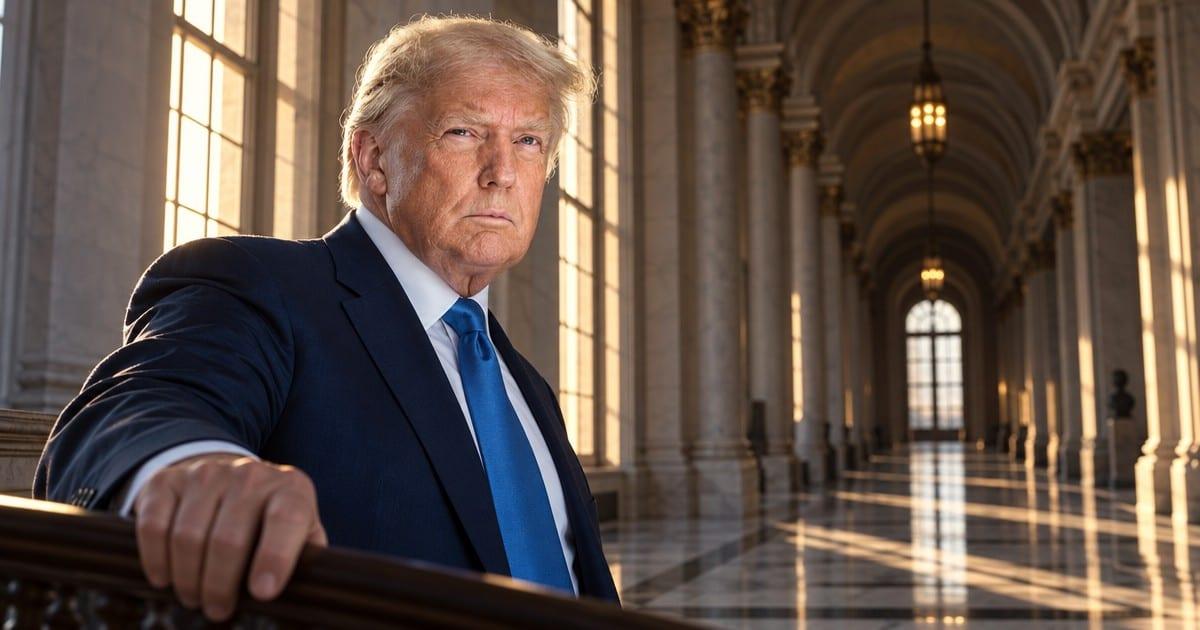
President Trump signed an executive order waiving new sanctions on Russia that had been authorized under the Lindsey O. Graham Sanctioning Russia Act, a move that avoids steep tariffs on Russian energy exports and on countries that purchase Russian fuel, according to The Washington Times. The decision, reported Friday, set off a wave of reaction from Republicans and Democrats alike, with critics calling it a mistake and supporters describing it as leverage to bring Moscow to the table.
The sanctions had been enacted through a bill championed by Sen. Darline Graham (R-S.C.). Graham said Saturday that she would prefer to keep sanctions pressure on Russia, telling reporters she looked forward to talking to the president about the waiver. Her statement was among the first signs that the decision would not pass quietly within the president's own party.
Energy Secretary Chris Wright defended the move during an appearance on "This Week," arguing that it does not amount to an economic lifeline for Russia. In a separate set of remarks, Wright characterized the decision to import Russian diesel as an "incentive to end the war," framing the waiver as a tool designed to move Moscow toward a settlement rather than a concession to it.
The criticism was not confined to one side of the aisle. Fox Business reported that Sens. Ted Cruz and Nikki Haley called the waiver a mistake, joining Democrats who warned it could embolden Russian President Vladimir Putin. Former Vice President Mike Pence went further, calling on Trump to restore the sanctions and scrap what he described as a controversial oil deal with Putin.
The reaction spread quickly across social media, where accounts with large followings on both sides picked up the story and pushed it in sharply different directions.
Real America's Voice, a broadcaster with 525,000 followers on X, posted that Trump had accused Ukrainian President Volodymyr Zelenskyy of not wanting to end the war. According to that post, Trump said Ukrainian attacks on Russian diesel refineries are hurting American farmers and businesses while complicating peace negotiations, and that he is holding off on new action against Russia to keep Moscow at the table. The post cut off mid-sentence.
MeidasTouch, an account with 1.3 million followers, answered with a blunt accusation: "Trump is siding with Russia. Again." The post argued that the president is attacking Zelenskyy for striking Russian oil refineries while Russia has been relentlessly bombing Ukraine's energy grid and civilian targets. It also claimed that Ukraine had actually stopped hitting refineries after Trump announced what the post called his fake ceasefire. The post, too, ended mid-sentence.
The two posts capture the shape the argument took within hours of the waiver becoming public: supporters of the decision described it as a pressure tactic aimed at ending the war, while opponents described it as a benefit extended to Moscow at Kyiv's expense.
Separately, End Time Headlines, an account with 37,000 followers, posted about new T-90M tanks arriving at a Russian reserve base roughly five hundred kilometers from NATO's borders with Latvia and Estonia rather than being sent to Ukraine. The post said analysts believe the armor may be intended for a future attack on the alliance. That post carries no direct connection to the sanctions waiver, but it circulated in the same window and added to the broader anxiety about Russian intentions that framed the reaction.
The underlying claim at the center of the dispute — that Trump signed an executive order waiving the new sanctions — is being reported by outlets including The Washington Times and Fox Business and is being described by the administration's own energy secretary in television interviews. Next News Network could not independently verify it.
The waiver touches the Lindsey O. Graham Sanctioning Russia Act, which had authorized penalties tied to Russian energy exports and to the countries that buy Russian fuel. By waiving the new sanctions, the president avoided triggering steep tariffs that would have fallen on those exports and on purchasers. The decision does not, according to the reporting, eliminate the underlying statute; it sets aside the new penalties authorized under it.
Graham's measured response — that she looks forward to talking to the president — stood in contrast to the sharper language from Cruz, Haley and Pence. The split is notable because the sanctions framework carried Graham's name and had been associated with a hawkish posture toward Moscow. A senator declining to escalate immediately while former officials in the president's own party call for reversal suggests the argument is far from settled inside the coalition.
Wright's defense rested on the idea that the waiver creates a path out of the war rather than a reward for continuing it. He told ABC's "This Week" that the decision is not an economic lifeline, and he separately described the diesel arrangement as an incentive for Moscow to end the conflict. Critics have not accepted that framing, arguing instead that relieving pressure on Russian energy revenues removes the cost that would otherwise force Putin to negotiate.
The online reaction followed the same divide. Real America's Voice amplified the president's own framing, presenting the waiver as a step taken to keep negotiations alive and to protect American farmers and businesses from the effects of refinery strikes. MeidasTouch rejected that framing entirely, arguing that the president is penalizing Ukraine for striking military-relevant energy infrastructure while Russia continues to target Ukraine's power grid and civilian sites. The MeidasTouch post also raised the claim that Ukraine had halted refinery strikes following the announcement of a ceasefire, presenting it as evidence that Kyiv had already made a concession.
What happens next depends in part on whether the Senate follows Graham's stated intention to raise the matter with the president directly. Pence's call to restore the sanctions and scrap the diesel arrangement sets out a concrete demand from within the former president's own political circle, while Cruz and Haley's criticism gives that demand bipartisan company. The White House has not indicated any intention to reverse course, and the energy secretary's public defense suggests the administration plans to hold the position.
For now, the record consists of an executive order, a senator asking for a conversation, a cabinet secretary making the case on Sunday television, and a set of Republican and Democratic critics calling the decision a mistake. The commentary surrounding those facts has moved faster than the policy itself, with accounts on both sides using the waiver to argue a larger question about which side of the war the United States is on.
Our Take
The waiver is a defensible exercise of presidential discretion only if it produces something. So far the administration has offered a theory — that relieving pressure on Russian energy exports creates an incentive to end the war — and no visible result. Energy Secretary Wright's claim that the arrangement is "not an economic lifeline" for Moscow is difficult to square with the simple fact that it relieves penalties on the revenue stream funding the war. If the intent is leverage, the leverage has to be demonstrated, not asserted on a Sunday show.
The more troubling part is the sequencing. The president is reportedly criticizing Ukraine for striking Russian refineries — targets that directly affect Moscow's ability to fund its military — while Russia continues to bombard Ukraine's energy grid and civilian areas. That is not neutrality; it is pressure applied to one side of a war. Sen. Graham's polite request for a conversation is a courtesy the seriousness of the decision does not merit. Cruz, Haley and Pence are right to call it a mistake, and the president should reverse it.
