
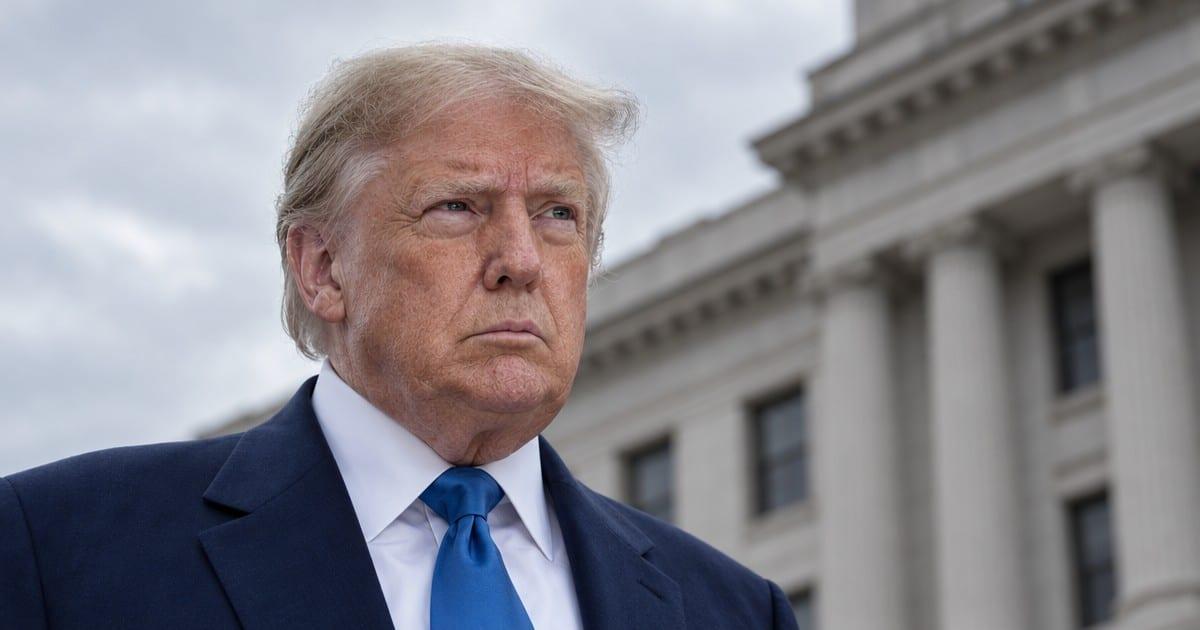
President Trump's approval rating has fallen to a record low of thirty-one percent as midterm elections near, according to a Reuters/Ipsos poll published Tuesday. The survey, which Reuters reported exclusively, claims the president's standing has dropped one percentage point from two weeks earlier and now sits at the lowest level of either of his presidential terms.
The Reuters report, carried by the outlet's main account to its audience of more than twenty-six million followers, landed as early voting began in several states and as Republicans face an uphill battle to maintain control of Congress. The poll's release set off a wave of coverage across major newsrooms, each amplifying the same core figure within hours.
The Washington Post-ABC News-Ipsos poll, released Sunday, showed Trump at thirty-three percent approval, a separate survey that nonetheless reinforced the same downward narrative. The Independent reported that just thirty-three percent of respondents approve of Trump's handling of the presidency. Business Standard, citing the Reuters figures, reported that thirty-one percent of Americans approve of Trump's job performance, down a percentage point from two weeks prior. And a separate survey report noted that the president's sinking numbers come as early voting has begun in several states, with the GOP facing difficulties in its effort to hold Congress.
The Reuters/Ipsos survey is the anchor of the coverage. Reuters presented the finding as exclusive, and the figure has become the reference point for outlets across the political spectrum. The number is being described as a career low, a record low, and the lowest level of either of his presidential terms, depending on which outlet is carrying it.
What the polling does not show, and what none of the coverage has established, is how the survey was weighted, how many respondents were sampled, or what the margin of error was. Those details were not included in the material available to Next News Network. What is clear is that the thirty-one percent figure is now circulating widely, repeated by Reuters, The Independent, Business Standard, and the Washington Post-ABC News-Ipsos survey, each contributing to a single narrative of collapsing support as voters head to the polls.
The timing is significant. Early voting has begun in several states, and the midterms are now little more than two weeks away. The Reuters report framed the numbers explicitly in that context: voters are deciding which party will control Congress next year, and the poll places the president's approval at its lowest point heading into that decision.
The Reuters/Ipsos poll is a survey, not a vote count, and its findings are a snapshot of respondent sentiment at a particular moment. The Washington Post-ABC News-Ipsos poll, released separately, landed at thirty-three percent, a two-point difference that suggests some variation depending on methodology and timing. The Independent's reporting cited the thirty-three percent figure. Business Standard cited thirty-one percent. The coverage has not reconciled the difference, and the two polls are being reported as part of the same trend.
Reuters described its survey as exclusive, and the outlet's account, which carries more than twenty-six million followers, put the thirty-one percent figure directly into the midterm conversation. The report was picked up and repeated across multiple outlets within a day, each adding its own framing to the same underlying number.
The president's approval rating has been a central focus of midterm coverage, and the Reuters/Ipsos poll is now the most widely cited figure in that coverage. Whether the number reflects the electorate's actual mood will not be known until the votes are counted, but the coverage itself has already shaped the narrative heading into the final weeks of the campaign.
Next News Network could not independently verify the findings of the Reuters/Ipsos poll or the other surveys cited in this report.
The coverage of the poll has spread across major outlets, each carrying the same core figure and framing it as a record low. Reuters, The Independent, Business Standard, and the Washington Post-ABC News-Ipsos survey have all contributed to the narrative, and the thirty-one percent figure is now the dominant number in midterm coverage. What the polls actually mean for the election will be determined by voters, not by surveys, but the coverage has already set the terms of the debate.
Our Take
The corporate media have found their midterm narrative, and they are running it hard. A single poll from Reuters and Ipsos, a survey the outlet itself labeled exclusive, has been transformed into a definitive verdict on the president's standing, repeated across every major outlet within hours. The Washington Post, ABC News, The Independent, and Business Standard are all carrying the same story, and none of them are asking the questions that matter: how was the sample weighted, what was the margin of error, and why should voters treat a snapshot of respondent sentiment as a prophecy?
What the coverage does not tell you is that the poll is a survey, not an election result. The difference between thirty-one and thirty-three percent across two separate polls is being reported as a single trend, with no acknowledgment that methodology and timing can produce exactly that kind of variation. The media are not reporting a fact; they are reporting a number that fits the story they want to tell.
The timing is no accident. Early voting has begun, and the midterms are two weeks away. The Reuters/Ipsos poll dropped into that window and was immediately amplified by outlets with millions of followers, each repeating the same figure without independent verification. The American people deserve better than a media apparatus that treats a single poll as a settled fact and builds a narrative on top of it. The only poll that matters is the one on Election Day, and no amount of breathless coverage will change that.
