
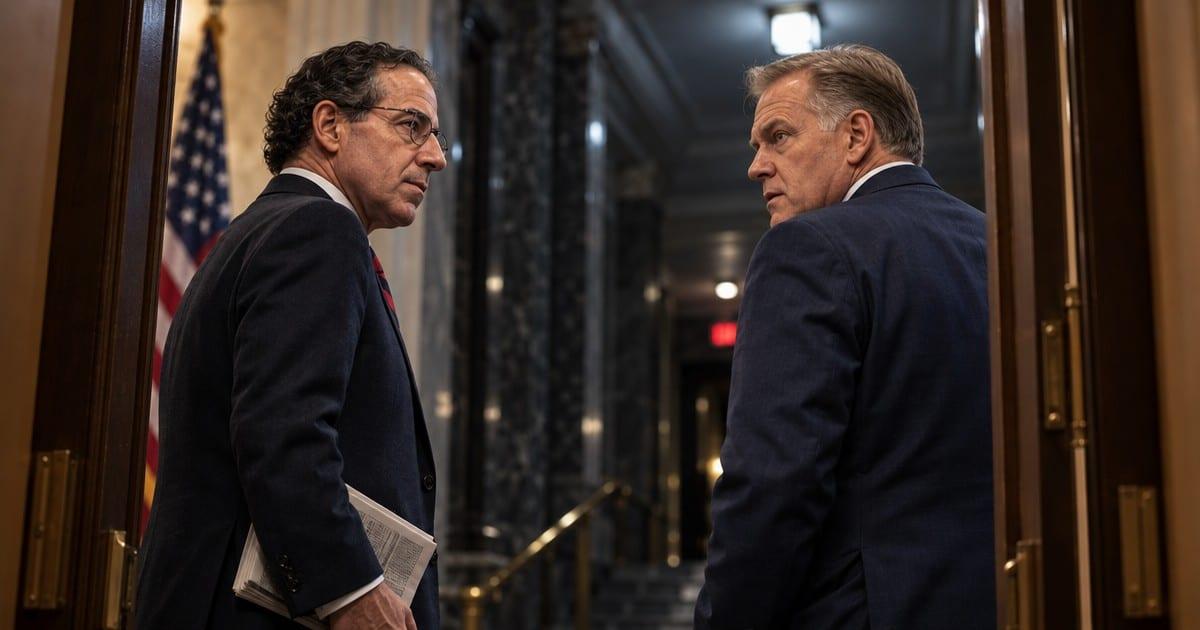
Rep. Jamie Raskin (D-MD) spent Sunday morning assuring a national television audience that he had personally spoken with Rep. Haley Stevens (D-MI) and that she was, without question, voting the straight Democrat ticket. By that same afternoon, Stevens was standing alongside Republican Senate nominee Mike Rogers at a Detroit church, endorsing him outright. The ranking member of the House Judiciary Committee learned he had been played on live television — and his before-and-after reactions are the story of the final weekend before Election Day.
On NBC's Meet the Press, host Kristen Welker asked Raskin directly about the intraparty war between Stevens and Democratic nominee Abdul El-Sayed. Raskin did not hedge.
"I spoke last night to Haley Stevens, and I spoke to Abdul as well, and my wonderful friend Haley Stevens wants me to represent to you and everybody else I talk to that she is voting straight down the line on the Democratic ticket, and she's going to be celebrating with Democrats across the country when we win on Tuesday night."
If that quote had a half-life, it was measured in hours. As the X account @BonillaJL flagged in a post, "Rep. Jamie Raskin represents to @MeetThePress viewers that Haley Stevens is most assuredly voting the Democrat ticket. Stevens would then go on to make a joint appearance with fmr Rep. Mike Rogers at a Detroit church."
The endorsement was not a quiet defection. According to RedState, Stevens had been El-Sayed's main opponent in the primary and is now being accused by party leaders — including Senate Majority Leader Chuck Schumer (D-NY), who endorsed Stevens over El-Sayed in June — of engaging in a "despicable betrayal."
By Monday, Raskin had moved from confident to concussed. Axios reporter Andrew Solender posted on X that Raskin, "who had said Stevens told him she would vote straight-ticket Dem," said: "I'm dumbfounded that Haley told me one thing last night and changed her mind today."
The sequence matters because it strips away the cover Raskin tried to provide. He was not relaying a public position; he was vouching for a private conversation, on camera, as evidence that Democratic fissures over El-Sayed's record on Israel were overblown. Stevens then undercut him in the most public way available — a joint appearance with the Republican — with roughly 48 hours until polls opened.
The New York Times reported that President Trump praised the endorsement during a rally in Iowa, telling the crowd of Stevens, "I'd love her to join the Republican Party." The Times also noted the endorsement landed as Republicans faced what it described as a bleak electoral outlook, and that the president's approval was sagging over the economy and the war in Iran. In other words, one of the few genuinely positive stories for Republicans this weekend came gift-wrapped by a Democrat who had been told, by a senior colleague, to stay quiet.
The Michigan race now carries a Democratic Party chairman disowning a sitting Democratic congresswoman four days after she was on the primary ballot. Raskin, for his part, has not said publicly whether he has spoken to Stevens since.
Our Take
This is what happens when party leaders treat their own voters like an inconvenience. Schumer hand-picked Stevens as the "electable" option in June. When she lost the primary, the machine moved to close ranks behind El-Sayed and demand total loyalty. Raskin went on national TV and put his credibility on the line to sell the story that everything was fine. It wasn't fine. It was falling apart, and Haley Stevens knew it was falling apart while Raskin was promising America otherwise.
Ask yourself which is the bigger story. A Democrat endorsing a Republican two days before an election — or a senior Democrat going on Meet the Press to personally guarantee the opposite? Raskin wasn't blindsided by the news. He was blindsided because he believed a colleague who had every reason to tell him only what he wanted to hear.
Michigan voters get the last word Tuesday. The party that spent months insisting there was no revolt just got told, on the record, that there was one — and they heard it from one of their own, right after their ranking member swore it couldn't happen.
