
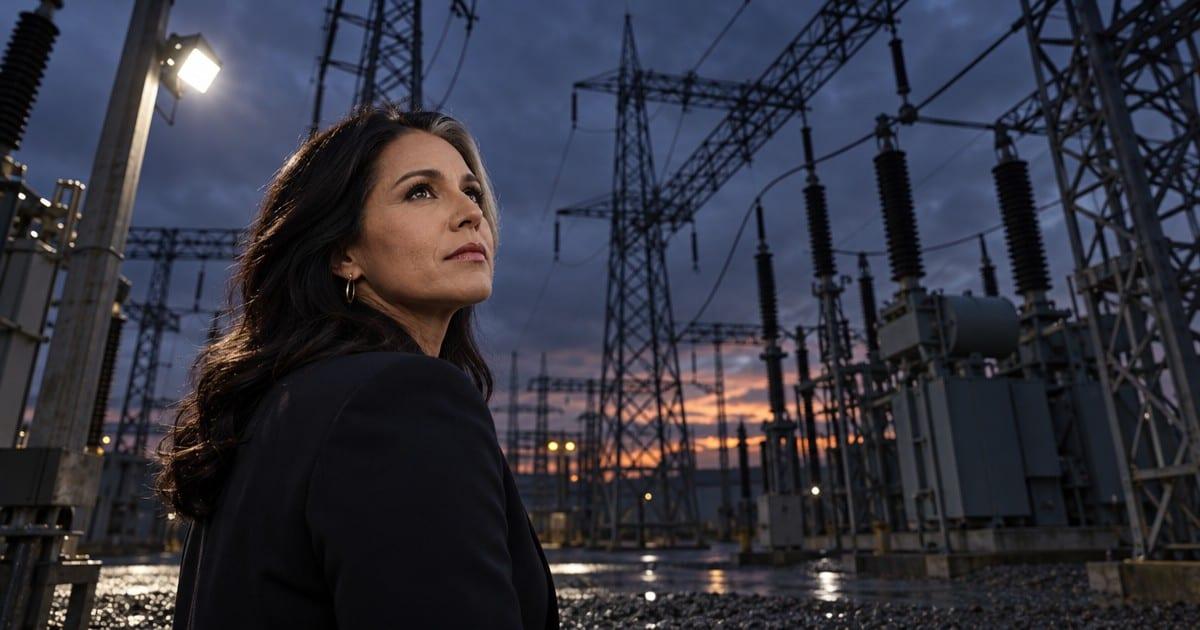
A controlled test at Idaho National Laboratory in 2007 proved what no Hollywood script has ever made real: a single cyber command can physically destroy critical infrastructure without a single bullet fired. Codenamed Aurora, the test manipulated a protective relay, slammed a generator back onto the grid out of phase, and watched the machine tear itself apart from the inside. No wrench touched a bolt. A remote command opened and closed a circuit breaker at precisely the wrong moment, and the torque did the rest.
That was nearly two decades ago. What has the federal government done since? According to the record, it has spent every year rehearsing the collapse, not preventing it.
Receipts on the Table
Director of National Intelligence Tulsi Gabbard signed the 2026 Annual Threat Assessment, and the document names China as the most active and persistent cyber threat to U.S. government, private-sector, and critical infrastructure networks. That assessment is not a prediction. It is an admission that the threat has been identified, documented, and dated.
RAND's own war game, Inverted Rook, opens with banks hacked, shipping frozen at American ports, the grid under attack, and panic setting in. That is the government modeling your house in January, your card declined, your phone silent. The NERC calendar tells the rest of the story. GridEx VIII ran November 18 and 19, 2025. GridEx IX is not scheduled until November 16 and 17, 2027. Friday was no GridEx drill. The federal apparatus has been game-planning this exact scenario for twenty years while telling American families that resilience was the answer.
Gabbard opened the 2026 briefing by telling the country the assessment does not represent her personal views. That line is the tell. The intelligence community owns that document, and it has been running these simulations longer than most Americans have owned smartphones.
Simulation Is Not Security
The establishment running CISA, NERC, and ODNI has spent two decades turning that blackout into a slide deck and calling the rehearsal resilience. But resilience is not a briefing document. It is keeping the lights on when the attack comes. It is your furnace running in January, your debit card working at the pump, your phone connecting when you call your family.
Every institution in the national security apparatus has a role in this story, and every one of them spent more on simulation than on hardening the grid that keeps American families warm. Idaho National Lab proved the kill shot was possible. RAND war-gamed the financial system collapsing. ODNI signed off on China's cyber threat profile. NERC scheduled the grid drills. CISA issued the warnings. And yet the grid remains as vulnerable today as it was when Aurora first tore that generator apart.
The question is not whether they saw it coming. They wrote it down, dated it, and filed it. The question is why the people who signed those documents chose simulation over security. Why did the federal apparatus spend two decades rehearsing the blackout instead of hardening the grid against the attack they already proved was possible?
Americans deserve a grid that survives the attack the government already gamed. The officials who ran the drill owe the country an answer: when does America get one?
