
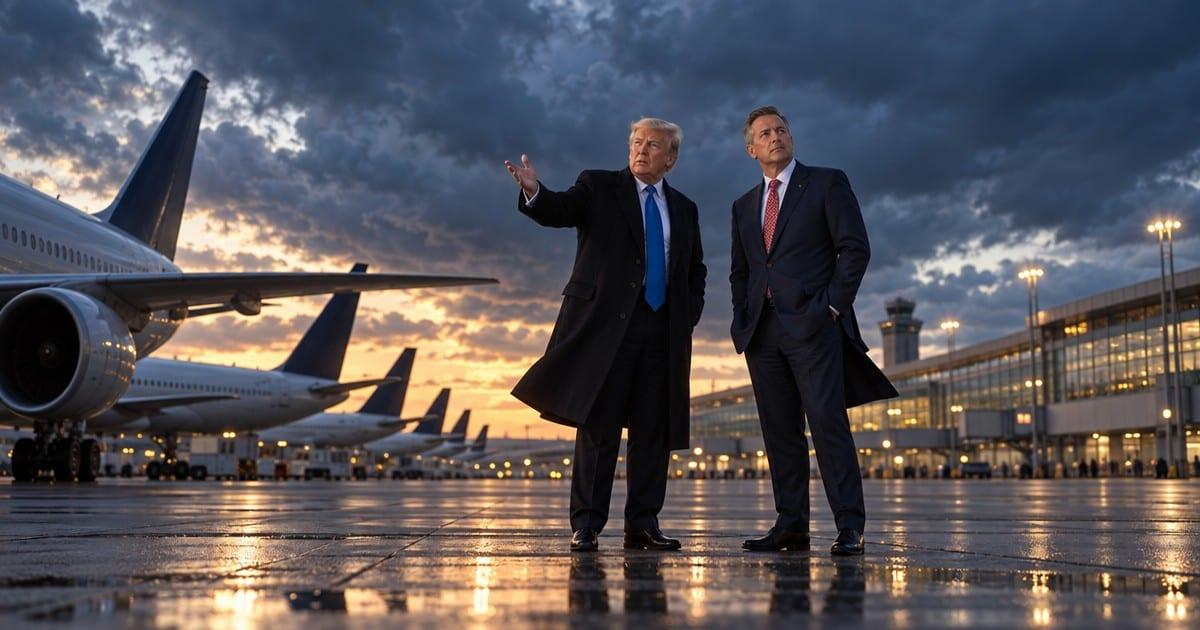
Just hours after a nationwide ground stop brought American air travel to a screeching halt for the longest stretch in 25 years, the Trump White House came before the press corps Friday evening with a blunt message: open the checkbook for $30 billion, because this is going to happen again.
Transportation Secretary Sean Duffy delivered the administration's official position during a briefing that ran from 7:31 p.m. to 8:04 p.m. Central time, putting President Trump's $30 billion request directly on the record. But it was Duffy's warning that should keep every American traveler up at night.
"You will have more of these, you will have more of them,"
No spin, no sugar-coating. The Secretary of Transportation told Americans to their faces that the system that failed Friday is still broken and will fail again. That's not fear-mongering from the opposition—that's the Trump administration leveling with the public about the disaster left behind by decades of administrative neglect.
The Pool Fight That Preceded the Briefing
Before Duffy ever reached the podium, the White House made a move that has the legacy media establishment howling. Politico had been slated to occupy Friday's print pool seat, but the White House blocked the outlet, according to the White House Correspondents' Association. A pool note from Naomi Lim of the Washington Examiner documented the empty seat where Politico should have been.
This administration has made no secret of its contempt for outlets that traffic in anti-Trump activism dressed up as journalism. Politico has spent years publishing anonymously-sourced hit pieces against the MAGA movement while pretending to be a neutral chronicler of Washington. The White House simply declined to hand them a front-row seat to the briefing.
Predictably, the press corps treated the access dispute as a story equal to the ground stop itself. That tells you everything about their priorities.
The Official Record—And What's Missing From It
Here's what the official White House record actually establishes: a four-hour nationwide ground stop disrupted air travel across the United States on Friday. Transportation Secretary Sean Duffy stated that President Trump has asked for $30 billion. Duffy warned that additional ground stops are likely. White House chief of staff Stephen Miller and communications director Steven Cheung were present in the briefing room along with other aides. The White House called a lid at 8:05 p.m. Central.
What's conspicuously absent from the record is a confirmed root cause for Friday's failure. The administration's framing remains open, credited to the officials themselves, and no definitive technical explanation has been established. The public is left with a warning and a dollar figure but no confirmed culprit.
For Americans planning holiday travel or business trips in the coming weeks, that's an unsettling reality. The system that failed Friday hasn't been fixed. The money hasn't been appropriated. And the same operational vulnerabilities that caused this stoppage remain in place.
The broader context matters here. This administration inherited an FAA and air traffic control infrastructure that has been starved of modernization for years—not by the private sector, but by the administrative state that prefers expanding its own bureaucracy over hardening critical systems. The $30 billion ask isn't a blank check. It's the cost of undoing decades of federal mismanagement.
The question every American should be asking is simple: why does it take a nationwide meltdown to force Washington to address infrastructure failure that has been building for years? The Trump administration is putting the price tag on the table and warning the public directly. The alternative is politicians who promise everything is fine until the next system collapses on their watch.
Friday's ground stop was the warning. Duffy's words were the confirmation. The only remaining question is whether Congress will act before the next one hits.
