
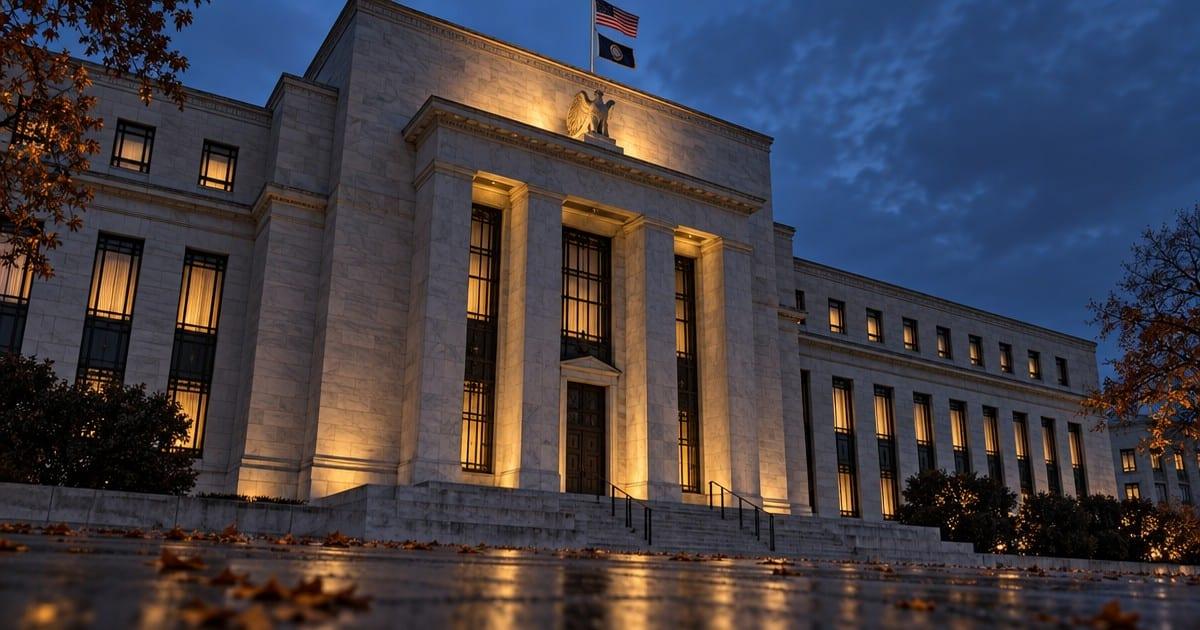
The Federal Reserve Board on Wednesday announced its approval of two applications submitted by Mutual Federal Bancorp, MHC, and MFB Bancorp, Inc., clearing the way for the institutions to move forward with changes to their corporate structure under the Bank Holding Company Act.
The announcement, posted to the Federal Reserve's website, offered no detail beyond the approval itself. The Board did not disclose the specific nature of the two applications, the dollar value involved, or the conditions attached to the approval. A search of the Fed's public applications database would typically reveal the particulars, but the announcement as published Wednesday contained only the bare approval language.
Mutual federal savings institutions and the holding companies that own them routinely file applications with the Fed for conversions, reorganizations, and acquisitions. The Bank Holding Company Act requires Board approval before a company may acquire control of a bank or bank holding company, and mutual-to-stock conversions and holding company formations are processed through the same channel.
What is not routine is the speed and silence with which such approvals now move through the system. The Fed's approval Wednesday did not come with a public statement from any governor, a dissent, or a scheduling note indicating when the applications were first filed. The Board's practice of issuing weekly "H.2" action letters means these approvals are often buried among pages of administrative notices, discoverable only by those who monitor the docket.
What the Approval Does
Under the approval, Mutual Federal Bancorp, MHC and MFB Bancorp, Inc. may proceed with the transactions described in their filings. The Fed's order, if posted in full to its website as is customary, would set out the statutory factors the Board considered — the financial and managerial resources of the institutions, the convenience and needs of the communities served, and the competitive effects of the transaction.
The approval does not by itself transfer any deposits, close any branches, or change the terms of any customer's account. Those steps, if they occur, would follow the transaction closing and any separate regulatory filings with the Office of the Comptroller of the Currency or state banking authorities.
It is not yet known whether the institutions involved plan to announce branch changes, leadership changes, or fee adjustments as a result of the approval. Calls and emails to the Federal Reserve's press office seeking the full application order were not immediately returned Wednesday. Mutual Federal Bancorp and MFB Bancorp, Inc. do not maintain public press offices listed in the Fed's action letter.
Why It Matters to Main Street
Bank holding company approvals rarely make headlines, but they determine who owns the institution that holds a family's mortgage, a small business's operating account, and a retiree's certificate of deposit. When a mutual institution converts or reorganizes, depositors who held ownership rights in the mutual form can see those rights extinguished or converted into shares they did not ask for.
The Fed's approval Wednesday did not include any public discussion of depositor impact. The Board's orders typically include a section on the convenience and needs of the community, but that analysis is written by Fed staff and is not subject to public comment after the fact.
Members of Congress who sit on the banking committees have repeatedly asked the Fed to publish application timelines and approval rationales in a searchable format. The request has gone nowhere. Wednesday's notice is the product of that system: an approval announced, a public left to guess at the terms, and no named official available to explain the decision.
Our Take
Here's what the Fed doesn't want you to notice. While the central bank's board was rubber-stamping holding company applications behind closed doors, the same institution is telling the American people that inflation is under control and that interest rates are being set by careful, data-driven deliberation. The secrecy is the point. If the Fed published the full application file for every bank holding company approval — the filing date, the comment period, the staff analysis, the conditions — voters could see how the financial plumbing actually works. They might notice which institutions get fast-tracked and which get held up. They might ask why mutual depositors lose their ownership stake in these conversions without a vote.
The Federal Reserve is not a private bank. It is a creature of Congress, accountable to the people through their representatives. Yet it releases bank merger and holding company approvals with less transparency than a county zoning board grants a homeowner building a deck. That is not an accident. It is a habit built over decades of treating the public as an inconvenience.
Patriots, this is the administrative state in its purest form: a decision that affects the savings and loans of ordinary Americans, announced in a two-sentence press release, with no one's name on it and no one available to answer questions. If you want to know why so many Americans have lost faith in federal agencies, start here. Call your representative and ask them to demand the full Mutual Federal Bancorp application file. It's your money in those banks. You deserve to know who is buying and selling the institutions that hold it.