
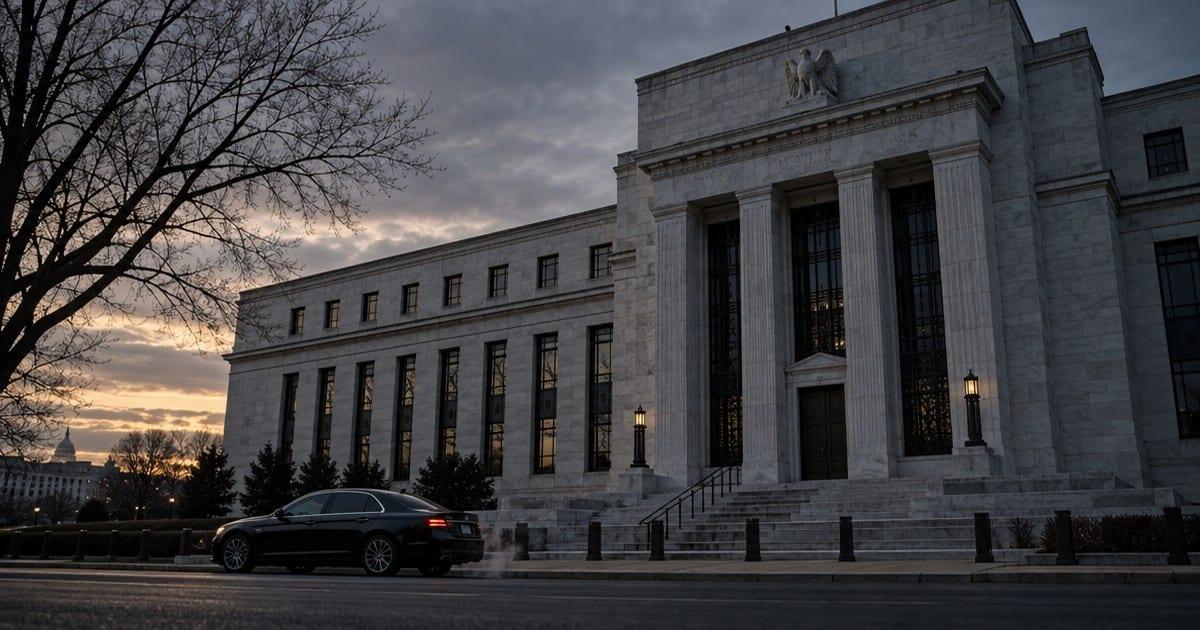
The Federal Reserve Board announced Tuesday that it has approved an application by The Bank of Nova Scotia, the Canadian banking giant known to Americans as Scotiabank. The approval was posted on the Fed's official news page, where the Board publishes decisions on bank applications under the Bank Holding Company Act and related statutes.
The Fed's announcement did not detail the specific application or attach conditions. The Board routinely approves applications from foreign banking organizations to expand or maintain their U.S. operations, and Scotiabank has a long-standing American footprint in commercial lending, capital markets and wealth management.
The approval lands in a week when the central bank's treatment of who gets access to the U.S. banking system is under a hotter spotlight than usual.
Same Week, Very Different Bankers
On Monday, the U.S. Supreme Court denied a petition by Custodia Bank, the Wyoming-chartered institution that has spent years fighting for direct access to Federal Reserve payment services, according to TradingView News. Custodia's bid for a Fed master account — the account that lets a bank settle payments directly with the central bank rather than through an intermediary — is now effectively dead at the federal level after the high court declined to review the dispute.
The contrast is hard to miss. A foreign megabank gets a routine green light from the Board, while a small, state-chartered American institution backed by Custodia's leadership and its allies in Wyoming gets the door closed — first by the courts, then by the Supreme Court's refusal to take the case.
The Fed has not commented on the Custodia decision beyond the court record, and the Board's Tuesday announcement regarding Scotiabank did not reference it.
Bowman's Capital Rule Fight
The Scotiabank approval also arrives as the Fed's vice chair for supervision, Michelle Bowman, is asking a D.C. federal judge to dismiss a lawsuit accusing her of secretly meeting with Wall Street bank chiefs to shape the newly proposed U.S. bank capital rules, Law360 reported Tuesday. The Fed and Bowman argue the suit, brought by Better Markets, is premature because the rulemaking is not final.
Better Markets, a financial reform advocacy group, alleges the meetings improperly influenced the capital rule proposal. The Fed's position is procedural: you cannot sue over a rule that has not been completed. A judge will decide whether the case proceeds.
Taken together, the week's developments sketch a Federal Reserve that is simultaneously approving foreign bank applications, defending its rulemaking process against outside scrutiny, and seeing its master account decisions upheld by the nation's highest court.
What It Means for Americans
For most Americans, a Scotiabank application approval is not a household event. It does not change deposit insurance, mortgage rates or the price of a car loan. What it does reflect is the Fed's continuing role as gatekeeper for the U.S. financial system — deciding which institutions can expand here, which can plug directly into the payment plumbing, and which cannot.
The Custodia outcome matters more to the long game. State-chartered banks and crypto-adjacent institutions have argued for years that the master account process is opaque and unevenly applied. The Supreme Court's decision not to hear the case leaves that argument without a federal judicial resolution for now, and leaves the Fed's discretion intact.
Scotiabank, for its part, has not issued a public statement on the approval. The Fed's announcement did not specify a timeline for the application's effective date or any conditions attached to the approval.
Our Take
Here is the pattern patriots should see. A foreign bank with deep pockets and a familiar name gets its application stamped approved by the Federal Reserve Board, quietly, on a Tuesday. A Wyoming-chartered American bank that dared to ask for direct access to the Fed's payment system gets told no — and when it asks the Supreme Court to look at that no, the Court declines.
That is not a conspiracy theory. That is the public record as of this week. The Fed's master account process is discretionary, and the Custodia case shows just how discretionary it can be. Meanwhile, the Fed's top supervisor is in court arguing that a lawsuit over how the capital rules were written is too early to hear — because the rules are not finished yet.
So which is it? Is the Fed an institution that follows neutral, rules-based process, or one where the big and connected get approvals while the small and disruptive get shut out? The American people deserve a Congress that asks that question out loud, on the record, with subpoenas if necessary. The Fed is not accountable to voters. It should at least be accountable to the law.
Until then, watch what the Fed approves — and watch what it refuses.