
In a departure from the corporate celebrations and political posturing that typically define heritage months in America, RedState contributor Streiff has marked National Native American Heritage Month with a series on frontier figures whose lives are, as he puts it, too important to ignore.
His latest installment profiles Lewis Wetzel (1763–1808), a figure whose remarkably specific skill set made him one of the most feared and controversial men on the American frontier — and whose story is being retold this month as part of an argument about how Americans should remember the country's founding.
National Native American Heritage Month is recognized by the Department of the Interior. Streiff wrote in the piece, published by RedState, that he had not known such a designation existed, and that he considers the recognition overdue — though his reasoning is not the standard one.
According to RedState, Wetzel was born in Lancaster County, Pennsylvania, but his family moved into contested territory near what is today Wheeling, West Virginia, following the British victory in the French and Indian War. The move placed them squarely in the violent borderlands of the Ohio Valley during the period of the Revolutionary War and the years that followed.
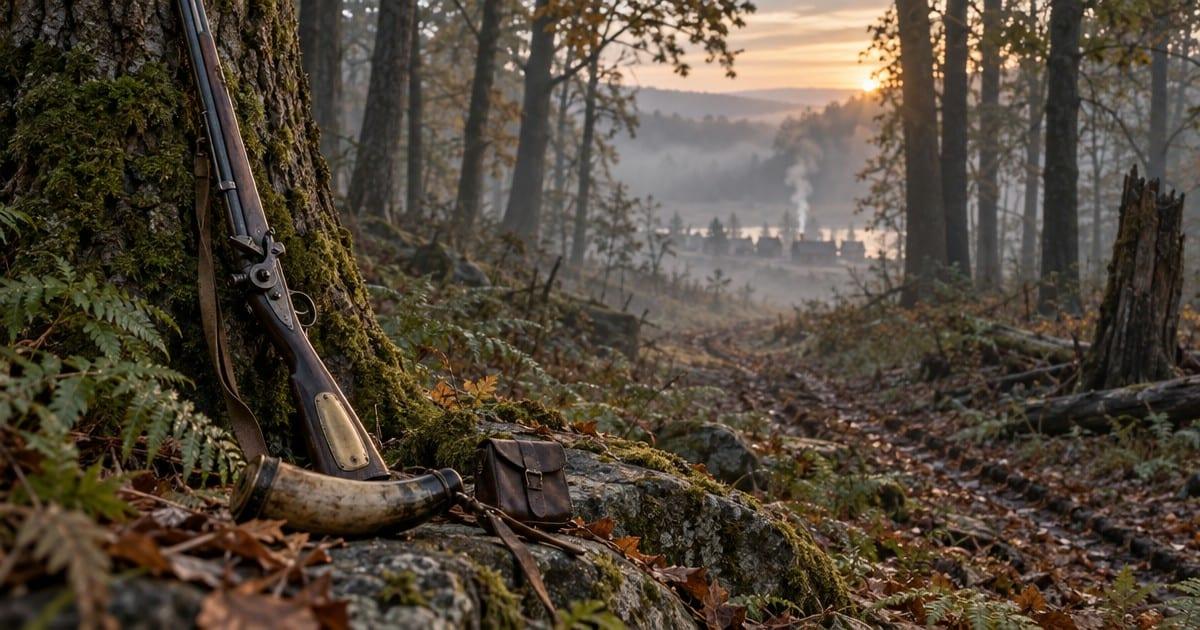
Wetzel's renown, RedState reports, rested on two distinct attributes. The first was a self-taught technique for reloading his rifle while running at full speed — a skill that earned him his nickname, "Running Gun." In an era when a muzzleloader took roughly fifteen to twenty seconds to reload while stationary, a man who could do it on the move held an enormous advantage in frontier combat.
The second attribute, according to the RedState account, was his ability as a negotiator. The combination made Wetzel a valued scout and a dangerous adversary, and his exploits became legend in the settlements along the Ohio.
"
The RedState series is unusual in how it approaches the heritage month: rather than a broad survey, it is a set of individual portraits, and each portrait is designed to make a historical case. Wetzel's story is therefore not simply a curiosity of frontier trivia — rapid reloading, harnessed skill, and a willingness to fight — but an argument about who built the country and what they were owed.
For readers interested in the frontier period, the Wetzel profile is a reminder of how thin the margin was on the American border in the late eighteenth century, and how specific, improvised skills could shape the outcome of that conflict. RedState says the series will continue.
Our Take
There is a reason heritage months have become a battleground: the people who run them have spent decades framing American history as a story of grievance rather than achievement. RedState's approach flips the script. It says: here is a man, here is what he could do, here is what it cost him, and here is what it built. That is how you honor history — not with a corporate press release, but with the actual stories of the people who made the country possible. Wetzel could reload a rifle at a dead run. He could talk his way out of a fight or into one. He was not a saint, and the series does not pretend he was. He was a frontier American, and the border he defended became the heartland our children will inherit. If public schools taught more of this and fewer lectures about collective guilt, we might not need a heritage month at all.
