
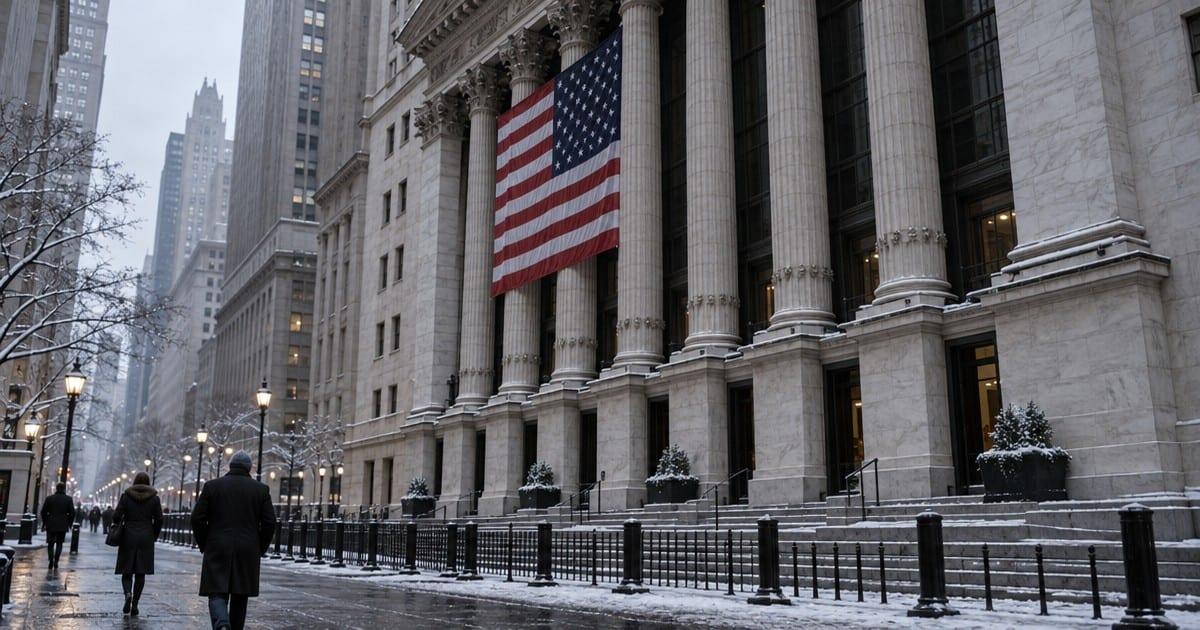
Wall Street is taking a breather. U.S. stock markets will be closed Thursday, Nov. 26 for Thanksgiving, and when they reopen Friday, Nov. 27, it will be for a shortened session — the traditional Black Friday half-day.
The New York Stock Exchange and Nasdaq will open at their usual 9:30 a.m. Eastern and close at 1 p.m. Eastern, according to MarketWatch and Seeking Alpha. Bond markets will also observe special hours, with the Securities Industry and Financial Markets Association recommending an early close. CME metals and energy futures will trade shortened sessions as well, per Seeking Alpha.
The early close is a fixture of the market calendar, but it lands this year amid a busy news cycle: President Donald Trump's second-term tariff agenda, the Department of Government Efficiency's deregulation push, and the administration's mass-deportation and border-security programs are all moving markets. Traders will have a three-and-a-half-hour window Friday to react to any holiday-week headlines before the weekend.
For everyday investors, the practical effect is simple: any trades placed after 1 p.m. Eastern Friday won't execute until the following Monday. Mutual fund orders and automated contributions tied to the trading day will also process on the next full session. Banks and mail delivery are expected to operate on reduced schedules Friday, and most restaurants — from McDonald's and Chipotle to Chick-fil-A, Starbucks and Dunkin' — will be open, though hours vary by location, according to a Black Friday roundup.
Social media accounts tracking market hours have been circulating the schedule. An Instagram post captioned "Stock market hours for Thanksgiving and Black Friday" has been making the rounds, a sign that even casual investors are checking the calendar before the holiday.
The holiday closure is routine, but it comes as Republicans in Washington push an America First economic agenda that has kept volatility elevated. Tariff announcements, DOGE-driven spending cuts and energy-dominance policies have all produced sharp moves in equities and commodities this fall. A short Friday session gives traders less time to price in any Thanksgiving-week developments — and less liquidity to do it with.
Overseas markets will operate on normal schedules. The London Stock Exchange, Euronext and Asian exchanges will trade as usual, though volumes are typically thin on the U.S. holiday. Futures markets will reopen Sunday evening Eastern, resuming the regular Globex schedule.
The bottom line for Americans: if you need to move money in the market this week, do it before Thursday. Friday's window closes at 1 p.m. Eastern — three hours earlier than usual — and then it's wait-until-Monday.
Our Take
Here's the thing about Black Friday on Wall Street: it's a half-day for the suits, but a full day for the rest of us. While traders knock off at 1 p.m. to hit the mall, American families are watching their 401(k)s and brokerage accounts, wondering whether the Trump economy's tariff-driven reshoring boom will keep running into the new year.
The early close is a reminder that the financial markets — the ones the legacy media treats as the scoreboard for America — operate on their own clock. But the real economy, the one where small business owners are still fighting inflation, where parents are stretching paychecks, where veterans are looking for work, doesn't get a half-day. It runs 24/7.
So while the NYSE rings the bell at 1 p.m. Friday, patriots should be asking a different question: is the market open for them? Under Trump's America First agenda, the answer should be yes — lower taxes, less regulation, cheaper energy, secure borders. That's the trade worth making. The 1 p.m. close is just a calendar note. The real action is in Washington, and it's just getting started.
