
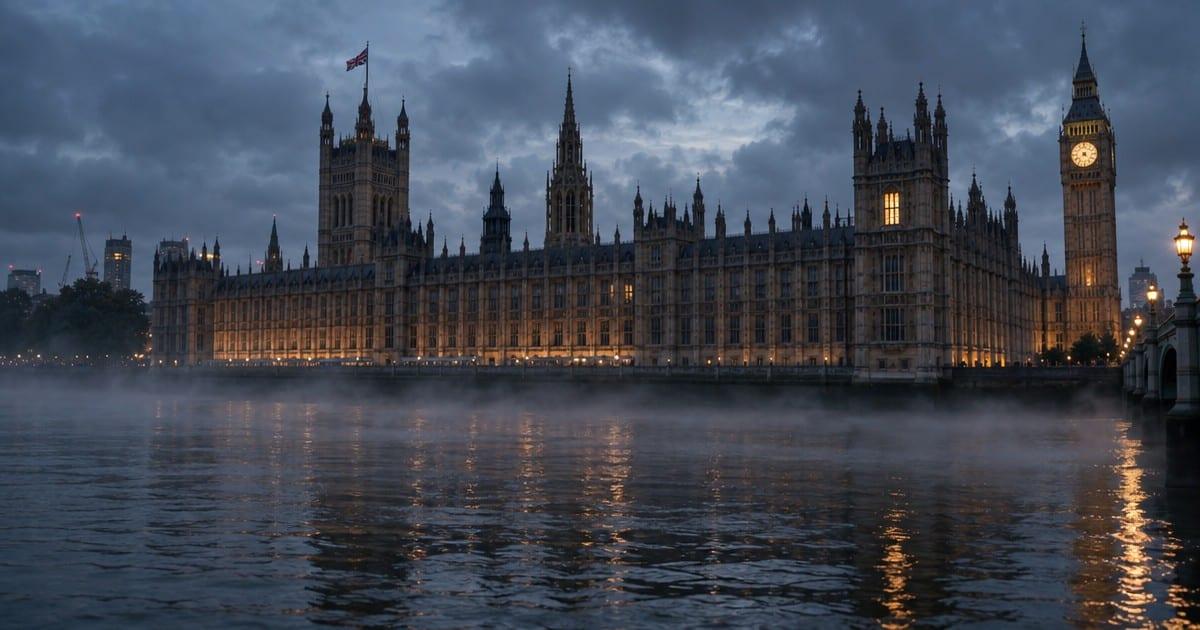
London is preparing to legislate its way around a legal wall it just admitted exists, according to reporting by The Federalist. The U.K. government has acknowledged it cannot force American technology companies to remove lawful speech under current law — and is now discussing a new statute that would give it that authority, The Federalist reported.
The admission matters because it confirms what critics of the U.K.'s Online Safety Act have argued for years: British speech rules are built to reach across the Atlantic and onto American servers. Now the government is saying the quiet part out loud — the existing tools aren't enough, and it wants more.
Precisely which lawful speech the proposed law would target, what penalties it would carry, and when it might be introduced are not yet public. The Federalist reported that the discussion is underway but did not detail the legislative text, and the U.K. government has not published a draft bill.
What London Has Conceded
The concession is a significant reversal in tone. For years, U.K. regulators have operated as though the Online Safety Act gave them a clear path to demand takedowns from platforms headquartered in California and Texas. The Act, passed in 2023, imposes a duty on platforms to protect users from harmful content and empowers the regulator, Ofcom, to investigate and fine noncompliant companies — including those based outside the U.K.
But enforcement against U.S. firms has always run into a fundamental problem: American law. The First Amendment protects lawful speech, and U.S. companies are not obligated to comply with foreign takedown demands that conflict with it. That tension is what London now concedes it cannot overcome with existing authority, according to The Federalist.
The reported move comes as the Trump administration has taken a sharply different posture toward speech regulation than its predecessor. The administration has pushed back on foreign efforts to police American platforms, and officials have framed U.S. tech policy as a matter of national sovereignty.
A Familiar Fight, on New Ground
The U.K. effort is not happening in a vacuum. It follows a broader pattern of Western governments trying to extend their speech rules to American companies, and a parallel fight inside the United States over how far the federal government itself may go in unmasking and investigating online speakers.
Separately, the American Civil Liberties Union filed a federal class action in Washington on Friday seeking to block the Justice Department and Department of Homeland Security from using grand jury subpoenas to identify anonymous critics of U.S. immigration enforcement, according to The Independent. The suit, brought on behalf of four unnamed social media users, asks the court to enjoin what the ACLU calls a "bad-faith investigation" that violates the users' First Amendment rights. Chief Judge James Boasberg unsealed the case on Wednesday and set a January 6 hearing on the ACLU's request for a preliminary injunction; the administration has until December 14 to respond in writing. The government has not responded publicly to the suit's allegations.
That case is domestic — it concerns U.S. subpoenas, not British statutes — but it illustrates the same underlying question the U.K. debate raises: who gets to decide which lawful speech stays online, and how far can a government reach to find out who said it?
Why It Matters for American Companies and Users
For American platforms, a new U.K. law would create a direct conflict between two legal regimes. Comply with London, and a company risks being accused of censoring lawful American speech at a foreign government's request. Refuse, and it faces the prospect of fines or other penalties under British law.
For American users, the practical effect depends on how aggressively a new law would be enforced. If it mirrors the Online Safety Act's structure, it would likely target categories of content British regulators deem harmful, with Ofcom empowered to investigate and penalize. The Federalist's reporting indicates the law is being discussed as a means to compel removal of lawful speech — a phrase that, if accurate, describes the precise collision point with the First Amendment.
The U.K. government has not said whether it would seek to enforce such a law against companies with no physical presence in Britain, or whether it would rely on market-access leverage instead. It is not yet known whether the Trump administration would respond with trade measures or other counterpressure, though the administration has previously signaled it views foreign speech mandates aimed at U.S. firms as a sovereignty issue.
What is clear is that London has now put its cards on the table. The question is whether American lawmakers and companies will treat the admission as a warning worth acting on.
Our Take
Here's the tell: the U.K. just admitted it can't force American companies to censor lawful speech — and its first instinct was to write a new law to try anyway.
That's not a glitch in the system. It's the system working as designed. The Online Safety Act was always a vehicle for reaching American platforms, and now that the limits of that vehicle are showing, London wants a bigger one. The pattern is familiar to anyone who has watched globalist regulators treat the First Amendment as an inconvenience to be routed around rather than a right to be respected.
American tech companies should say no now, clearly and publicly, before a new statute gives U.K. regulators a fresh cudgel. And the Trump administration should make unmistakably clear that a foreign government's demand to silence lawful American speech will be treated as what it is: an act of overreach against U.S. companies and U.S. users.
Because if London succeeds here, other capitals will follow. The question for American platforms is simple — will you defend the speech of the people who made you, or will you hand a foreign regulator the switch?
