
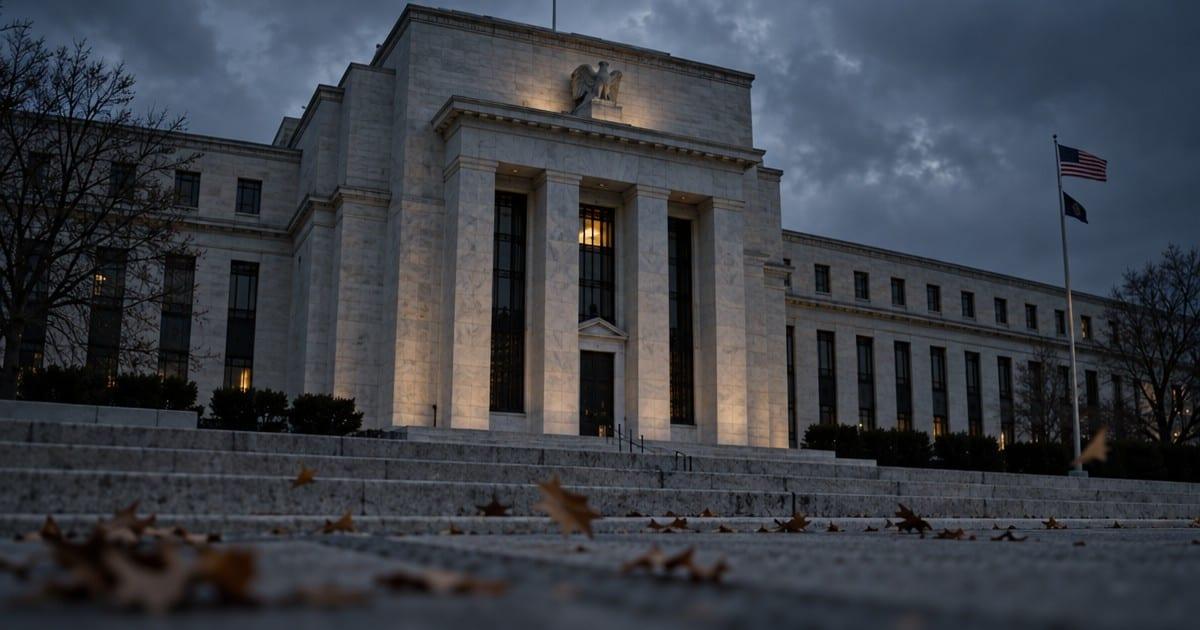
The Federal Reserve on Tuesday published the minutes of its October 27-28 Federal Open Market Committee meeting, the central bank's official record of the policy debate that produced its latest rate decision. The document lands as currency and bond traders parse every signal out of the Eccles Building, with the dollar index hovering near 103.7, not far off a 22-month high of 104.53 touched earlier this month, according to reporting from News Usa Today.
The minutes are the Fed's own account of the meeting. The October session was a two-day affair, with the policy statement released at 2:00 p.m. ET on the second day, per the Fed's published calendar. The next scheduled FOMC meeting is December 8-9, 2026.
What the Markets Are Telling Us
The dollar's recent run has been fueled by expectations of continued Fed tightening, even as Treasury yields retreat. The 10-year yield dropped as much as 10 basis points to 4.8% — its lowest in two and a half months — before climbing back 5 basis points to 4.9%, News Usa Today reported, citing BigGo Finance. ING analysts told clients that bond holdings could look attractive ahead of the extended holiday break, noting a possible "effect from the long weekend."
Overseas, the picture is messier. The Australian dollar clawed back above 0.66 after hitting a one-year low of 0.6557, the Norwegian crown rose 0.25% to 9.74 versus the greenback, and the New Zealand dollar got a lift from election results that reduced political uncertainty — all per CNA and IDNFinancials reporting cited by News Usa Today. The Canadian dollar slipped 0.3%. The euro sat near $1.097, and the yen traded around 159.06. The real pain is in emerging markets: the Brazilian real has fallen 4.7% and the Colombian peso has been hammered, MUFG Research data shows.
The Fed's own Instagram account promoted a live press conference with the FOMC Chair tied to the meeting cycle, a post that drew attention as traders scrambled for any hint of the committee's thinking before the minutes dropped.
Why This Matters to Your Wallet
The Fed doesn't set your mortgage rate, your car loan, or your credit card APR directly — but its decisions move all of them. Every basis point of tightening ripples through the cost of borrowing for small businesses, homebuyers, and families carrying balances. The October minutes are the closest thing to a roadmap for where the committee leans heading into December.
What the minutes actually say about the committee's internal debate — how many members favored a pause versus a hike, how worried they are about sticky inflation versus a slowing labor market — is the substance traders are digging into. The document is the Fed's record, and it will be read far more closely than the statement was.
Households already squeezed by years of elevated prices are the ones absorbing the cost of the Fed's balancing act. The dollar's strength makes imports cheaper but makes American exports more expensive abroad, hitting manufacturers and farmers. The yield curve's behavior signals bond investors are nervous about growth. And with the extended holiday break approaching, ING's note about long positions in bonds suggests institutional players are hedging — not celebrating.
Our Take
Here's the part the legacy media won't say out loud: the Federal Reserve is not an apolitical referee. It is a powerful central planner with enormous sway over the cost of living for every American family, and its deliberations deserve far more sunlight than a dry minutes document released weeks after the fact.
Working Americans don't care about basis points and yield curves in the abstract. They care that groceries cost more, that a mortgage is out of reach, and that Washington keeps spending money it doesn't have while the Fed tries to mop up the inflationary mess. The America First agenda — drill, produce, cut regulation, shrink the federal footprint — is the real cure. The Fed's December meeting is coming whether we like it or not. The question is whether the committee will admit that the federal government's own spending is a driving force behind the price pain it claims to be fighting.
Watch the December 8-9 meeting closely, folks. Your paycheck depends on it.
