
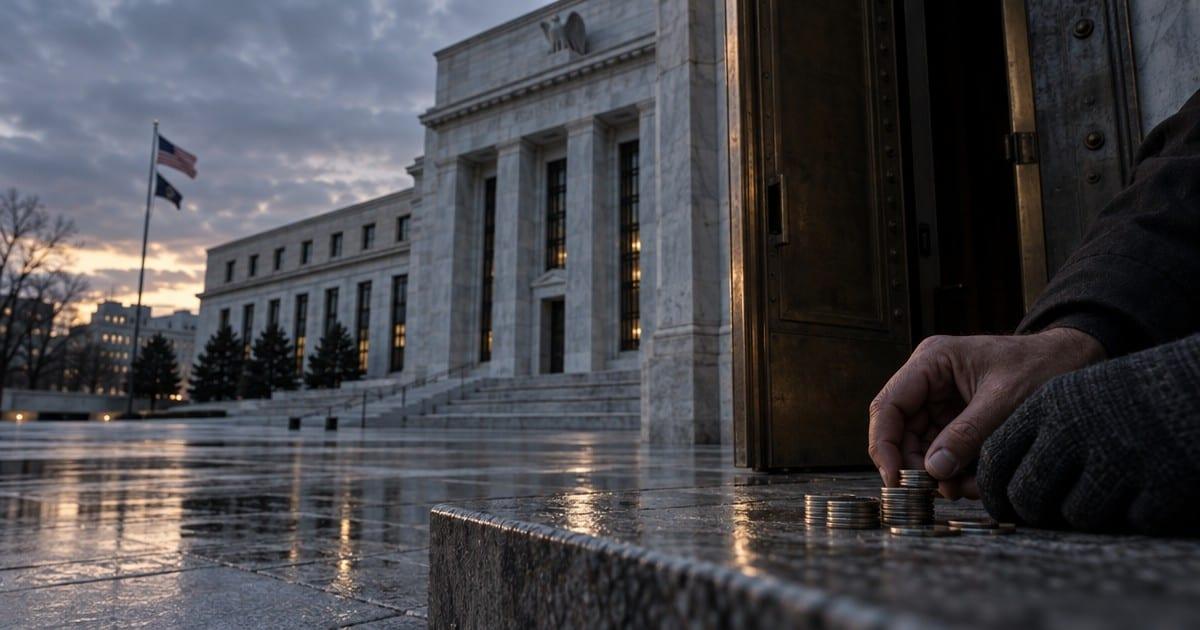
The Federal Reserve Board on Tuesday announced the prices it will charge banks and credit unions for payment services beginning January 1, 2027, and outlined changes to streamline and adjust its check services. The pricing schedule covers the plumbing of the American financial system — the wires, automated clearing house transfers, and check-clearing operations that move money between institutions.
The Board did not disclose specific fee increases in its announcement, and the full schedule of new prices was not immediately published. What is known is that the Fed sets these fees unilaterally, and the banks that use them do not absorb the cost. They pass it on.
The timing is notable. The new pricing takes effect the same month that economists expect the Fed to still be raising interest rates. Futures pricing put the probability of a rate hike at the December 9 meeting at 99%, according to Reuters. A 25 basis point increase would bring the policy rate to the 4.00–4.25% range. BNP Paribas Chief US Economist James Egelhof forecasts additional hikes in January and March, which would push rates to 4.50–4.75% by spring, according to Reuters.
The Fed has kept rates steady at 3.75–4.00% since its October meeting. Since then, headline PCE inflation rose from 3.7% to 3.8%, and core PCE climbed from 3.1% to 3.3%. Third-quarter annualized growth was revised upward from 3.4% to 4.3%. Capital Economics North America economist Bradley Saunders wrote in a November 25 note that the December hike is the most likely next step and that another may be needed in January, Reuters reported.
So while the Fed is making borrowing more expensive for mortgages, car loans, and credit cards, it is also adjusting the fees it charges the institutions that hold your checking account. The check-services changes are part of the same announcement. The Fed described them as streamlining and adjusting its check offerings — a recognition that check volume has collapsed over the past two decades as Americans moved to cards and digital payments. Consolidating that operation may reduce overhead inside the Fed system, but the pricing announcement does not include a commitment to pass those savings to the public.
The Fed is not subject to the congressional appropriations process. It funds itself through the interest on its securities holdings and through the fees it charges banks for services. That structure gives the Board wide latitude to set prices without a vote in Congress. Lawmakers who have called for auditing the Fed or moving its functions to the Treasury have pointed to exactly this kind of announcement: a routine pricing notice, buried in the regulatory calendar, that changes what financial institutions pay and, eventually, what their customers pay.
For community banks and credit unions, the new schedule matters most. Large institutions can absorb fee changes or negotiate alternative arrangements. Smaller institutions rely on the Fed's payment rails and have fewer options. When their costs rise, the effect shows up in monthly account fees, minimum balance requirements, and per-transaction charges. The Board has not said whether the 2027 schedule increases, decreases, or holds flat the fees for ACH, Fedwire, or check clearing. Those details will be published in the full fee schedule.
What is clear is the direction of travel. The Fed is tightening monetary policy, reworking its check operations, and resetting its payment prices — all on the same calendar. The Fed will release updated economic projections alongside its rate decision on December 9.
Our Take
Here is what the Board's announcement really is: a reminder that the Federal Reserve is not a neutral referee. It sets the price of money, and it sets the price of moving money. When it raises rates, it says it is fighting inflation. When it raises payment fees, it says nothing at all — it just publishes a schedule and moves on.
The people who feel this first are not Wall Street traders. They are the folks at the local credit union in Ohio, the community bank in rural Texas, the small business owner who still deposits paper checks. Those institutions will get a new price list on January 1, and they will do what they always do: adjust their own fees to survive. The customer at the end of the line pays either way.
If the Fed can streamline its check services — a sensible move in an era when almost nobody writes checks — then the savings from that consolidation should be visible in the new pricing. The Board should show its work. Publish the full schedule, line by line, and explain what each fee pays for. The same institution that sets the interest rate on your mortgage should not be allowed to quietly reset the cost of your checking account in the same month without a public accounting.
Congress created the Fed. Congress can demand transparency from it. Ask your representative where they stand on a full audit of the Federal Reserve's operations and pricing. The answer will tell you whether they work for you or for the institution that sets the price of your money.
