
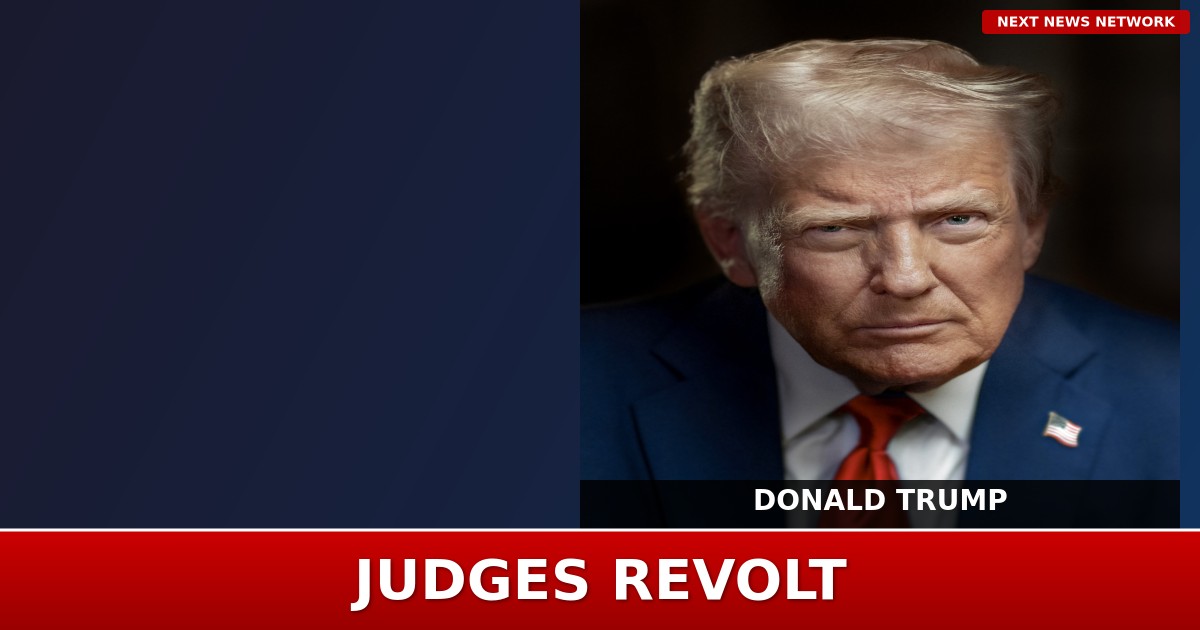
The Trump administration is facing mounting criticism for what conservative legal scholars describe as a dangerous surrender of executive authority to an activist federal judiciary that continues to overstep its constitutional bounds.
Despite President Trump's electoral mandate to faithfully execute the laws of the United States, his administration has repeatedly deferred to federal court rulings on matters clearly within presidential constitutional and statutory powers, effectively allowing unelected judges to dictate national policy.
Constitutional Crisis in the Making
This judicial overreach represents one of the most consequential yet underreported developments of 2025, as federal courts increasingly behave as if they hold final authority over executive branch decisions ranging from immigration enforcement to national security matters.
The pattern has drawn sharp reactions across social media, with some critics arguing the administration has fundamentally altered the balance of government power. Dr. Bruce Collins noted on X that "Trump has prevailed upon congressional Republicans to surrender their core constitutional responsibilities, has eviscerated the modern administrative state, and upended the relationship between the federal government and major civil society actors."
"Judicial supremacy thrives on abdication," warned legal analysts, pointing to the administration's pattern of backing down from legitimate executive actions when faced with activist court challenges.
The surrender of executive authority comes at a critical time when America faces complex domestic and international challenges requiring decisive presidential leadership. Critics argue that by allowing courts to dictate policy, the Trump administration is effectively neutering the presidency and undermining the separation of powers doctrine.
Conservative legal experts warn this precedent could permanently damage executive authority, regardless of which party holds the White House. They argue President Trump must reassert constitutional executive powers before judicial activism becomes permanently entrenched in American governance.
The administration has yet to respond to calls from conservative lawmakers and legal scholars demanding a more aggressive defense of presidential prerogatives against judicial overreach.
