
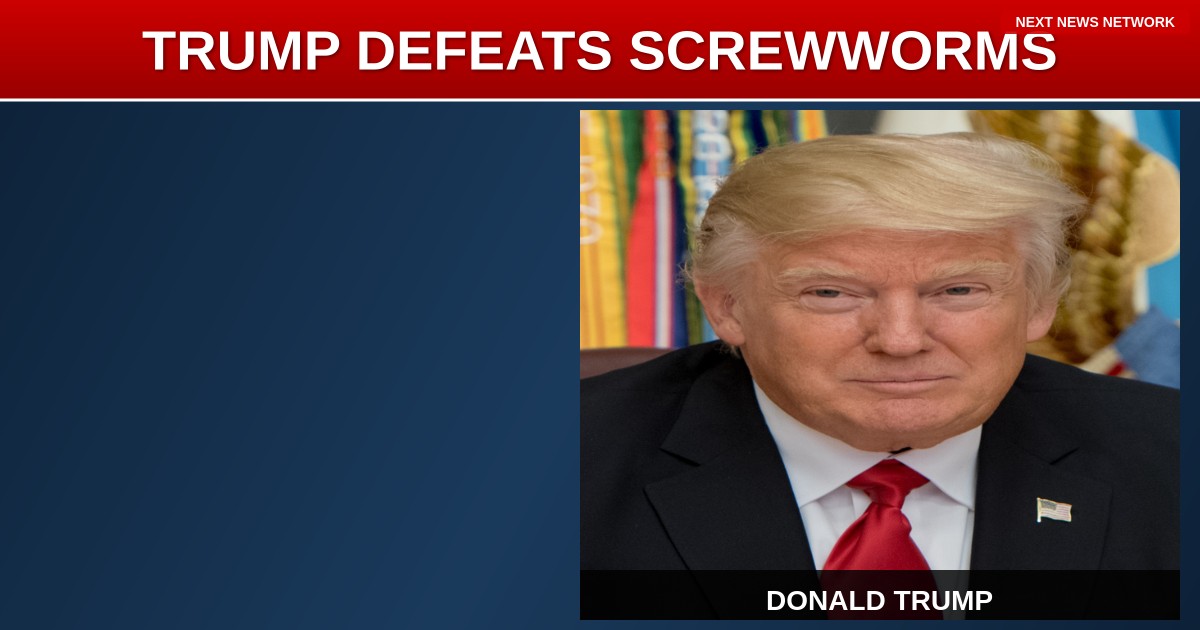
In a major win for the Trump administration's America First agenda, the battle against the devastating New World Screwworm has advanced significantly, paving the way for the United States to resume cattle imports from Mexico. This bold move is set to commence with the reopening of the Douglas, Arizona port of entry on August 24, 2026, followed by other strategic ports in New Mexico.
The Obama-Biden era of regulatory hesitance has been replaced by decisive action from Trump's team. A staggering $25 million has been allocated to establish a sterile fly dispersal facility in Douglas, ensuring that local industries can trade without fear of the screwworm threat. This initiative was highlighted by @PortDouglasAZ, showcasing a collaborative government effort with USDA Secretary Rollins and Representatives Ciscomani, Biggs, and Crane all on board.
"USDA Secretary Rollins visited Douglas with Reps. Ciscomani, Biggs, and Crane to announce a $25M sterile fly dispersal facility and confirm cattle crossings resume August 24. A major win for Douglas & Arizona’s livestock industry." - @PortDouglasAZ
For over a year, cattle trade between the U.S. and Mexico was stifled, impacting both American ranchers and consumers due to biosafety concerns brought on by the screwworm. But now, with a phased reopening strategy outlined by the USDA, there is hope on the horizon. As expressed by @PopovMx, both nations are balancing industry supply needs with rigorous biosafety protocols to prevent future infestations.
"Mexico cattle trade to resume after yearlong closure. USDA announces phased reopening as industry balances supply needs with New World screwworm concerns." - @PopovMx
This timely reopening aligns with broader efforts within the Trump administration focused on restoring economic opportunity and security for everyday Americans. With strong leadership and unwavering commitment to America's agricultural industries, this administration continues to deliver results that resonate with everyday ranchers and food consumers alike.
The implications of this decision are vast, touching national food security, job creation, and economic stability. As the screws tighten on regulatory burdens, Americans can now look forward to increased agricultural trade and strengthened ties with neighboring Mexico.
As the mainstream media sidesteps these significant achievements, it's clear that the Trump administration is committed to securing America's food system against external threats while ensuring resiliency through policy action. What's next for America's agriculture and trade policies under Trump? What other battles await victories? Share your thoughts in the comments below!
