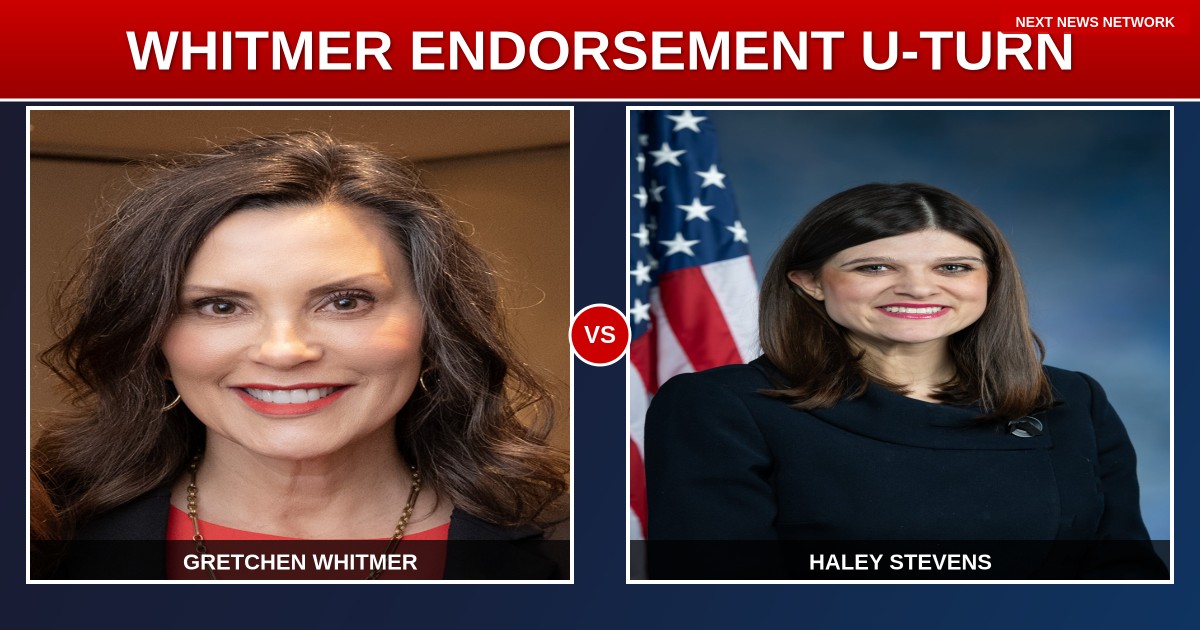
Michigan's political scene took an unexpected turn as Gov. Gretchen Whitmer extended her congratulations to Abdul El-Sayed following his victory in the Democratic U.S. Senate primary, despite previously endorsing his opponent, U.S. Rep. Haley Stevens. Whitmer's public show of support has left many questioning the consistency of her political allegiances.
Coming off the heels of El-Sayed's triumph, social media buzzed with the news of Whitmer's change of heart. Twitter user @23dwayne pointed out the governor's endorsement switch, capturing the surprise felt by political observers across the board.
A Parade of Endorsements
The political establishment quickly rallied around El-Sayed after his win. High-profile Democrats like Sen. Kamala Harris and Senate Majority Leader Chuck Schumer joined the chorus of endorsements, solidifying his status as the party's nominee for the U.S. Senate seat. Even Rep. Haley Stevens, who El-Sayed defeated, appeared to bury the hatchet, joining other Democratic figures in supporting him, as highlighted by @princezar and @SenateOdds.
"Today’s Endorsements for Abdul El-Sayed 🔵 Kamala Harris 🔵 Gov. Gretchen Whitmer 🔵 Sen. Chuck Schumer 🔵 Sen. Mark Kelly 🔵 Rep. Haley Stevens 🔵 Mallory McMorrow" - @princezar
In the wake of this political about-face, Michigan voters are left to wonder what this says about the Democratic establishment's priorities. Is this a strategic move to unify the party, or a sign of waning ideological conviction? With such flip-flopping, can everyday Americans trust politicians claiming to uphold foundational values?
Implications for the American Electorate
While some Democrats celebrate this newfound unity, conservatives eye the development with skepticism. The shifting endorsements reflect a broader pattern of political expediency that plagues today's left-wing establishment, raising doubts about their ability to represent true American values. This latest twist serves as a reminder for patriotic Americans to critically evaluate the motivations behind such political maneuvers.
With November's elections looming, Americans must ask themselves: will they accept political inconsistency, or stand firm in their convictions? The choice may very well define the future of governance in the United States.