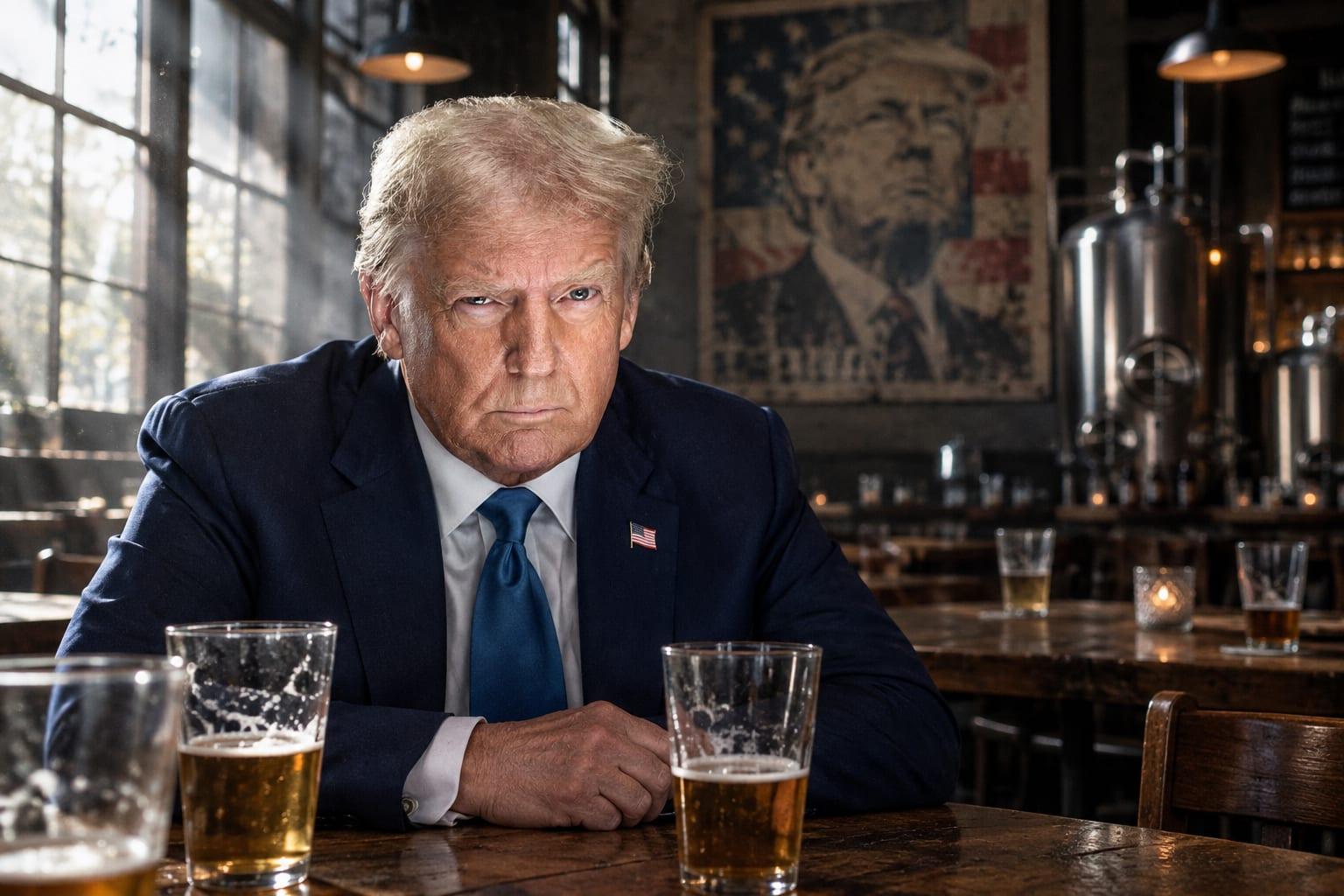
Minocqua Brewing Co., the Wisconsin brewery known for promising free beer on the day President Trump dies, is bracing to lose its Madison taproom after the state moved to revoke its alcohol permits, according to the Washington Times.
The New York Post reported Thursday night that the brewery that offered free beer when Trump dies could shut its doors after losing its alcohol license. The Washington Times, in an earlier report Thursday evening, said the Wisconsin brewery is preparing for the loss of its Madison taproom after state officials acted against its permits.
The Department of Revenue said the action stems from allegations that beer was transported from Illinois, according to an account circulating among Wisconsin outlets. The permits in question are tied to the company's Madison and Minocqua operations, according to that coverage, and the Madison taproom is expected to close by year's end as a result.
The brewery gained notoriety for its promise of free beer on the day the president dies, a promotion that became a fixture of its public identity and the reason the permit fight has drawn attention beyond Wisconsin.
The story spread quickly across conservative and regional outlets Thursday and into early Friday. The Washington Times carried it under the headline that a Wisconsin brewery known for dangling the promise of free beer on the day President Trump dies is bracing to lose its Madison taproom after the state moved to revoke its alcohol permits. The New York Post's account focused on the possibility that the brewery could shut its doors after losing its alcohol license.
Other coverage framed the sequence the same way: the permits were revoked, and closure of the Madison taproom is the likely consequence. One account described Minocqua Brewing Co. as facing possible closure after the state revoked its alcohol permits, again noting the tax violation allegations. Another headlined the development as the Wisconsin brewery that taunted Trump's death facing permit closure. A separate report said Wisconsin revoked two Minocqua Brewing permits, threatening the Madison taproom's closure, and specified that the Department of Revenue tied the action to allegations that beer was transported from Illinois.
The posts from @nypost and @WashTimes are social media posts, not reporting, and they summarize the underlying events in the way their outlets framed them. Neither post offers new detail beyond the headline claims.
What is known is the shape of the state action as described in the coverage: two permits, two locations, a tax-related allegation involving beer moved across state lines, and a taproom expected to close by the end of the year. What is not known from the material available is the current status of any appeal, whether the brewery has responded formally, or the precise dollar figure or period involved in the alleged violations.
Next News Network could not independently verify the alleged violations or the reported permit revocations.
Our Take
Let's be clear about what is happening here. A business that built part of its public brand on promising free beer when the president dies is now losing the state permissions it needs to operate. The two facts belong in the same story, and the brewery's defenders will insist they are unrelated. The state says the permits were pulled over allegations that beer was moved in from Illinois, which is a regulatory matter, not a political one. That is how the system is supposed to work, and if the allegations hold up, the revocation is a straightforward enforcement action.
But conservatives should also be honest about the pattern. A brewery that turned a presidential death into a marketing gimmick is not a victim of anything when regulators find permit problems, and it is not owed sympathy just because the audience it cultivated likes the joke. The left spent a decade telling us that businesses which offend public sensibilities should pay a price. Here is a business that chose to make its name off a morbid punchline, and now the state of Wisconsin has found reason to question its permits. That is not persecution. That is consequence.
The proper conservative response is not glee at a small business losing its taproom. It is a reminder that the rules apply to everyone, that alcohol permits come with conditions, and that taunting the death of a president is not protected by a liquor license. If the violations are real, the closure is on the brewery. If they are not, the brewery can make its case through the process. Either way, the free beer promise was never going to save it.