
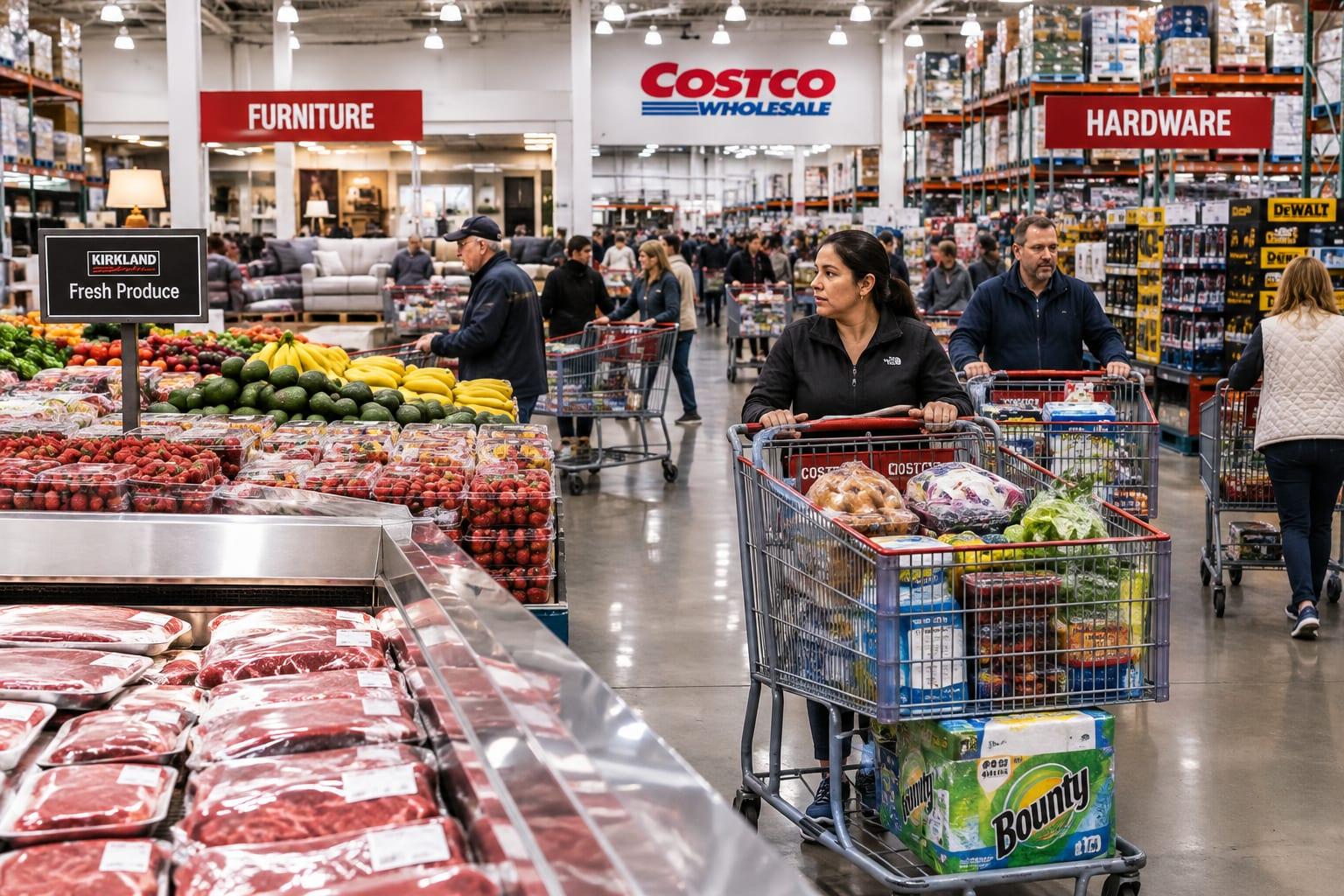
Costco Wholesale has handed back $184 million in tariff refunds and is sending most of it straight to the checkout lane. According to Fox Business, the warehouse giant reinvested the majority of that money into lower prices on produce, meat, beverages, home furnishings and hardware — turning a government refund into a direct break for shoppers squeezed by years of inflation.
The refunds stemmed from tariff payments that were later returned to the company. Rather than booking the money as pure profit or spreading it around executive bonuses, Costco pushed it back into the cost of goods, a move that shows up on price tags across the store, not in a press release about corporate generosity.
The categories matter. Produce, meat and beverages are the staples working families buy every week. Home furnishings and hardware are the bigger-ticket items that got crushed by supply chain chaos and inflated import costs. Every dollar in those aisles is a dollar back in the household budget.
Costco has long positioned itself on volume and thin margins, so steering a refund into prices is on brand for a company whose entire pitch is more for less. Still, it is a notable choice for a major retailer in an economy where shoppers have been told for years that high costs are the new normal.
The Trump-Vance administration has made tariffs and "America First" trade policy a centerpiece of its economic agenda, arguing that hard-nosed trade deals and import pressure are needed to force companies to build and hire at home. Costco's refund-turned-price-cut shows how one company chose to handle the cash flow when tariff dollars came back around.
It also puts a spotlight on the practical side of trade fights: money actually changes hands, gets accounted for, and eventually lands somewhere. In this case, Costco says most of it landed on the shelf next to the ground beef, the tomatoes and the paper towels.
The company did not say exactly how much of the $184 million went to each category, and it is not yet known whether the lower prices will be permanent or cycle out as costs shift. What is clear is that the refunds were booked and then redirected, not pocketed.
For shoppers, the move is a rare piece of good news at the register. For the broader retail industry, it is a quiet challenge: if Costco can pass tariff refunds back to customers, other chains that received similar money will face questions about where theirs went.
Tariffs remain one of the most debated tools in Washington. Supporters say they protect American industry and give the country leverage. Critics say consumers pay the price. Costco's move does not settle that fight, but it does show what happens when the money comes back — at least at one company that decided to share the change.
Our Take
This is what it should look like.
Costco took $184 million in tariff refunds and pushed most of it back into prices on meat, produce and everyday goods. No PR tour. No self-congratulatory Super Bowl ad. Just lower numbers on the shelf where families actually feel them.
Compare that to the corporate class that spent the last four years blaming "supply chains" and "inflation" while racking up record profits and buying back their own stock. The same executives who cried about tariffs are the ones most likely to pocket a refund check and say nothing. Costco didn't. That matters.
Patriots know that tariffs are not a punishment on Americans — they are leverage, and when that leverage produces refunds, the money should go right back to the people who paid it in the first place. Costco just proved it can be done. The question now is simple: if Costco can hand it back, why won't every other big-box retailer that got the same kind of money step up and do the same? Americans should ask. And they should remember who answered.
