
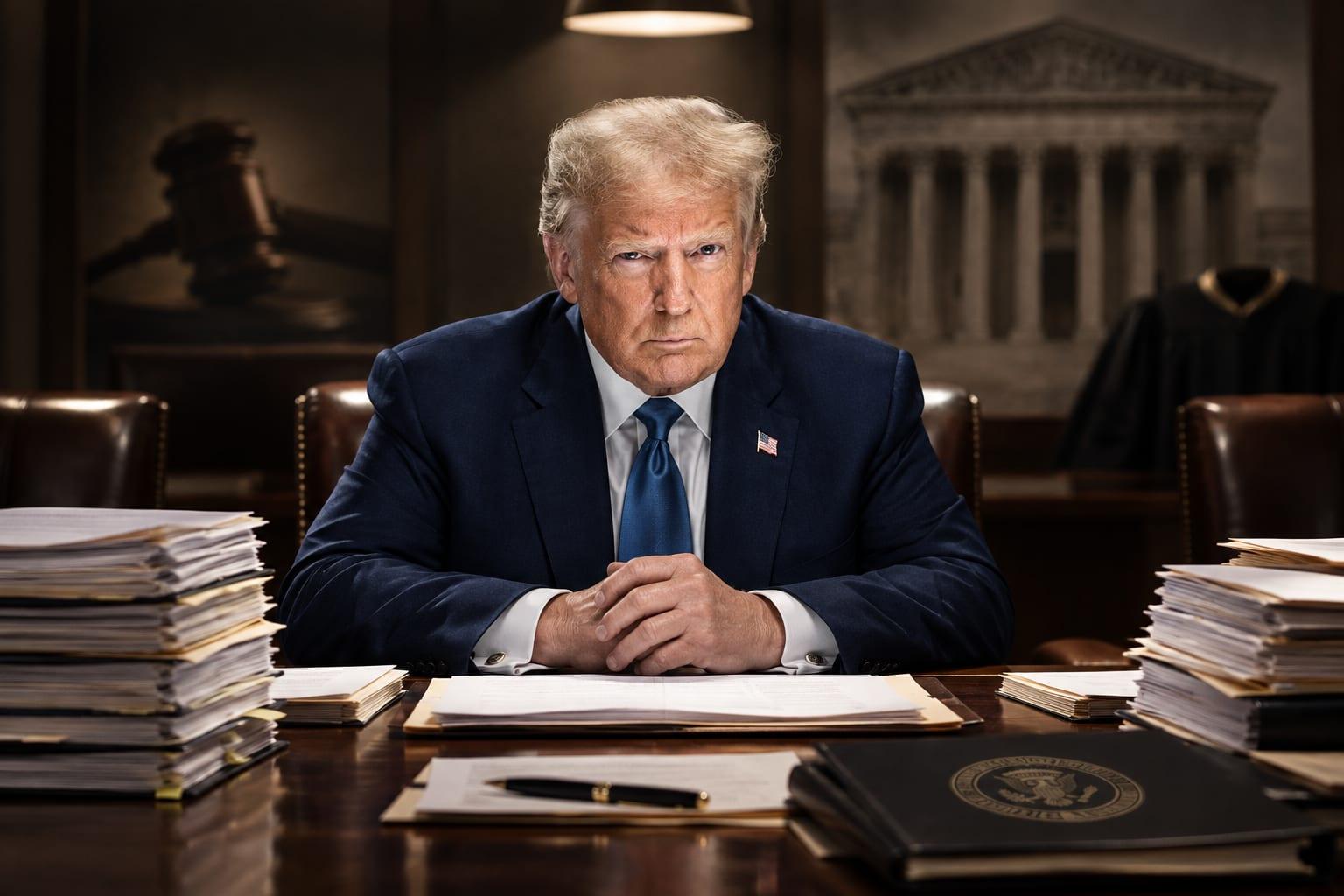
The Department of Justice asked the U.S. Supreme Court on Thursday to shut down yet another lower-court blockade of the Trump administration's deportation policy, filing an emergency application for stay against an order issued by Massachusetts-based District Judge Brian Murphy.
According to The Federalist, which first reported the filing, the administration is asking the justices to pause Murphy's order while the case works its way through the appellate process. The Biden appointee's ruling marks the latest in a string of injunctions issued by federal judges that have stalled removal operations across the country.
The emergency filing is the second such request the DOJ has made to the high court in recent months, as the administration fights what officials describe as a coordinated effort by the federal judiciary to obstruct enforcement of immigration law.
A Pattern of Blockades
Murphy's order is far from isolated. According to reporting from USA TODAY and Newsweek, U.S. District Judge Stephanie Gallagher held the Department of Homeland Security in contempt on Friday for deporting a Salvadoran asylum seeker identified in court filings as E.L.A., despite three prior court orders — dated Nov. 25, 2024, April 23, 2025, and July 29, 2026 — that protected him under a class-action settlement governing certain unaccompanied minors.
Gallagher, a Trump appointee, ordered the administration to return the 19-year-old to the United States, restore his property, and refrain from executing a final removal order until U.S. Citizenship and Immigration Services issues a determination on a properly filed asylum application or the settlement expires.
A DHS spokesperson told Newsweek that E.L.A. arrived in the U.S. illegally in 2023, was deported on March 13, 2026, returned to the United States in early August, and then was removed again. The agency said he requested voluntary departure at an ICE field office.
The Gallagher ruling follows an August contempt finding in the same court after 50 unaccompanied minors were deported. In that order, Gallagher rejected the government's argument that bringing some of the minors back was sufficient remedy. "This court agrees with class counsel that 'a post-violation demonstration of good faith does not undo the violation,'" she wrote.
Judges vs. the Executive
The volume of conflicting orders has become a central point of friction between the administration and the federal bench. A Minnesota judge found in February 2026 that ICE had violated 96 court orders across 74 cases and summoned the agency's acting director to explain. That same month, the administration acknowledged violating New Jersey federal court orders more than fifty times in ten weeks, according to reporting compiled by Not Better Off.
In one episode detailed in that report, an Egyptian mother and her five children were released from detention by court order, re-arrested hours later, placed on a deportation flight, and released again only after a second judge ordered the plane turned around.
Meanwhile, the Supreme Court this week set aside a block that had prevented states from using the SAVE database — the Systematic Alien Verification for Entitlements system built in 1986 to let states confirm whether benefits applicants are legally present — to verify voter eligibility ahead of the midterm elections, as reported by The Last Refuge and The Federalist.
The Supreme Court has not yet indicated whether it will act on the DOJ's latest emergency application. It is not yet known when the justices will rule or how Murphy's order will be treated if the court declines to intervene.
Our Take
Here is the game, plain as day. A president wins an election on a promise to secure the border and remove people who are here illegally. He starts doing it. A single district judge in Massachusetts — an appointee of the previous administration — issues an order stopping him. The government appeals. Another judge issues another order. And another. And another, until the entire enforcement apparatus of the executive branch is tied up in knots by a handful of unelected jurists who were never on any ballot in any state.
This is not judicial review. This is judicial sabotage, and it is being run on a schedule. The pattern is the same everywhere: an injunction issued in a friendly venue, emergency motions filed, months burned while the clock runs. Every week of delay is another week the removal machinery sits idle.
Patriots, ask yourself a simple question: if a single judge in Boston can halt the immigration policy that tens of millions of Americans voted for, what exactly did we vote for? The Constitution gives the executive branch the power to enforce the law. It does not give Judge Murphy — or Judge Gallagher, or any of the others — the power to run the Department of Homeland Security from the bench.
The Supreme Court has a chance to end this. It should take it, and it should take it now — before the next injunction, and the one after that, and the one after that.
