
The yield on Japan's 20-year government bond climbed half a basis point to 3.915%, according to the market-monitoring account @FirstSquawk, extending a run-up in Japanese sovereign debt that has pushed borrowing costs to levels not seen in decades and that market watchers are tying to inflation concerns and expectations of further tightening by the Bank of Japan.
The move in the long end came alongside a broader repricing across the curve. The 10-year yield rose two basis points to 3.095%, a level described as near its highest close since August 1996, while the 2-year yield reached 1.950%, matching a peak last seen thirty-one years ago. The account @FirstSquawk carried the 20-year figure in a short market alert, and the same yield levels were circulated across trading desks and financial wires through the overnight session.
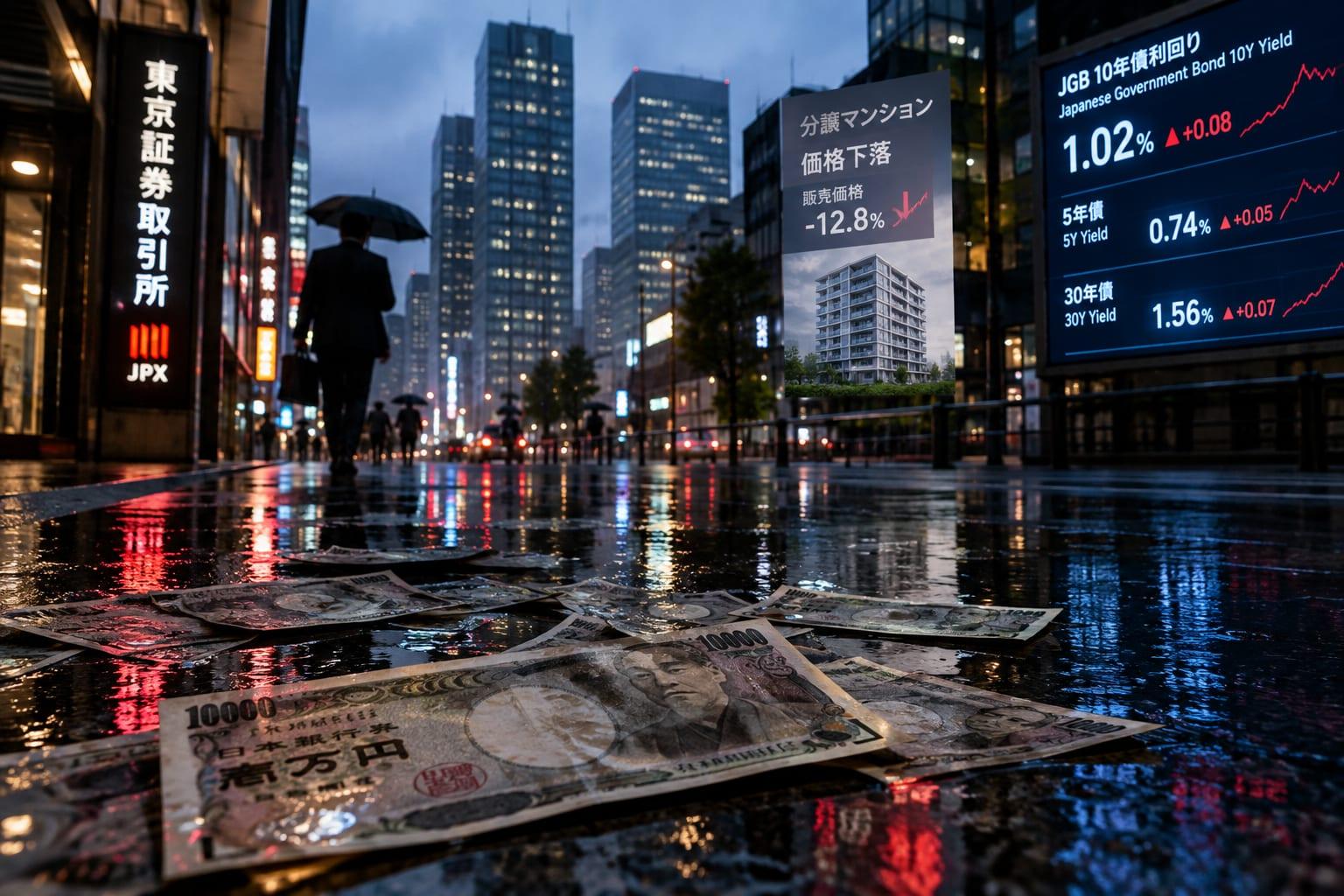
The bond selling is not happening in isolation from the rest of Japan's economy. Central Tokyo condominium asking prices fell for a fourth consecutive month through August, a decline that listing data attributes in part to borrowing costs that have climbed across the region. That is the sequence traders are watching: higher yields on government debt feed into mortgage and corporate lending rates, and those rates eventually show up in what buyers are willing to pay for a home in the capital.
The Bank of Japan has been the central actor in this story for years. Its long-standing policy of holding down the yield on government debt, including through purchases of large quantities of bonds, kept Japanese borrowing costs near or below zero for much of the past decade. That policy has been unwound in stages, and each step has been met with pressure on the long end of the curve. The yields now being printed on the 10-year and 2-year notes represent a repricing of Japanese debt that traders describe as the most significant in a generation.
Inflation is the other driver market participants keep citing. Price growth in Japan, which spent years skirting deflation, has run above the central bank's target, and that has changed the calculus for policymakers who previously had little reason to move rates higher. Expectations that the Bank of Japan will tighten further have become a fixed feature of trading commentary, and the accounts carrying the yield figures describe those expectations as a direct cause of the selling.
The reaction has spread well past the bond market. Japanese government bonds fell as the inflation and tightening narrative took hold, and the yield move was picked up by financial news accounts that track sovereign debt across Asia and Europe. The 2-year yield matching a thirty-one-year peak is the kind of datapoint that gets passed around quickly because it signals that the front end of the curve, not just the long end, is moving. When short-dated yields rise, it typically means traders expect near-term policy action rather than a distant shift.
For the Tokyo property market, the timing matters. Asking prices are a leading indicator of where transaction prices go, and four straight months of declines through August suggests sellers are adjusting to a financing environment that looks different from the one buyers had grown used to. The condominium market in central Tokyo has been a focal point for both domestic and foreign capital, and a sustained rise in borrowing costs changes the math on leveraged purchases.
The 20-year yield at 3.915% is the number @FirstSquawk put in front of its readers, and it is the figure that framed the overnight conversation. A long-bond yield at that level is notable in a country where the same instrument traded at a fraction of that rate within recent memory. The half-basis-point move itself is small in isolation, but it comes on top of a much larger move already in place, which is why the alert traveled as far as it did.
Traders are also watching the gap between Japanese and overseas yields. When Japanese government debt pays more, the incentive for Japanese institutions to move money abroad weakens, and that can ripple into currency markets and foreign bond markets. None of those knock-on effects are confirmed in the current move, but market commentary is treating the Japanese yield rise as a development with international consequences rather than a domestic curiosity.
What happens next depends heavily on the Bank of Japan. If policymakers signal another rate increase, the front end of the curve would be expected to bear the brunt, and the 2-year yield matching a thirty-one-year peak suggests traders are already positioning for that possibility. If the central bank holds steady, the long end could settle, and the property market would get time to adjust to the rates already in place. It is not yet known which path the bank will take at its next meeting.
In the meantime, the numbers keep moving. The 10-year at 3.095%, the 2-year at 1.950%, and the 20-year at 3.915% are the levels that define the current stretch. Each figure has been circulated by accounts and wires tracking Japanese debt, and each represents a claim about where the market stood at a given moment rather than a policy decision by any government or central bank.
Next News Network could not independently verify the yield figures or the property price data described in this report.
Our Take
The story here is not one basis point on the long bond. It is that Japan, after decades of being the world's great experiment in holding interest rates down, is now running that experiment in reverse, and the results are showing up in the price of a Tokyo apartment. Conservatives have argued for years that suppressing the cost of credit eventually distorts the assets priced with it, and the Japanese bond curve is the clearest live demonstration of that argument. A 10-year yield near its highest close since 1996 does not happen because traders got bored; it happens because the market has concluded that the cheap-money era is ending and is repricing accordingly. The Tokyo condominium market falling for four months is the downstream consequence, and it is the part that ordinary households feel. If the Bank of Japan blinks and re-anchors yields, it confirms that the policy was never sustainable. If it follows through, Japanese borrowers pay the bill for years of artificial rates. Either way, American policymakers watching from Washington should take note: the bill for suppressed rates always arrives, and it arrives with interest.
