
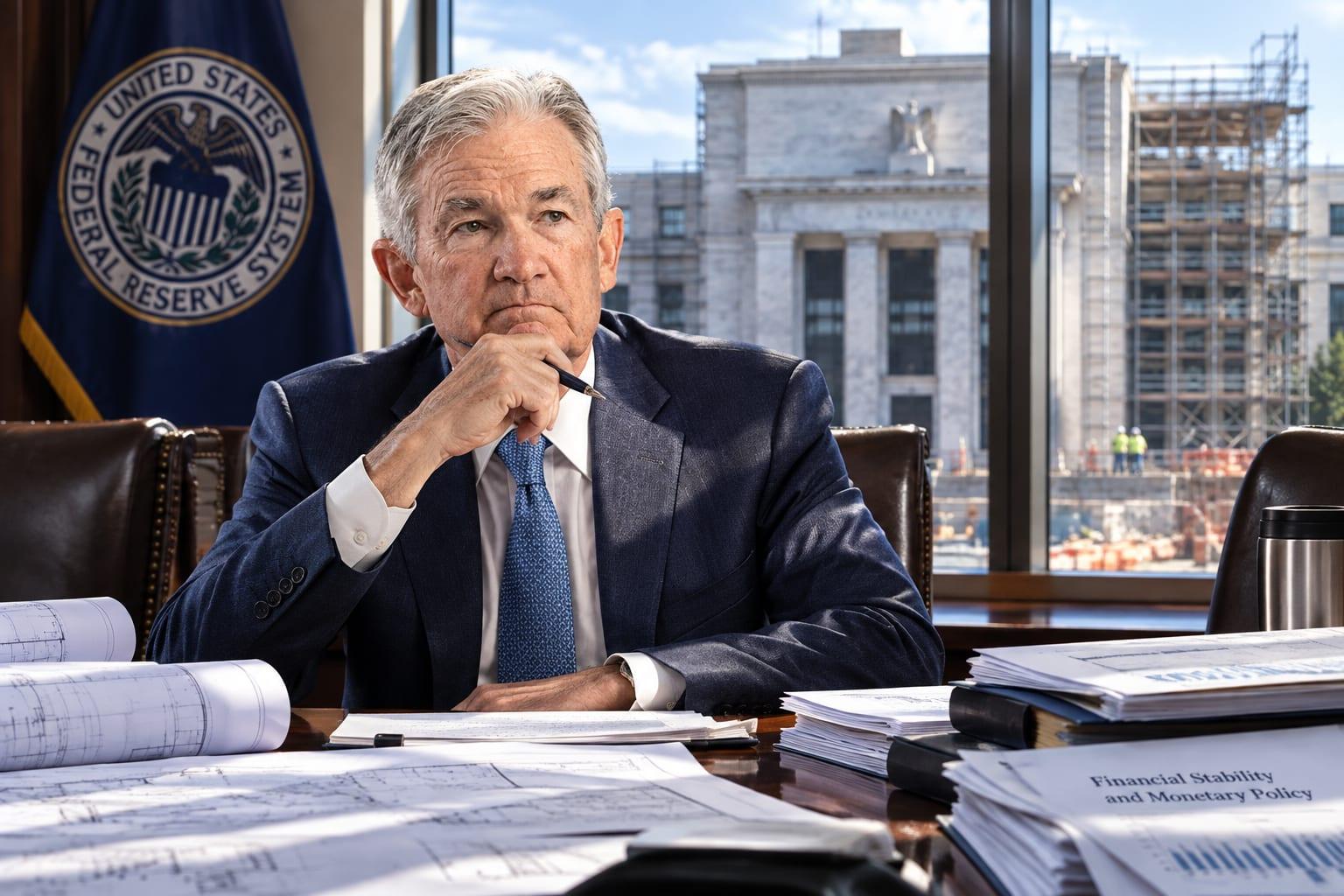
The Federal Reserve Board on Wednesday finalized two rules aimed at increasing the transparency and public accountability of its annual bank stress tests while reducing volatility in the capital requirements that follow from them, according to a Federal Reserve press release. The changes, first proposed in 2025, represent the most significant procedural overhaul of the Fed's stress testing framework in years.
"The stress test is an essential component of our regulatory capital framework," said Vice Chair for Supervision Michelle W. Bowman in the release. "Today's changes preserve its resilience by ensuring that it is transparent, granular, and risk-sensitive. The public will now have greater assurance that the risks banks take will be reflected appropriately in their stress test losses and their capital requirements."
What the Final Rules Do
The first final rule requires the Fed to invite public input annually on the stress test scenarios and any material model changes. It also updates the framework guiding the design of hypothetical scenarios and adopts the models that will be used for the 2027 stress test. The rule makes several adjustments to the stress test calendar and updates the global market shock component applied to banks with large trading books. Under the changes, those banks will be tested against two global market shock components each year, with the Fed using the shock producing the largest losses for each firm to calculate results.
The second final rule requires additional disclosures from the Board, though the full text of that requirement was not detailed in the initial release.
The Fed conducts stress tests to ensure large banks are sufficiently capitalized to lend to households and businesses even during a severe recession. In December 2024, the Board announced it would modify the test to improve its resilience.
Powell Cleared — But Blasted by Watchdog
The stress test announcement came the same week the Fed's independent inspector general released findings from a more than yearlong review of the central bank's multibillion-dollar headquarters renovation, according to reporting by NBC News. The watchdog found no reasonable grounds to believe federal law was violated in the project's management, but sharply criticized then-Chair Jerome Powell and the Fed board for allowing costs to balloon past $2 billion without establishing a guaranteed maximum price or sufficient internal governance.
President Donald Trump, who has repeatedly clashed with Powell over interest rate policy, responded on Truth Social, writing: "This is Jerome Powell's fault, and he should be forced to resign, IMMEDIATELY! If he doesn't resign, he should be sued, at the highest level, by the United States Government, for either corruption or incompetence, both of which are completely unacceptable."
Powell, whom Trump nominated for the top Fed job during his first term, remained on the Fed's board after Kevin Warsh took over as chair in May, per NBC News. In a letter to Inspector General Michael Horowitz, Warsh wrote that he agreed on the need to complete the work "in the most efficient and transparent way possible" and said the General Services Administration would serve as project executive.
The renovation scrutiny has become a flashpoint for the Trump administration, which has pressured the Fed to cut interest rates and pushed for greater accountability at federal agencies. The stress test changes, meanwhile, respond to long-standing complaints from banks and conservatives that the tests were opaque and produced unpredictable capital requirements that constrained lending.
"The public will now have greater assurance that the risks banks take will be reflected appropriately," Bowman said. Whether that assurance translates into more lending and less regulatory guesswork will become clearer when the 2027 test cycle begins.
Our Take
Let's be clear about what happened here: The Fed just admitted, in regulatory language, that its stress tests were neither transparent nor predictable — and that banks and the public deserved better. That's a win for anyone who believes capital rules shouldn't be conjured in a back room by unelected bureaucrats.
But don't pop the champagne yet. This is the same institution that spent over $2 billion on a headquarters renovation without a guaranteed maximum price, according to its own inspector general. The same institution that Jerome Powell ran while telling the rest of us to trust the experts.
Trump is right to demand accountability. The IG may have found no criminal violation, but "not illegal" is a far cry from "well-managed." Americans struggling with high prices and tight credit deserve a Federal Reserve that treats their money with the same scrutiny it applies to bank balance sheets.
Transparency in stress testing is a start. Now let's see some transparency on the marble, the water features, and the $2 billion tab.
