The Supreme Court agreed Thursday to hear a Kentucky Catholic church's fight to build a prayer grotto on its property, accepting a case that turns on what counts as a "substantial burden" on religious exercise under federal land-use law — and one of the attorneys arguing the case says the stakes reach far past a quiet corner of Park Hills, Kentucky.
Ryan Gardner, senior counsel at First Liberty Institute, which represents the Missionaries of St. John the Baptist, told Fox News Digital that the outcome could touch every local zoning code in the country.
"This is a massive case for religious liberty because it has the potential to impact every single zoning law in this country," Gardner told Fox News Digital.
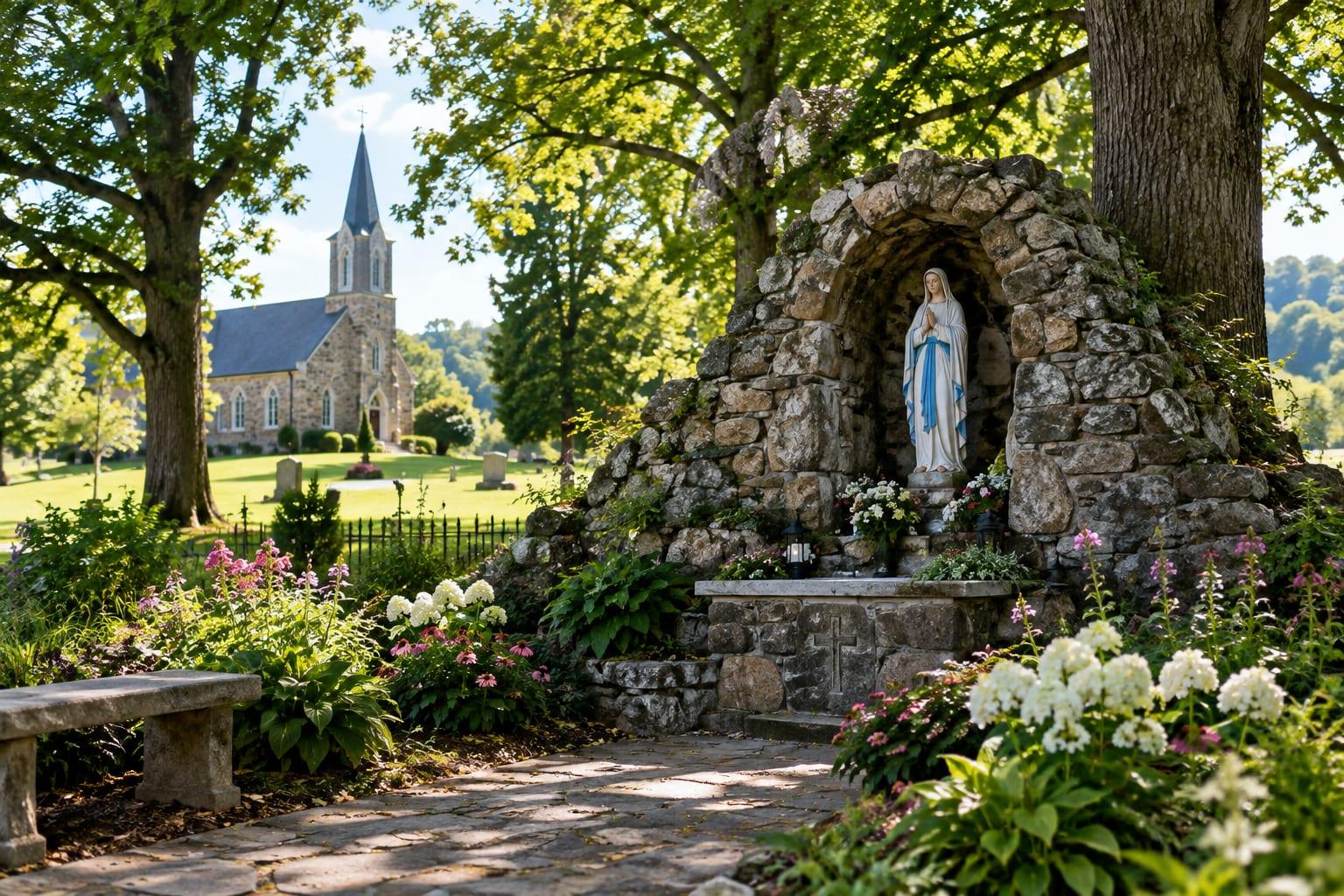
At the center of the dispute is a proposed 16-by-39-foot grotto that court records describe as including a shrine to the Virgin Mary, a plaza, a walking path and a retaining wall. Gardner compared its roughly 600-square-foot footprint to the size of a swimming pool. The church applied in March 2021 for a conditional-use permit and variance to build the grotto behind its building, in honor of the Virgin Mary's apparition to Saint Bernadette in Lourdes, France.
The church building itself has stood on the property for nearly a century — predating Park Hills' zoning ordinance, which was adopted in 1974.
A Fight With the Neighbors, Not the City
Unlike many religious land-use battles, this one did not begin as a fight with local government. The Park Hills Board of Adjustment approved the church's permit in April 2021. Two neighboring property owners, Joel and Elizabeth Frederic, objected and challenged the board's decision in Kentucky state court.
A trial court ruled in the church's favor. The Kentucky Court of Appeals reversed, concluding the board exceeded its authority in approving the project and finding no violation of federal religious land-use law. The Kentucky Supreme Court affirmed that RLUIPA ruling in December 2025, prompting the church to seek review from the nation's highest court.
The property history is more complicated than the case's shorthand description suggests. According to Fox News Digital's reporting, the proposed grotto involved an adjacent parcel that was initially subject to a perpetual lease that would be transferred to the religious organization as a condition of the project's approval.
The federal law at issue, the Religious Land Use and Institutionalized Persons Act, sits at the intersection of two critical rights, Gardner said. RLUIPA bars state and local governments from imposing land-use regulations that place a substantial burden on religious exercise unless the government can show a compelling interest pursued by the least restrictive means.
How the Supreme Court defines "substantial burden" will determine whether churches, synagogues, mosques and other houses of worship can be regulated off their own property by local boards — or whether federal law gives them a meaningful shield.
The case arrives at a Supreme Court term already stacked with religious-liberty disputes. The National Catholic Register notes the court will open its new term on the first Monday of October with a docket that reads like a syllabus on religious freedom and parental rights. Among the cases: St. Mary Catholic Parish v. Roy, out of Colorado, asking whether a state can offer a "universal" preschool benefit to every family except those who choose a Catholic parish school, with argument set for Nov. 3. In Grand v. City of University Heights, an Orthodox Jew who invited a dozen friends to his Ohio home to form a minyan faced a cease-and-desist letter, police surveillance and city encouragement for neighbors to report on his guests.
The court has not yet scheduled argument in the Kentucky grotto case. SCOTUSblog also noted the justices agreed to hear arguments in an important immigration case alongside the religious zoning dispute.
Our Take
Read the facts of this one slowly, because they tell you everything about how the administrative state actually works.
A Catholic church that has stood on its land for nearly a century wants to build a 600-square-foot prayer shrine — the size of a backyard swimming pool. The local board said yes. A trial judge said yes. Then two neighbors who didn't like the project dragged the church through the Kentucky court system for five years, and a state appeals court decided the board never had the authority to approve it in the first place.
That is the game. It is never enough to win at the local level. The process itself becomes the punishment — years of legal fees, delays and uncertainty for a congregation that only wanted to honor the Virgin Mary on its own property. This is what the Left means when it talks about "democracy" in zoning: whoever has the money and the patience to litigate longest gets to decide what your church is allowed to build.
RLUIPA was written precisely for this. If the Supreme Court narrows what counts as a "substantial burden," every zoning board in America gets a green light to slow-walk, nickel-and-dime and effectively strangle religious construction. Pastors and parish councils will think twice before filing a permit application at all — and that chilling effect is the point.
Gardner is right that this reaches every single zoning law in the country. It is not just about a grotto in Kentucky. It is about whether the First Amendment means anything once you cross the property line.
Patriots, watch this docket. And watch your own town hall. The same playbook is running in your backyard right now.