Four teenagers and one adult have been arrested in the shooting death of a four-year-old North Carolina boy who was killed while sleeping in his own bed, according to police accounts circulated by local and national news outlets.
The child is identified in those accounts as Caleb Flax. The shooting happened at a home in northwest Charlotte, where investigators say multiple shooters opened fire on four separate houses in the middle of the night.
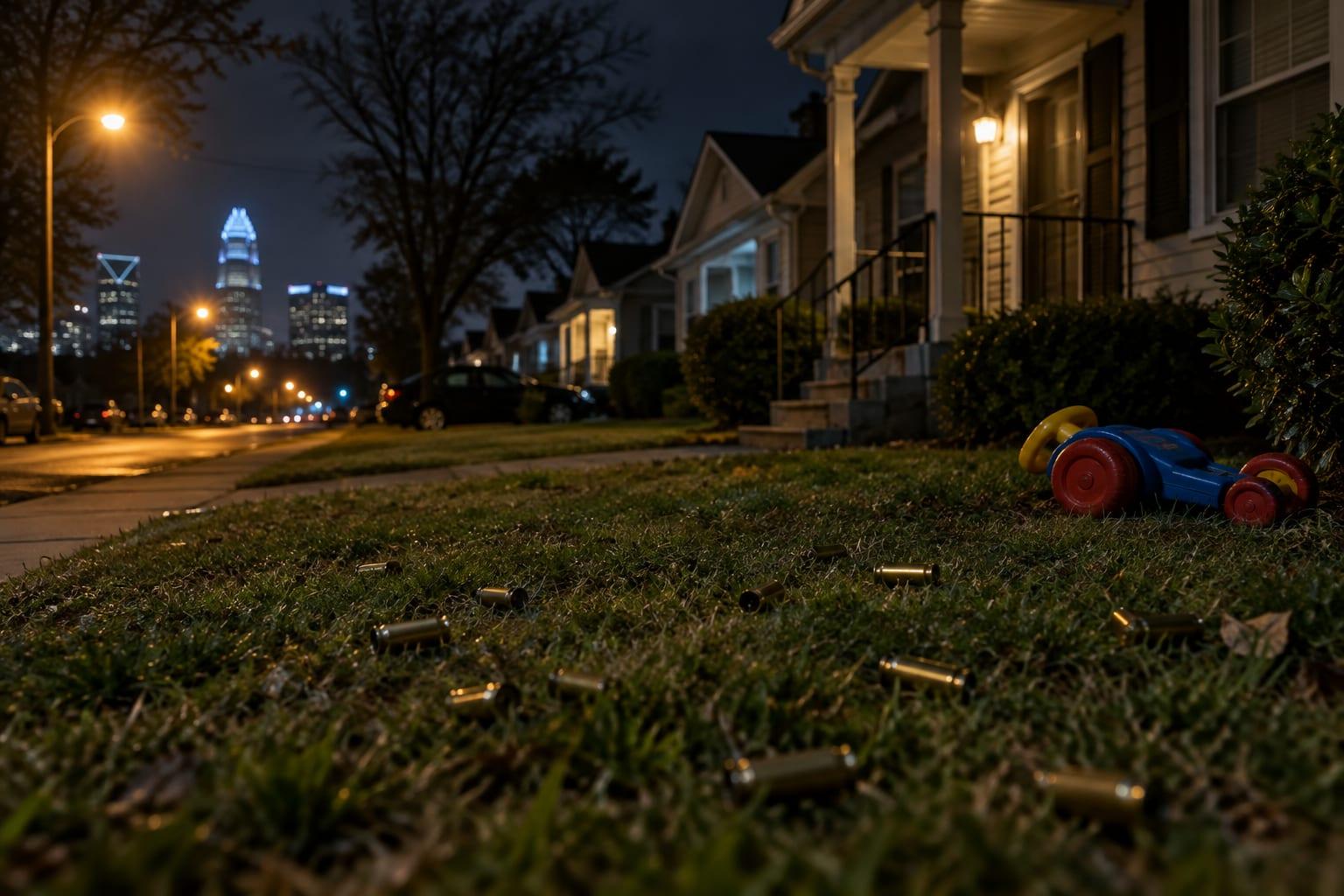
According to reporting attributed to police, seven people fired more than eighty bullets into the four homes. One of those rounds struck the four-year-old as he lay sleeping.
The case moved quickly through the Mecklenburg County court system in the days that followed. Four teens and one adult were taken into custody, according to WCCB Charlotte, which reported the arrests in connection with what it described as a drive-by shooting. WSOC TV reported that Channel 9 was present at the Mecklenburg County Courthouse when one of the suspects appeared before a judge.
That suspect was identified in the WSOC TV account as Ian Garland, seventeen, described as a junior at Mallard Creek High School.
The accounts of what took place have traveled widely. They have been carried by the New York Post, which reported the death and the arrest of four teens in a single line, and by a broad set of regional outlets including WCCB Charlotte and WSOC TV, each of which added its own details as the investigation moved from the scene to the courtroom.
What separates the versions is not the core of the story but the accumulation of detail. The earliest accounts establish the bare facts: a four-year-old boy, a shooting in his own home, four teens arrested. Later reporting adds the scale of the gunfire, the number of homes struck, and the identity of a juvenile suspect facing a judge.
The picture that emerges from those combined accounts is of a neighborhood hit by a volume of gunfire that police say was directed at four separate houses, with the child killed by one of the rounds as he slept. It is not yet known from the available accounts what connection, if any, existed between the shooters and the homes that were targeted, or what motive investigators have identified.
Juvenile proceedings in North Carolina are subject to confidentiality rules, and it is not yet known how the cases against the teenage suspects will proceed or whether any will be transferred to adult court. The charges filed against the adult in custody have not been fully detailed in the accounts available.
Next News Network could not independently verify the details of the shooting, the sequence of events, or the circumstances of the arrests.
What is not in dispute across the accounts is the outcome for the family. A four-year-old boy, asleep in his bed, is dead. The house he was sleeping in was one of four struck by gunfire in a single burst of violence that police describe in terms of dozens of rounds and multiple shooters.
The reaction to the case has spread across regional and national platforms. The New York Post carried the story to a national audience. WCCB Charlotte, WSOC TV and other Charlotte-area outlets have followed each development. The result is a case that began as a local police investigation and has become a nationally circulated account of a child killed in his sleep.
Taken together, the coverage shows how a single night of gunfire in one Charlotte neighborhood became a story carried by outlets across the country, with each new account adding a detail: the number of shooters, the number of bullets, the number of homes, the name of the child, the age of a suspect in a courtroom.
It is not yet known what additional arrests may follow, or what investigators have concluded about how the shooting was organized. It is not yet known whether the suspects have entered pleas or retained counsel. It is not yet known what the adult in custody is alleged to have done.
What is known, from the accounts circulated by police and reported by the outlets above, is that a four-year-old boy is dead and five people are in custody in connection with the shooting that killed him.
Our Take
A four-year-old boy was shot to death in his bed. Not in a crossfire on a street corner, not in a car, not in any of the situations the gun-control debate usually argues about. He was asleep in his own home, in his own bed, and someone put more than eighty rounds into four houses in the dark.
The response from the political class in cases like this is predictable, and it is always the same: a call for more gun laws that the people who fire eighty rounds into occupied homes were never going to obey in the first place. The men and boys who do this do not read statute books. They do not check the waiting period. They do not care about the magazine limit. Every new restriction lands on the law-abiding household down the street, which is precisely the household that did nothing wrong here.
What this case actually shows is the failure of the systems that were supposed to stop it. Seven shooters, by the police account, firing into four homes. That is not a lone act of impulse. That is an operation, and operations leave traces: people who knew, people who saw, people who drove, people who supplied. If a seventeen-year-old high school junior can be standing in a courtroom on a charge connected to a dead four-year-old, then somewhere along the line the warning signs were there and the institutions that are paid to act on them did not.
The country has spent a decade arguing about the instruments of violence and almost no time on the culture that produces it, the family breakdown that leaves young men to raise themselves, the plea deals that return violent offenders to the street, the prosecutors who treat a gun charge as paperwork. Caleb Flax will not get a hearing. He will not get a task force. He will not get a press conference with a politician's name on it. He was four years old and he was asleep.
The arrests are a start, and they deserve to be followed by prosecutions that go the distance. But arrests are not a policy. If the response to this is another round of speeches about laws that already exist and are already ignored, then the next four-year-old will be just as dead, and the people who could have stopped it will be just as surprised.