
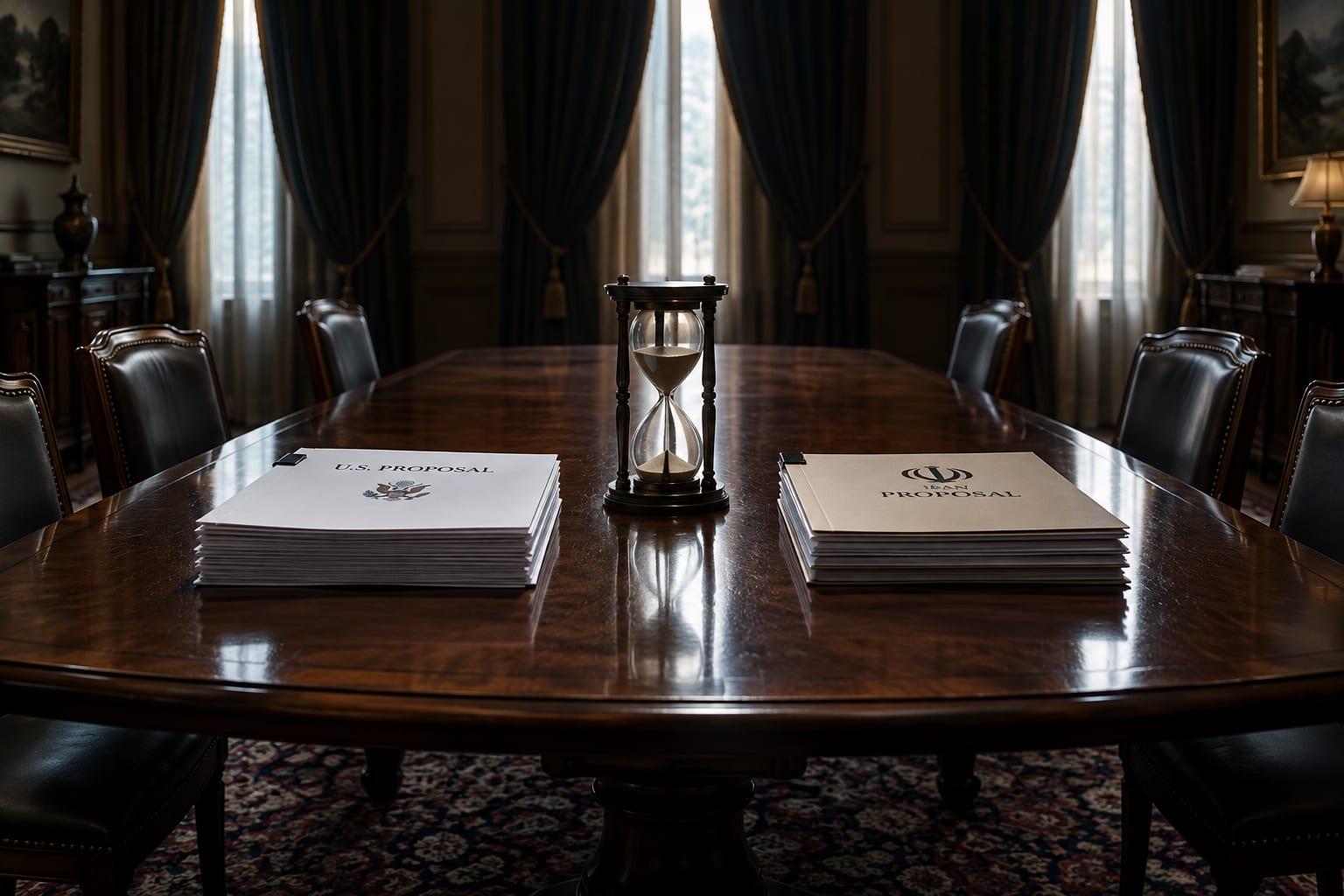
Iran is reviewing the American response to its diplomatic proposal and remains prepared for every possible outcome, according to Deputy Foreign Minister Kazem Gharibabadi, who said Sunday that Tehran will communicate its final position once an internal review is complete.
“We are studying the American response to our proposal and remain prepared for all scenarios,” Gharibabadi said, according to the account @FirstSquawk, which carried the statement. The deputy foreign minister added that Iran will announce its formal position after the review concludes, while maintaining readiness for what he described as “other scenarios.”
The statement follows a period of stalled negotiations between Washington and Tehran, with both sides trading public assessments of where the diplomatic track stands. The proposal at the center of the current exchange was delivered to Iran by US officials, and Tehran's reply has now drawn a counter-response from Washington that Iranian officials say they are still evaluating.
Iran International, citing Gharibabadi's remarks, reported that Iran rejected President Donald Trump's assertion that Washington does not know who its Iranian negotiating counterparts are. The deputy foreign minister's comments suggest Tehran is seeking to project a posture of both openness to diplomacy and readiness for alternative outcomes, a formulation Iranian officials have used repeatedly in recent months as talks have fluctuated between progress and impasse.
The diplomatic uncertainty is playing out against a backdrop of heightened tensions over the Strait of Hormuz, the critical waterway through which a substantial share of global oil shipments pass. Iran's parliament speaker, Mohammad Baqer Qalibaf, said Sunday that the strait will not reopen until seven Iranian conditions set out in a June interim agreement with the United States are met. His statement, carried by Iran war news live updates, came just days after Tehran received Washington's reply to its diplomatic proposal.
The Strait of Hormuz has been a focal point of the broader US-Iran confrontation, with Iran repeatedly signaling that it retains the ability to disrupt maritime traffic through the chokepoint. The June interim agreement referenced by Qalibaf established a framework that Iranian officials say includes specific commitments from Washington, though the full details of those conditions have not been publicly disclosed. The parliament speaker's remarks indicate that Tehran intends to link any reopening of the waterway to the fulfillment of those conditions, effectively tying a key element of global energy security to the broader negotiating track.
Foreign Minister Abbas Araghchi, meanwhile, said there is no military solution to the conflict between Iran and the United States and urged negotiations based on justice. His statement, reported by The Hindu, reflects a position Iranian officials have maintained throughout the recent exchanges: that diplomatic engagement remains the only viable path forward, even as both sides continue to prepare for other contingencies.
Araghchi's call for negotiations rooted in “justice” echoes language Iranian officials have used to frame their grievances over sanctions and what they describe as unfair treatment by Washington. The foreign minister has been the public face of Iran's diplomatic outreach in recent months, and his comments suggest that Tehran is not prepared to abandon the negotiating track entirely, even as it reviews the most recent American response.
Adding to the uncertainty surrounding the diplomatic process, rumors have circulated in the corridors of New York suggesting that Araghchi has sought asylum in the United States. La Sicilia reported that the alleged rift involving the Iranian minister was attributed to American leaks following the stall in negotiations. However, the report described the asylum claim as an unverified rumor without official confirmation from any government source.
The rumors about Araghchi's status have not been substantiated, and Iranian officials have not commented publicly on the allegation. The foreign minister's continued public statements on the negotiations, including his call for a negotiated settlement, would appear to contradict the asylum claim, though the situation remains unclear.
Gharibabadi's insistence that Iran is prepared for “all scenarios” is consistent with the posture Iranian officials have adopted since the talks began to falter. The deputy foreign minister did not specify what those scenarios might entail, but his language suggests that Tehran is keeping its options open, both on the diplomatic front and in terms of its military and economic response to continued US pressure.
The back-and-forth between Washington and Tehran has taken on an increasingly public dimension, with statements from both capitals serving as signals to domestic audiences, international observers and the other party in the negotiations. Trump's comment that Washington does not know who its Iranian counterparts are appeared to question the coherence of Tehran's negotiating team, a characterization that Gharibabadi's remarks implicitly reject.
The diplomatic exchange is unfolding as the broader regional situation remains volatile. The June interim agreement, which Iranian officials cite as the basis for their conditions on the Strait of Hormuz, represented a temporary understanding that both sides have accused the other of violating. The seven conditions referenced by Qalibaf have not been made public in full, but Iranian officials have linked them to sanctions relief and security guarantees.
Next News Network could not independently verify the claims and counterclaims described in this report.
The diplomatic track between Washington and Tehran has been characterized by cycles of engagement and stalemate, with each side blaming the other for the lack of progress. Iran's review of the American response is the latest phase in that process, and the outcome remains uncertain. Gharibabadi's statement that Iran will announce its final position after the internal review suggests that Tehran is not prepared to make an immediate decision on the US reply, leaving the diplomatic process in a state of suspended animation for the time being.
Whether the current exchange leads to a resumption of substantive negotiations or another prolonged period of stalemate will depend on the internal deliberations in Tehran and the willingness of both sides to bridge the gaps that have prevented a breakthrough. For now, the public statements from Iranian officials indicate a desire to keep the diplomatic channel open while preparing for the possibility that it may close.
Our Take
The Iranian regime's insistence that it is reviewing the American response while remaining prepared for “all scenarios” is a familiar negotiating tactic from a government that has spent decades using diplomatic engagement as a cover for its broader strategic objectives. Tehran's demand that the Strait of Hormuz remain closed until seven conditions are met is not a negotiating position; it is economic warfare against the West, and the fact that this demand comes from the parliament speaker rather than the foreign ministry suggests that hardliners in Tehran are setting the terms.
The rumors about Foreign Minister Araghchi seeking asylum, while unverified, reflect what many observers have long suspected: that the Iranian diplomatic establishment is deeply divided, and that the moderates who once sought genuine engagement with Washington are being marginalized or have themselves lost faith in the process. President Trump was right to question whether Washington knows who its Iranian counterparts are, because the answer may be that no single faction in Tehran speaks for the regime as a whole.
The American people should not be lulled into believing that any diplomatic breakthrough is imminent. The Iranian regime's track record of broken promises and its continued use of proxy forces across the Middle East should inform Washington's approach. Negotiations are not a sign of progress when one party treats them merely as a means to buy time and extract concessions. The Strait of Hormuz is a global chokepoint, and Iran's willingness to weaponize it should be met with unambiguous resolve, not the false hope of a diplomatic breakthrough that Tehran has no intention of delivering.
