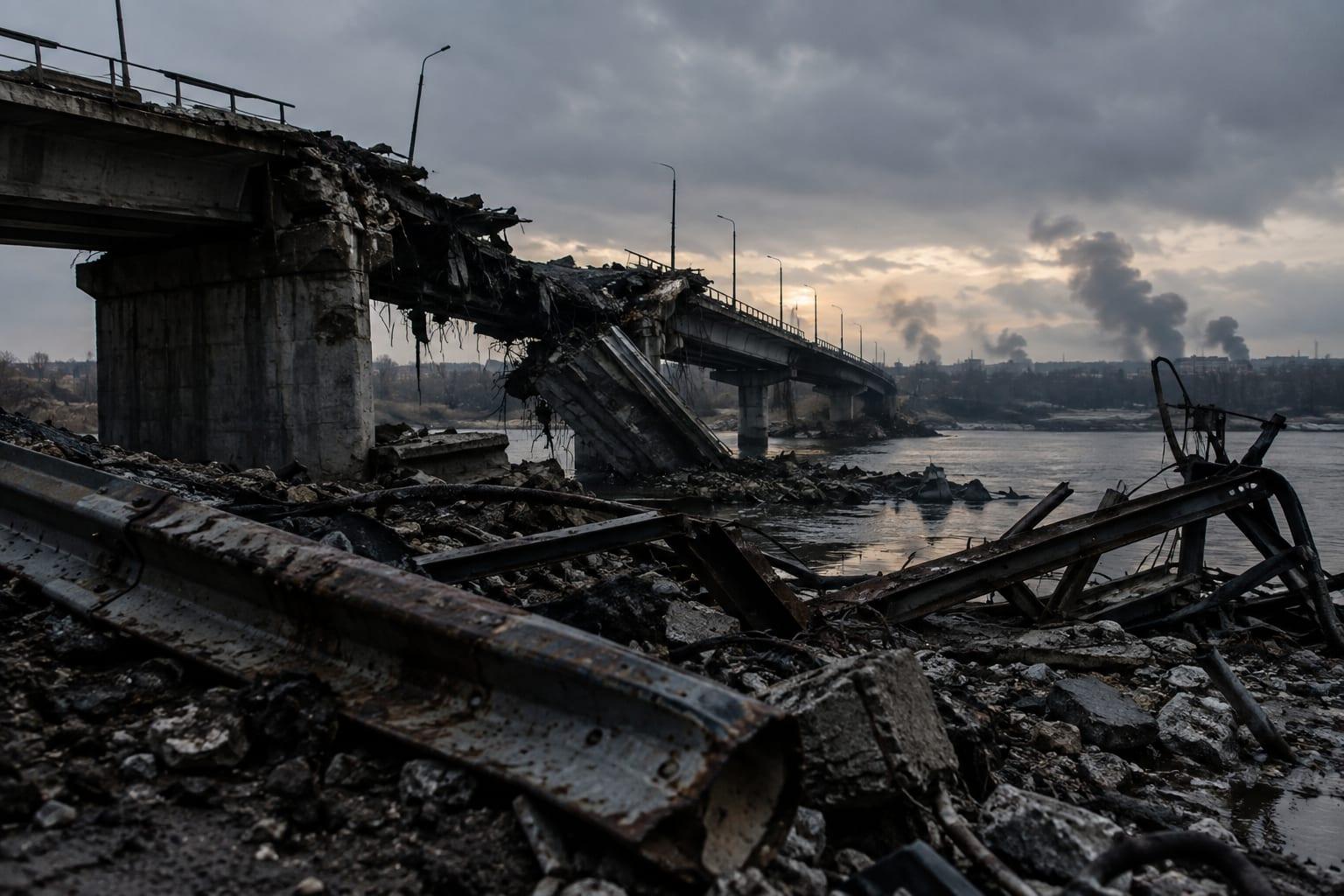
A Russian drone slammed into a bridge in the Ukrainian capital of Kyiv on Sunday, according to a report from CNN, as German Chancellor Friedrich Merz arrived in the city in a display of support for Ukrainian President Volodymyr Zelensky. The strike, which CNN reported hit a bridge in Kyiv, occurred as Merz was visiting the country. The visit was reported by ABC, which said Merz arrived in Kyiv on Sunday in a show of support as Russia escalated its attacks on Ukrainian cities.
The account @visegrad24 posted on social media platform X, formerly Twitter, at 09:19 UTC, stating, "BREAKING: Russia is currently murdering Ukrainian drivers about to cross a bridge in Kyiv." The post did not provide further details or evidence to support the claim. This claim has not been independently verified by Next News Network.
CNN reported at 10:00 UTC that a Russian drone slammed into a bridge in the Ukrainian capital of Kyiv on Sunday as German Chancellor Friedrich Merz visited the city in a display of support for Ukrainian President Volodymyr Zelensky. The report did not specify which bridge was hit or provide details on casualties.
Also on Sunday, the account @FirstSquawk posted at 07:31 UTC that Chancellor Friedrich Merz reiterated Germany's backing for Ukraine as he arrived in Kyiv and warned that Russia could attack the Western alliance. This post did not elaborate on the specific warning or its context.
Earlier in the day, the account @MarioNawfal posted at 06:40 UTC, stating: "🇷🇺🇺🇦Kremlin threatens MASSIVE new drone terror on Kyiv. The Russian Foreign Minister has warned foreign citizens and diplomats to flee as incoming barrages prepare to rain hundreds of drones down on the capital and key infrastructure." The post included a partial quote: "In response to the Ukrainian Armed Forces'" but the remainder of the statement was cut off. The claim of a Russian Foreign Ministry warning has not been independently confirmed by Next News Network.
These social media posts circulated rapidly on Sunday, with the account @visegrad24, @ABC, @CNN, @FirstSquawk, and @MarioNawfal all carrying the story. The claims they contained—of a bridge strike, of threats of further attacks, and of diplomatic warnings—were shared widely, though none of the accounts provided verifiable evidence at the time of posting.
The strike on the bridge in Kyiv follows a pattern of recent Russian attacks on bridges in the Ukrainian capital. According to other coverage, a strike on the Pivnichnyi (Northern) Bridge occurred a day after another major bridge in Kyiv was hit, causing traffic chaos. The Guardian reported that a bridge across the Dnipro River was hit a day after another linking two sides of the capital was struck, forcing traffic suspensions. The New York Times reported that Russia has turned to striking Kyiv's bridges, threatening a vital lifeline, as part of a broader bombing campaign against infrastructure.
The Independent reported that Kyiv's North Bridge was hit in a fresh Russian air strike as Moscow vowed to retaliate, amid German Chancellor Friedrich Merz's visit to Ukraine to show support for Zelensky. These reports provide context for the strike on Sunday but do not independently confirm the specific claims made in the social media posts.
Next News Network could not independently verify the claims made in the social media posts regarding the bridge strike, the threat of further attacks, or the warning to foreign citizens and diplomats. The reports from CNN, ABC, and other outlets provide some corroboration of the bridge strike and Merz's visit, but the more specific allegations—such as the targeting of drivers or the mass drone threat—remain unverified.
The German Chancellor's visit to Kyiv was aimed at demonstrating support for Ukraine, according to ABC and CNN. Merz's arrival came as Russia escalated its attacks on Ukrainian cities, as reported by ABC. The visit was not without risk, as the drone strike occurred during his time in the city. The German government has not issued a statement on the strike as of the time of this report.
The Ukrainian government has not commented on the specific claims made in the social media posts. The Russian government has not responded to requests for comment on the allegations. The identities of the drivers mentioned in the @visegrad24 post have not been confirmed, and it is not known whether there were any casualties.
The social media reaction highlights the rapid spread of information—and misinformation—during the conflict. While some accounts, like @visegrad24, used strong language to describe the event, others, like @MarioNawfal, focused on the Kremlin's purported threats. The lack of independent verification underscores the challenges of reporting from a war zone.
Next News Network will continue to monitor the situation and provide updates as more information becomes available. Readers are advised to treat social media reports with caution until they are confirmed by multiple sources.
Our Take
The reaction to the bridge strike in Kyiv is a case study in how quickly unverified claims can spread during a conflict. The account @visegrad24's claim that Russia is "murdering Ukrainian drivers" is a serious allegation, but it lacks any corroborating evidence. While the strike itself has been reported by CNN, the specific detail about targeting drivers remains unconfirmed. Similarly, @MarioNawfal's claim of a Kremlin threat to rain hundreds of drones on Kyiv is alarming, but it cites a Russian Foreign Minister warning that has not been independently verified. In the fog of war, it is essential to distinguish between what is known and what is merely asserted. The mainstream media's reports provide a baseline—a bridge was hit, Merz visited—but the more inflammatory claims come from social media, where verification is often absent. As conservatives, we should demand evidence before accepting narratives that could escalate tensions. The lack of independent confirmation does not mean the claims are false, but it does mean we should be cautious. The real story here may be the German Chancellor's visit and the ongoing Russian attacks, not the viral posts that seek to inflame. We will continue to report the facts as they emerge.