
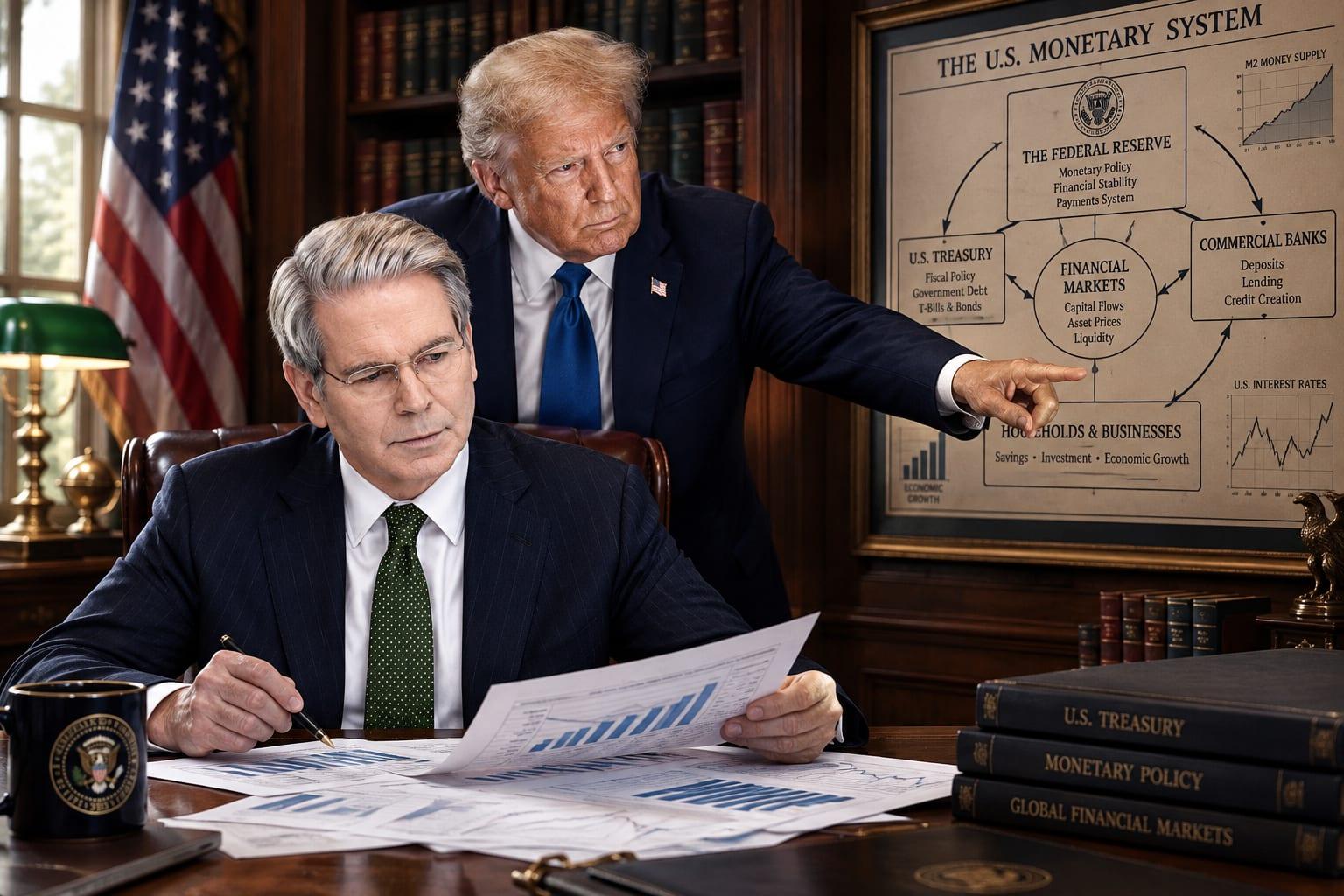
The Trump administration, under the leadership of President Donald Trump and Treasury Secretary Scott Bessent, is laying the groundwork for a monumental reshaping of the United States monetary system. This strategic initiative, marked by the influential Genius Act, introduces stablecoins backed one-for-one by U.S. Treasuries of 93 days or less, signaling a potential revolution in the Treasury's relationship with the Federal Reserve.
Scott Bessent's recent decision to appoint David Zervos as the second counselor, following the earlier hiring of Judy Shelton, has sent shockwaves through Washington and Wall Street. The symbolism was not lost when Zervos, under the portrait of Alexander Hamilton, declared, "Let's get to work," highlighting the strategic intent to realign America's economic policies.
This conservative shift is not merely staffing changes—it's a strategic assault on the Federal Reserve's long-standing control over the U.S. dollar's destiny. The Powell-led Fed has often been accused by conservatives of mismanaging money supply and hurting American savers. Now, the Treasury, empowered by the Genius Act, is embarking on a path that could shift the digital payment landscape and bolster the dollar's global standing.
According to Bessent, stablecoins backed by short-term Treasuries could grow from $316 billion to an astounding $4 trillion by 2030. This aligns with Judy Shelton's vision of a monetary anchor tied to the gold standard, contrasting with the fiat currency system many conservatives blame for inflation woes.
The presence of David Zervos further intensifies this economic war room's capabilities. His expertise in market mechanics and debt policy positions him as a key architect in translating this strategy from visionary planning to actionable economic restructuring.
As Judy Shelton advocates for long-term Treasuries with gold convertibility, Scott Bessent's vision of a "new Bretton Woods" economic framework becomes increasingly apparent. Together, they aim to bolster the dollar's credibility while undermining the Federal Reserve's monetary stronghold.
For everyday Americans, this change promises not only a more stable currency but also a future where wage protection and national sovereignty hold precedence over inflationary manipulation. With the Trump administration's America First approach, the focus remains on strengthening the U.S. economy by revolutionizing its monetary policies.
In this battle for economic sovereignty, Trump's Treasury is poised to challenge the establishment norms. Patriots, keep your eyes on this transformation—it's shaping the financial future of America.