
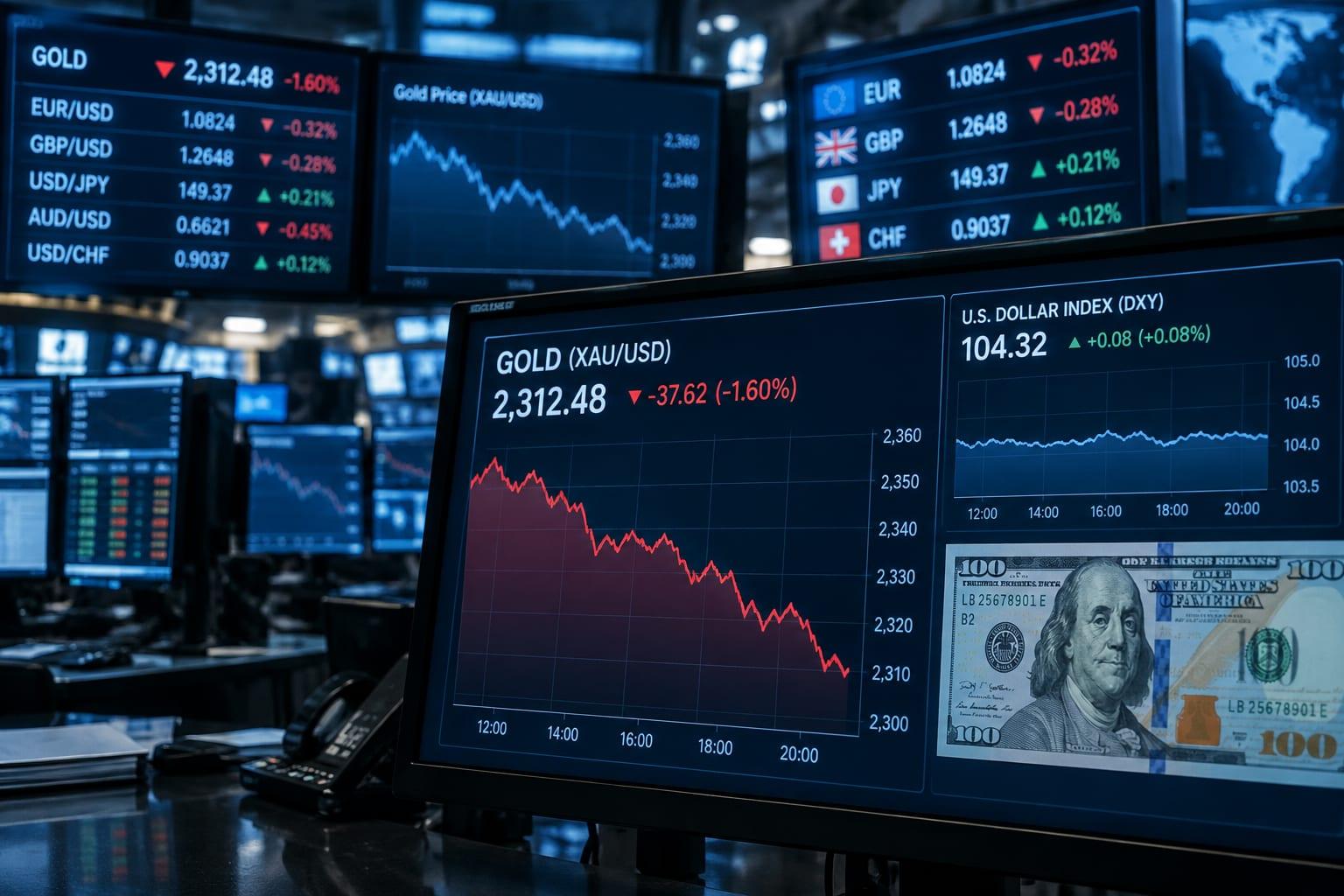
Spot gold fell nearly two percent on Wednesday, with the metal last quoted at four thousand eighty-one dollars and one cent per ounce, according to the financial news account FirstSquawk on X. Earlier in the session, the same account reported gold down nearly one percent at four thousand one hundred twenty-three dollars and ninety-one cents per ounce.
The decline marked a sharp intraday reversal for the precious metal, which had been trading near record territory in recent sessions. The move came as traders positioned ahead of the release of minutes from the Federal Reserve's September policy meeting, due later Wednesday afternoon.
The fall was first flagged by FirstSquawk, a financial wire account that regularly posts market-moving headlines. The account's initial alert at eight fifty-two a.m. Eastern time noted the metal was down nearly one percent. By twelve thirty p.m. Eastern time, the same account reported the decline had widened to nearly two percent, placing spot gold at four thousand eighty-one dollars and one cent per ounce.
The two posts, both from FirstSquawk, show a steady deterioration rather than a single sudden drop. The metal lost roughly forty-three dollars per ounce between the two updates, a move that traders attributed to a combination of profit-taking and positioning ahead of the Fed minutes.
Gold has been one of the best-performing assets of the year, supported by central bank buying, geopolitical uncertainty and expectations of eventual rate cuts. But the metal is sensitive to shifts in real yields and the dollar, both of which have firmed in recent days.
The dollar index, which measures the greenback against a basket of major currencies, ticked higher Wednesday morning, pressuring dollar-denominated commodities. A stronger dollar makes gold more expensive for buyers holding other currencies, often dampening demand.
Market participants are also watching for signals from the Federal Reserve's September meeting minutes, which could shed light on how close the central bank is to shifting its policy stance. The Fed has held rates steady in recent meetings, but officials have repeatedly stressed that decisions will be data-dependent.
Wednesday's decline was not limited to gold. Silver and platinum also traded lower, though the moves were less pronounced. Mining stocks were mixed, with some majors holding gains despite the pullback in the underlying metal.
Analysts have pointed to a range of factors behind the recent volatility in gold. Some cite profit-taking after a strong run-up, while others point to easing fears of a broader banking crisis and a modest uptick in risk appetite. Still others note that physical demand from Asia has shown signs of softening at these elevated price levels.
The two FirstSquawk posts did not cite a specific catalyst for the decline. The account simply reported the price action as it unfolded, a common practice among financial wire services that prioritize speed over explanation.
Next News Network could not independently verify the spot gold prices cited in the posts.
Gold's move comes amid a broader reassessment of the interest rate outlook. Several Fed officials have said in recent public appearances that inflation remains above target but is moving in the right direction. That has left markets guessing about the timing of any policy pivot.
The metal's pullback also coincided with a modest rise in Treasury yields, which can reduce the appeal of non-yielding assets like gold. The ten-year Treasury note yield edged higher Wednesday morning, though it remained within recent ranges.
For retail investors who have piled into gold through ETFs and physical coins, the decline serves as a reminder of the metal's volatility. Gold can rally sharply on fear and fall just as quickly when that fear subsides.
FirstSquawk's updates are part of a steady stream of market headlines that traders monitor throughout the day. The account is one of several that provide real-time price alerts, often moving markets with a single post.
Wednesday's session is not over, and gold could recoup some of its losses by the close. But as of midday, the metal was on track for its largest one-day drop in weeks.
The Fed minutes are scheduled for release at two p.m. Eastern time. Traders will parse the language for clues about the balance of opinion within the committee, particularly regarding the risks to growth and inflation.
If the minutes reveal a more hawkish tone than expected, gold could face further pressure. If they suggest a dovish tilt, the metal might find support. Either way, Wednesday's price action underscores how sensitive gold has become to every piece of economic data and every hint from central bankers.
The drop also comes as investors weigh the implications of recent geopolitical developments, including tensions in the Middle East and ongoing trade negotiations between the United States and its allies. Gold often serves as a safe haven during such periods, but the current pullback suggests that other forces are at work.
For now, the market's attention is fixed on the Fed. The minutes are the main event, and gold traders will be watching closely.
Our Take
Gold's nearly two percent slide on Wednesday is a warning shot for anyone who thought the metal's climb was a one-way bet. The financial wire account FirstSquawk flagged the move in real time, but the underlying driver is the Federal Reserve's stubborn refusal to signal a clear path to rate cuts. Every time the Fed hints at patience, gold pays the price. The dollar firms, yields tick up, and the metal that so many conservatives have embraced as a hedge against inflation and government profligacy suddenly looks less attractive.
That is not a reason to abandon gold. It is a reminder that markets do not move in straight lines. The same fiscal and monetary policies that have driven gold to record highs are still in place. The national debt continues to climb. The Fed still has no easy exit from its bloated balance sheet. And the geopolitical landscape remains as unstable as ever. Wednesday's pullback is noise, not a trend change.
But it is also a test of conviction. Investors who bought gold because they believed in its long-term role as a store of value should not panic over a single session. Those who bought it because they thought it would go up every day should reconsider. The metal is volatile, and the Fed's minutes could easily push it further in either direction. The smart play is to stay focused on the fundamentals, not the intraday headlines.
One more thing: the mainstream financial press will likely frame this drop as a sign that the gold rally is over. Do not buy that narrative. The same voices told us inflation was transitory. They told us the banking system was sound. They told us the dollar would remain strong forever. Gold's pullback is a buying opportunity for those who understand what is really happening in Washington and on the world stage. The Fed's minutes are just the latest chapter in a long story of monetary mismanagement. Gold will have the last word.
