
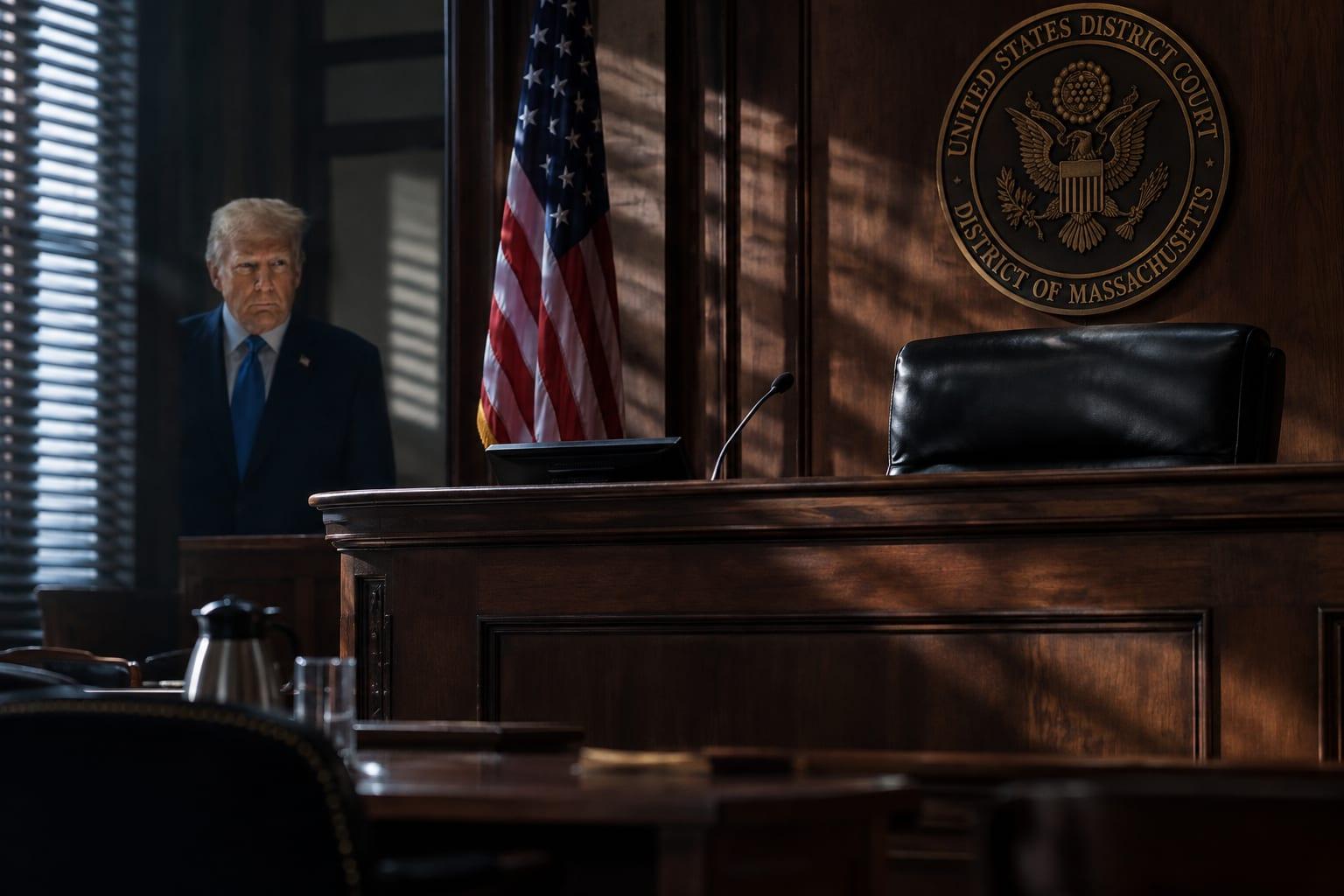
A federal judge in Boston on Monday blocked the Trump administration from enforcing fines of up to $1.8 million against migrants who fail to leave the country after receiving final deportation orders, ruling that the Department of Homeland Security imposed the penalties unlawfully.
U.S. District Judge George O'Toole issued the decision in a class-action lawsuit brought last year by two migrants and the Immigrant Legal Resource Center, according to Reuters. The ruling halts enforcement of a revived civil penalty program that has no modern precedent — Congress authorized such fines under the Illegal Immigration Reform and Immigrant Responsibility Act of 1996, but no prior administration had applied them.
Under the program, DHS levied penalties of $998 per day against migrants who remained in the country after a final deportation order, charging retroactively for up to five years — producing maximum penalties of $1.8 million per person. DHS reported issuing more than 103,000 fines amounting to roughly $84 billion since January 2025, with the agency removing a 30-day notice window and curtailing appeals in July of that year.
O'Toole concluded the penalties would push plaintiffs into immediate financial ruin. "The plaintiffs live in an economically precarious position even without the imposition of the government's exorbitant fines," the judge wrote, per TRT World. The Daily Mail reported that O'Toole — a Clinton appointee — described the fines as exorbitant and said they would hurt migrants.
The outcome drew quick attention online. The Hill posted the news to its followers on X, writing simply: "Judge blocks Trump administration move to fine migrants."
Judge blocks Trump administration move to fine migrants https://t.co/CiOPwCi12D — @thehill
The case now returns to a familiar battleground: whether the executive branch can use civil monetary penalties as an enforcement tool at a scale never before attempted. Administration officials have argued the fines are squarely within the law Congress passed nearly three decades ago, and that applying them was long overdue after years of catch-and-release practices.
For the thousands of migrants who received penalty notices, the ruling means collection efforts are on hold — at least for now. For DHS, the ruling raises questions about how aggressively it can pursue financial penalties while litigation continues, and whether the agency will need to rewrite its notice and appeals procedures before resuming enforcement.
The White House has not yet indicated whether it will appeal. It is not yet known whether the Justice Department will seek a stay or take the case to the First Circuit Court of Appeals.
The decision arrives as the Trump-Vance administration continues its mass deportation push, a central 2024 campaign promise now being tested in courts across the country. Supporters of the fines argue they give teeth to removal orders that migrants have ignored for years without consequence. Opponents counter that the penalties are designed less to compel compliance than to punish people who are already here and largely unable to pay.
Congress authorized the penalties in 1996. For nearly thirty years, both Republican and Democratic administrations declined to enforce them — until the current DHS leadership dusted off the statute and applied it on a mass scale.
Our Take
Here's the part the legacy media won't lead with: Congress passed these penalties into law in 1996. They weren't invented by Donald Trump. No president before him — Republican or Democrat — had the nerve to actually use them against people who ignore final deportation orders. Trump did, and within months the courts stepped in to stop him.
A Clinton-appointed judge in Boston deciding that the law is too harsh when actually enforced tells you everything about the two-tier system patriots have been screaming about for years. Illegal aliens receive taxpayer-funded lawyers, class-action suits, and sympathetic rulings. The American families footing the bill for sanctuary policies and border chaos get nothing but a shrug from the bench.
The administration is well within its rights to appeal this, and it should — immediately. Congress wrote the penalty. The executive branch is exercising it. If a single district judge can overrule that, then the immigration laws on the books are just suggestions.
The real question is whether this White House will keep fighting through every courtroom the Left can find — or whether the permanent bureaucracy in the courts gets to decide our border policy for us. Patriots should be watching. Contact your representatives and demand they back the administration's enforcement push all the way to the Supreme Court if necessary.
