
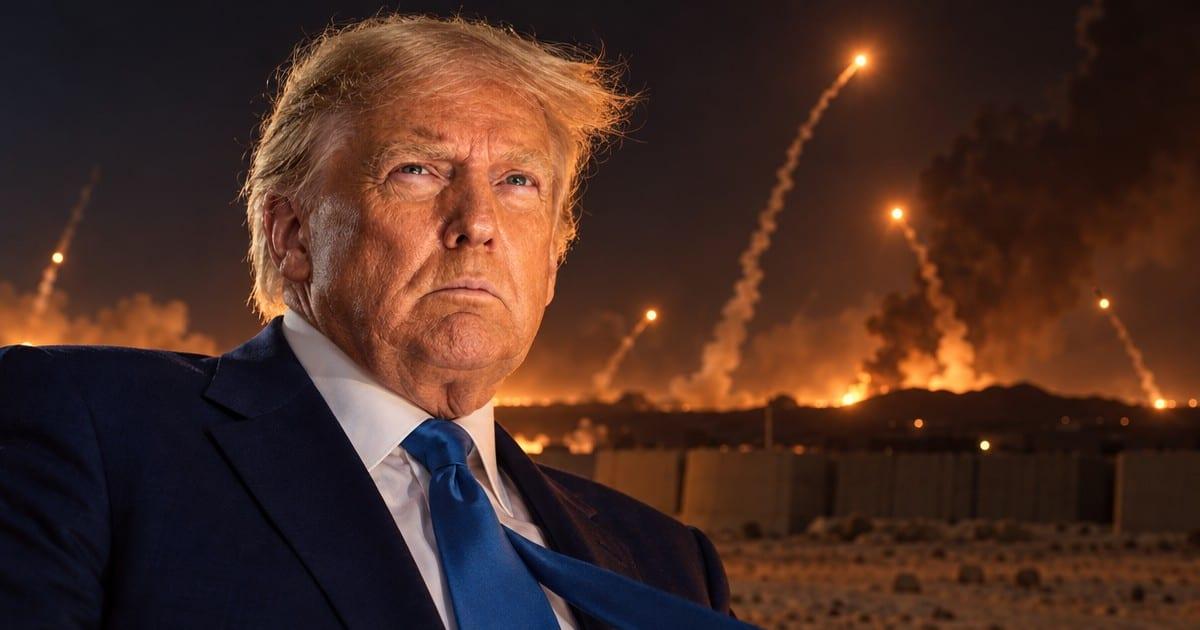
The Trump administration ordered non-essential U.S. embassy personnel and their families to leave Saudi Arabia this week, The Times of Israel reported, as a wave of Houthi missile and drone attacks on the kingdom killed at least 20 people — including one American citizen — and exposed gaping holes in a Saudi air defense network that Riyadh has spent tens of billions of dollars to build.
The evacuation order marks the sharpest escalation yet in a crisis that is rapidly becoming President Donald Trump's problem. Fox News reported Tuesday that Britain is deploying Typhoon fighter jets to defend Saudi cities and critical infrastructure, Egypt is already assisting the kingdom, and Israel has offered to help. Riyadh, meanwhile, is asking Washington for more interceptors — and the president is weighing whether to order direct U.S. strikes on Houthi launchers inside Yemen.
The numbers are ugly. Houthi strikes and attempted strikes more than doubled in a single week this month, according to the Armed Conflict Location & Event Data Project. Airports in Riyadh, Jizan, Najran, Dammam and Abha have all been targeted since Oct. 5. The worst attack hit King Khalid International Airport in Riyadh, killing at least 13 people and wounding more than 300, per Fox News. An Oct. 10 strike there killed 13, including a U.S. citizen, CBS News reported. The Houthis have also struck the headquarters of Saudi Aramco and targeted the kingdom's energy infrastructure directly.
Saudi Arabia spent an estimated $83.2 billion on defense last year — the eighth-largest military budget on earth, according to the Stockholm International Peace Research Institute, and more than any other country in the Middle East, including Israel. Its arsenal includes American-made F-15 fighter jets and Patriot systems. It was not enough.
"No country can ever have a 100% interception rating, that just doesn't really exist," Elizabeth Dent, a senior fellow at the Washington Institute for Near East Policy, told CBS News — but the Oct. 10 strike "was a hell of a one to miss."
Jason Campbell, a senior fellow at the Middle East Institute, told Fox News Digital the allied response so far is "defensive or defensive-minded," and the question is whether it evolves into something "more offensive or kinetic." That decision now sits on the president's desk.
The strategic picture is grim. Saudi Arabia shares a border of more than 800 miles with Yemen, where the Houthis control vast territory. To the west, the group is fighting for control of the Red Sea's vital coastline. To the north, Iran-backed militias operate across the Iraqi border. To the east, only the Persian Gulf separates the kingdom's oil fields from Iran. This is not a remote proxy war — it is a siege of the world's largest oil exporter, and it is already putting upward pressure on oil and gas prices as Washington and Tehran spar over the Strait of Hormuz.
The White House has not said publicly what a U.S. military response would look like, and it is not yet known whether the president has signed off on strikes. But the administration has issued an unprecedented wave of warnings about escalating Houthi risk in recent days, according to ABC News, and the embassy drawdown is the clearest signal yet that Washington expects the threat to get worse before it gets better.
For everyday Americans, the stakes are plain: gas prices, the safety of U.S. citizens abroad, and whether an Iran-backed terror army is allowed to shut down a waterway that carries a chunk of the world's energy supply. The Houthis are testing whether the United States under Trump will respond like the Biden administration did — with warnings and wind down — or like something else entirely.
Our Take
Here is the uncomfortable truth the legacy media will dance around: Saudi Arabia has spent a fortune on American weapons and still cannot stop Iranian proxy drones from hitting its capital's airport. That is not just Riyadh's failure. It is a warning about what happens when a superpower projects weakness for four years, and it is exactly the mess President Trump inherited.
The Houthis are not a lawless tribe with rifles. They are the armed wing of the Iranian regime, and they are firing ballistic missiles at a U.S. ally and killing American citizens. When a proxy kills an American, the response should not be a sternly worded statement and a voluntary embassy departure. It should be the kind of response that makes the mullahs in Tehran think twice before they ever greenlight another launch.
Trump has a real decision to make. Defensive interceptors alone will not eliminate the launchers in Yemen — they just buy time while the Houthis reload. The only way to stop the barrage is to go after the source. That means direct strikes, and it means making unmistakably clear to Iran that its proxy war has a price.
Patriots, the world is watching. Will this administration restore deterrence and defend an ally under fire — or will it manage the decline the way the last crowd did? The answer will define the next three years.
