
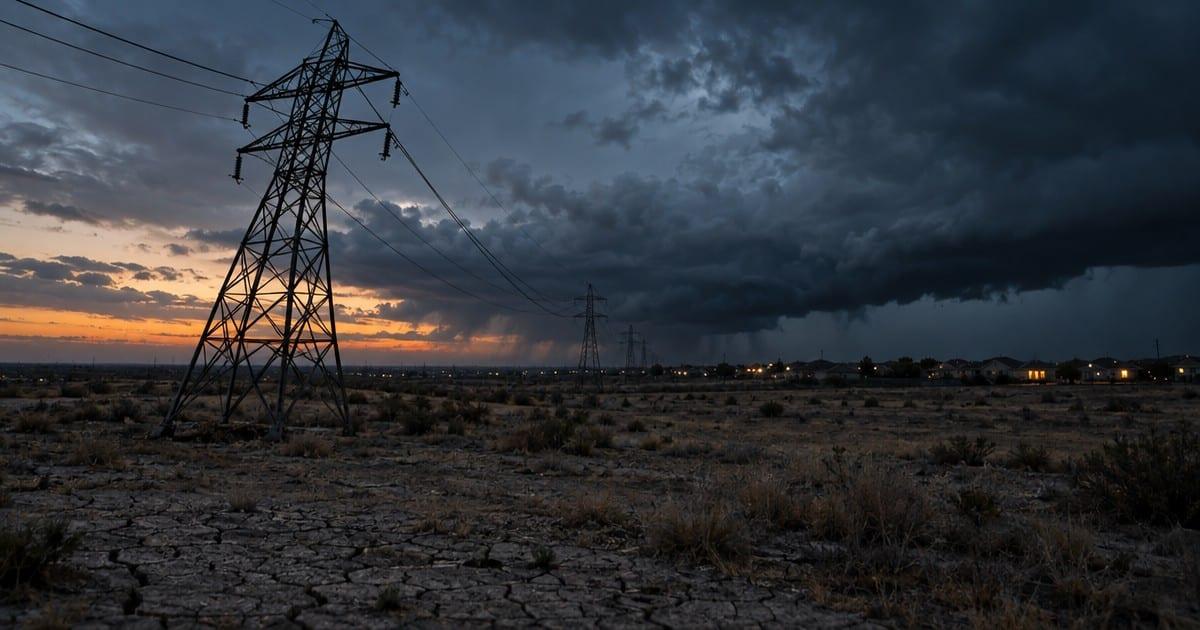
Texas Gov.-elect Gina Hinojosa is set to make good on a campaign promise that is doomed to fail: freezing residential electricity rates by executive fiat. According to Fox News Digital, Hinojosa plans to declare an emergency and lock down rates on her first day in office, a move that clashes with Texas' famously competitive energy market and, critics warn, could make the very affordability crisis she claims to be solving far worse.
"It's a campaign promise they made on the trail," Sam Romain, chairman of the free-market group Americans for Energy Dominance, told Fox News Digital. "But they don't have the power to just freeze the rates. You can't just wave a magic wand and freeze the rates."
Romain's warning cuts to the heart of the problem. Price is a signal, and when politicians artificially suppress it, supply shrinks. "We know that price works based on supply and demand, right? It's basic, basic economics," he said. "And what you're seeing across the nation is this Democratic price control scheme that's dressed up as an emergency. The problem is you can't necessarily freeze your way out of the supply problems."
Hinojosa is not alone. Democratic governors and governors-elect across the country are rolling out their own versions of rate freezes, credits, and caps, all sold as relief for families squeezed by rising bills. Virginia Gov. Abigail Spanberger, who took office in January, is demanding a six-year rate freeze as a Florida company looks to buy Virginia's largest energy supplier, and she has called for a tripling of monthly bill credits for ratepayers, Fox News Digital reported. New Jersey Gov. Mikie Sherrill promised to declare a state of emergency to cap energy rates at the outset of her term in January 2026, but has since pivoted to a credit system implemented through executive orders.
In California, Gov.-elect Xavier Becerra promised to "institute a freeze on utility rates… while the state investigates long-term solutions to bring these costs under control." In Wisconsin, Gov.-elect David Crowley will lead a legislature that last year considered a proposal to cap gas and electricity bills at 4% of a qualifying household's income.
Each plan shares the same flaw, according to Romain: they treat the symptom—high prices—while ignoring the disease—insufficient supply. When rates are capped below what it costs to generate and deliver power, utilities and generators have little incentive to build new plants or maintain existing ones. The result, as Texas learned during Winter Storm Uri in 2021, can be blackouts and price spikes far worse than the bills lawmakers sought to tame.
The Texas oil and gas group Texans for Natural Gas has projected that federal energy policy changes will cost Texas households an additional $96 billion through 2040, according to public radio station TPR. That figure, which the group attributes to federal permitting and regulatory shifts, underscores the stakes as Hinojosa prepares to take office.
Democrats campaigned on affordability in 2026, and their promises to freeze or cap utility bills resonated with voters who have watched electricity costs climb. But now that they hold office, the gap between what they promised and what they can constitutionally and practically deliver is becoming impossible to hide.
Utility regulation is typically the province of state commissions, not governors, and any emergency order is likely to face legal challenges from utilities and free-market groups. Even if a freeze survives court scrutiny, it cannot create a single megawatt of new generation. In fact, by suppressing prices, it may do the opposite.
Hinojosa's team has not detailed how it would enforce the freeze or what would happen if utilities cannot recover their costs. A spokesperson for the governor-elect did not respond to a request for comment.
The energy crunch facing American families is real. But the Democratic Party's answer—price controls, subsidies, and executive orders—ignores the one thing that would actually lower bills: more supply. That means fewer regulations, faster permitting, and an all-of-the-above energy strategy that includes the fossil fuels that keep the lights on.
Until Democrats acknowledge that basic math, their promises of relief will remain exactly what Romain called them: campaign lines with no magic wand to back them up.
Our Take
Here's the uncomfortable truth Democrats don't want you to hear: you cannot decree lower prices. You can only decree shortages. Hinojosa's rate freeze is a political stunt that will either be struck down in court or, if it survives, will push generators out of the Texas market and leave ratepayers begging for reliable power. The same goes for the credit schemes and caps in Virginia, New Jersey, California, and Wisconsin. They are all variations on the same failed idea: central planning by press release.
Conservatives have the real answer. Unleash American energy production—oil, gas, coal, nuclear, and yes, renewables where they make sense—by slashing the red tape that strangles new generation. Stop the war on fossil fuels that has made energy scarce and expensive. Let the market work, and prices will fall. It's not complicated. It's economics. And it's time Democrats stopped pretending otherwise.
