
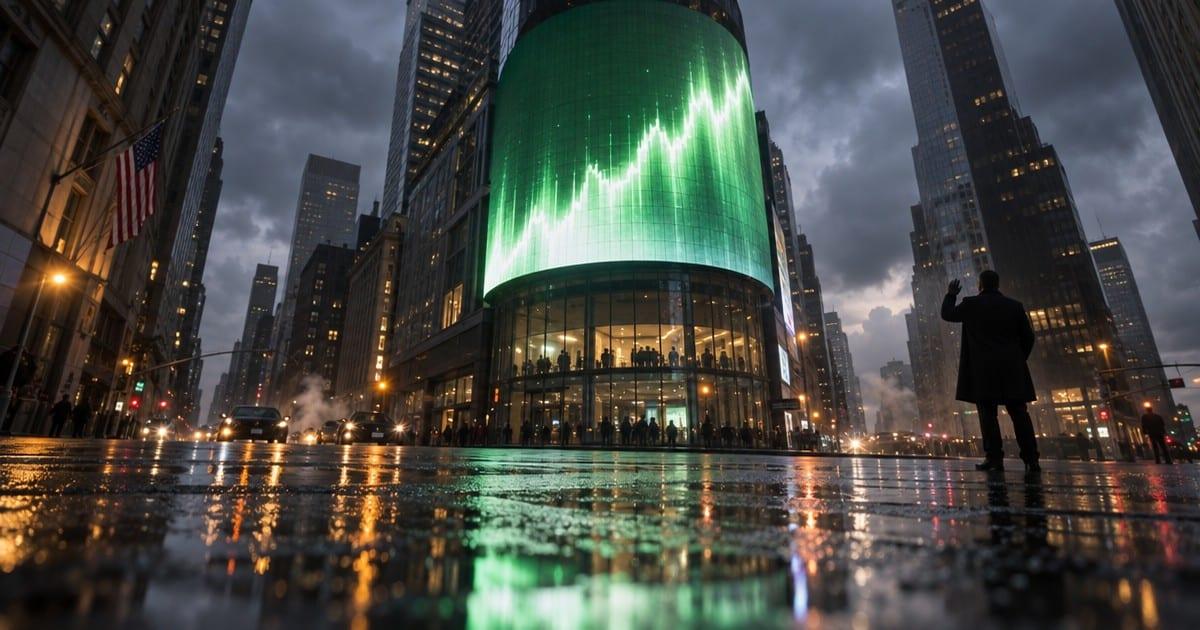
Anthropic just pulled off the biggest initial public offering in Wall Street history—and everyday investors got a piece of the action.
The San Francisco-based AI developer behind the Claude chatbot began trading on the Nasdaq Thursday under the ticker ANT, opening at $111.50—a 34% pop from its $83 offer price—and surging as high as $114.99, briefly valuing the company at more than $2 trillion, according to CBS News.
By the closing bell, the stock had settled to $97.17, still good for a 17% gain on the day. CNN Business reported a closing valuation of $1.76 trillion, while CBS News pegged the IPO valuation at roughly $1.5 trillion—both figures placing Anthropic above giants like Berkshire Hathaway, JPMorgan Chase, Visa, and Walmart.
The offering raised $81.3 billion, catapulting past SpaceX's $75 billion raise from its June IPO to become the largest public offering ever recorded. Anthropic offered 980 million Class A shares, with up to 20% set aside for retail investors—a move that let ordinary Americans claim a stake in the AI revolution long dominated by venture capital insiders.
The debut came on a brutal day for the rest of the market. Late in Thursday's session, the Nasdaq dropped 550 points (2.3%), the Dow Jones Industrial Average tumbled more than 1,100 points (2.2%), and the S&P 500 sank 2%, per CBS News. Anthropic's gains stood out against that backdrop.
CEO Dario Amodei framed the moment in sweeping terms at an event marking the IPO.
"The goal is to make the whole industry better, regardless of whether Anthropic is winning or losing at any given time," Amodei said. "The advent of machine intelligence is one of the seminal moments in human history, and we have a rare opportunity to shape it for the better."
Jay Ritter, an IPO expert and professor at the University of Florida's Warrington College of Business, told CBS News the volatility was expected.
"Both the jump from the offer price and the high volatility are not surprising, given the enormous potential of the company and the wildly different opinions about how profitable the company will become," Ritter said in an email.
Dan Ives, a tech analyst at Yorkville Ives & Co."
The payday is staggering. The seven Anthropic co-founders are now worth roughly $20 billion each on paper, and many employees have become millionaires overnight, according to CBS News.
"
Anthropic's public market debut marks the arrival of generative AI as a mainstream investment class. The company's Claude models compete directly with OpenAI's ChatGPT and Google's Gemini, and the IPO gives Anthropic a massive war chest to expand compute infrastructure, hire talent, and push into enterprise markets.
Our Take
Here's the part the legacy media won't say out loud: a company built on American innovation, American capital, and American risk-taking just became one of the most valuable enterprises on the planet—while the rest of the market was bleeding red. That's not luck. That's the kind of dynamism that thrives when Washington gets out of the way.
Notice who got a seat at the table. Up to 20% of shares were reserved for retail investors—not just the coastal elite and the venture capital cartel. For once, everyday Americans had a shot at the upside of a tech juggernaut from day one. That's how wealth-building is supposed to work.
But let's be clear-eyed. AI is the most consequential technology of our lifetime, and the companies leading it are now trillion-dollar public entities accountable to shareholders—and, increasingly, to politicians who want to regulate, control, and ultimately capture it. The same Deep State that went after a sitting president, that weaponized agencies against parents and patriots, will not sit idle while a handful of private firms control the future of machine intelligence. The question isn't whether they'll try to seize the wheel—it's how fast.
Patriots, this IPO is a victory for free enterprise and a warning shot in equal measure. Watch the regulators. Watch the lobbyists. And ask yourself: when the next AI giant goes public, will American investors still have the same opportunity—or will the bureaucrats have already closed the door?
