
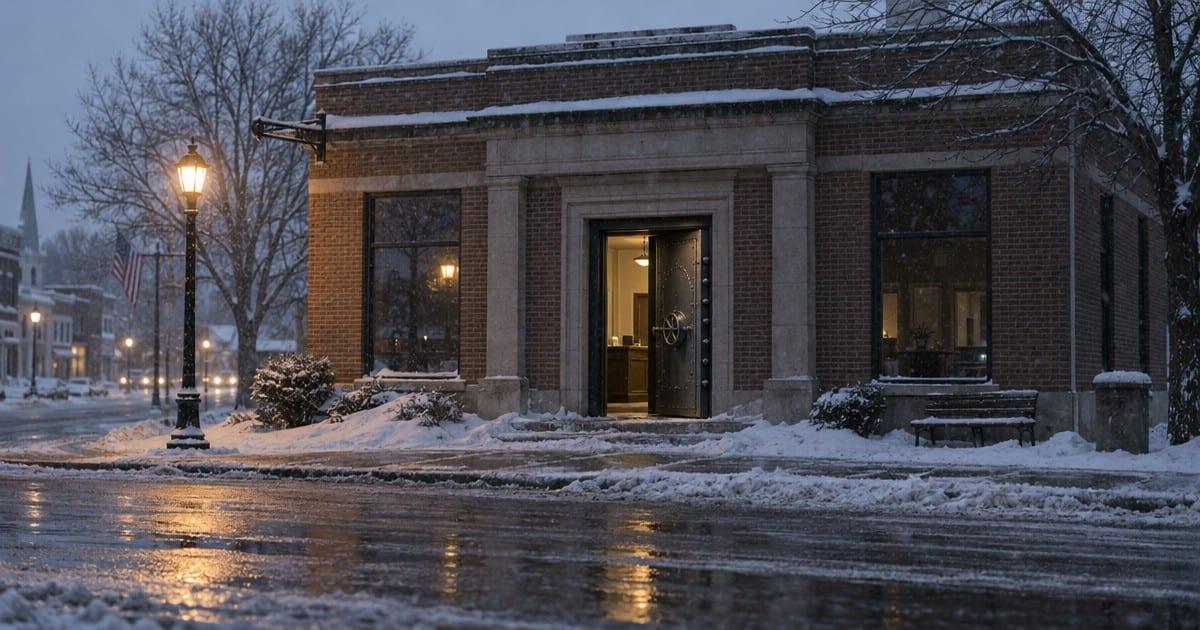
The Office of the Comptroller of the Currency (OCC) closed Indiana-based United Fidelity Bank on Friday, marking the largest U.S. bank failure in three years, Fox Business reported. The OCC said it acted after finding the bank was in an "unsafe or unsound condition to transact business and was likely to be unable to pay its obligations or meet its depositors' demands in the normal course of business."
United Fidelity reported nearly $6 billion in assets and $5.4 billion in deposits, according to the Federal Deposit Insurance Corporation (FDIC). The FDIC estimated its cost from the failure at $1.83 billion — the priciest since First Republic Bank collapsed in 2023, which cost the insurance fund more than $15.5 billion.
The FDIC granted North Carolina-based First Citizens Bank & Trust Company the winning bid to acquire United Fidelity's assets and liabilities. In a release, the FDIC said customers "do not need to change their banking relationship and will retain all of their funds and deposit insurance coverage." United Fidelity operated 22 branches across four states and the U.S. Virgin Islands; all will reopen as First Citizens branches.
The acquisition includes $3.1 billion in loans and United Fidelity's subsidiaries, including the Pedcor Homes Corporation real estate development and management arm, according to First Citizens. "We believe this transaction is both financially and strategically compelling, and we look forward to welcoming our new customers, earning their trust and positioning our company for continued success," the bank said in a statement.
The collapse is the largest since First Republic — a San Francisco lender with $212.64 billion in assets when it failed — and the biggest in two years by another measure, as Bloomberg noted. The OCC's Friday announcement gave no further detail on what specifically drove the bank's condition beyond the standard language about unsafe or unsound practices.
For customers, the practical effect is a change of signage: accounts remain insured and accessible, and branch operations continue under First Citizens. For the FDIC's Deposit Insurance Fund, the $1.83 billion hit is the cost of cleaning up after a lender that regulators determined could no longer meet its obligations.
The failure comes as the Trump administration touts a deregulatory agenda and economic growth. Daily Mail framed the closure as a contradiction to White House claims of a thriving economy. The White House has not commented on the specific failure.
What is not yet known is what internal factors — bad loans, liquidity strain, management decisions — pushed United Fidelity over the edge. The OCC's statement did not elaborate, and the FDIC's release focused on the transfer of assets rather than the cause.
Our Take
Here's what the establishment doesn't want you to notice: a $6 billion bank just went belly-up on the federal government's watch, and the same regulators who missed the warning signs are now patting themselves on the back for a transfer to First Citizens that the FDIC's own release says customers won't even notice. The FDIC's $1.83 billion bill isn't magic money — it comes from the Deposit Insurance Fund, which is funded by premiums paid by every other bank in the country. That cost gets passed to consumers one way or another.
This is exactly the kind of story the legacy media will bury under a pile of Trump-era outrage. They'll frame it as a one-off, a fluke, nothing to see here. But three years after First Republic, the same pattern is repeating: regulators declare a bank "unsafe" only after it's already too late, then arrange a shotgun marriage to a larger institution. The consolidation of American banking continues, and the big get bigger while the little guy pays the tab.
Patriots, this is why we need real oversight — not the kind that harasses small businesses and conservative groups, but the kind that actually watches the balance sheets. The Trump administration should demand answers: How did United Fidelity get to this point, and who at the OCC was asleep at the switch? The American people deserve to know before the next domino falls.
