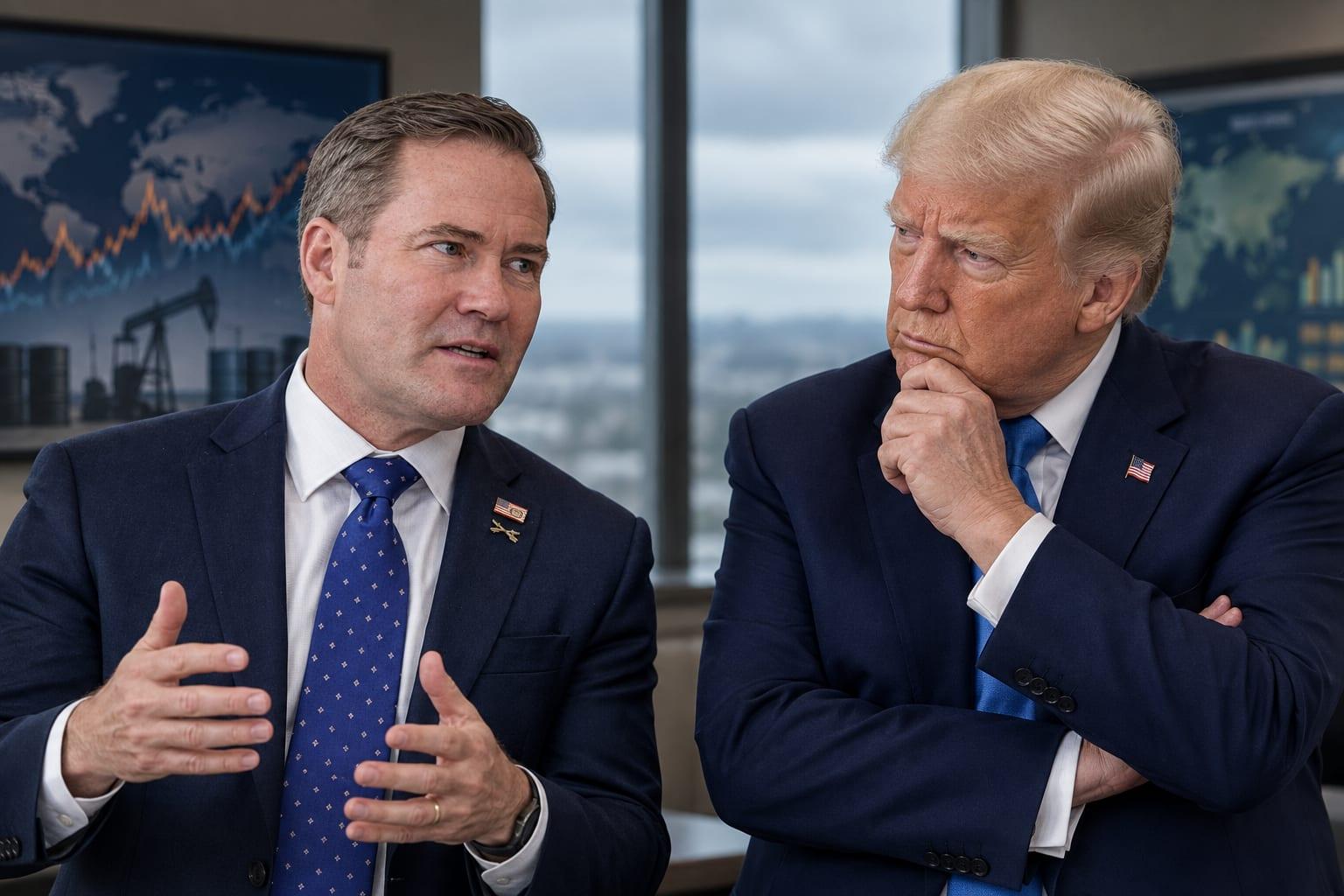
U.S. Ambassador to the United Nations Mike Waltz joined a growing roster of Trump administration officials pointing squarely at the Russia-Ukraine war as the driver of high diesel prices, shifting the energy conversation away from the war in Iran and the Strait of Hormuz.
Speaking on the conflict's economic fallout, Waltz said the war is spreading beyond the battlefield and into global fuel markets. "What we're seeing in the war in Ukraine is that it is spreading to" other sectors of the world economy, Waltz said, according to the Washington Examiner.
His comments put him alongside a series of Trump administration officials who have argued that the grinding war between Moscow and Kyiv — now well into its fifth year — is a core reason American truckers, farmers and families are paying more at the pump for diesel.
THE ADMINISTRATION'S ENERGY ARGUMENT
The framing matters. For months, much of the legacy media coverage of energy prices has fixated on tensions with Iran and the Strait of Hormuz, the narrow chokepoint through which roughly a fifth of the world's oil passes. Waltz and other administration officials are steering the story back to Eastern Europe, where sanctions, disrupted supply chains and refinery pressure tied to the war have squeezed global distillate markets.
Diesel is not a luxury item. It moves the freight that stocks every grocery shelf in America. When diesel spikes, so does the price of food, building materials, and just about everything else. That is the message the administration is pushing: the war in Ukraine is not a distant European problem, it is a direct tax on American consumers.
Waltz, confirmed as United States Ambassador to the United Nations, has been among the administration's most visible voices on the intersection of foreign policy and American economic pain. His remarks track with President Donald Trump's repeated position that the war would never have started under his watch — and that ending it is an economic priority for the United States, not just a geopolitical one.
WHY THE SHIFT TOWARD UKRAINE MATTERS
The pivot away from the Strait of Hormuz narrative is not random. Iran and the Strait have dominated cable news energy coverage, often in ways that inflate the perception of an imminent supply catastrophe. Administration officials are effectively arguing that the market disruption Americans are actually paying for traces back to the Ukraine conflict and the Western sanctions regime surrounding it.
For American farmers gearing up for harvest, independent truckers running cross-country routes, and small businesses operating on razor-thin margins, the distinction is not academic. Diesel prices hit their bottom line directly, and those costs get passed to consumers.
What the administration has not yet outlined publicly is a specific new policy measure tied to Waltz's remarks — whether that means renewed diplomatic pressure to wind down the war, adjustments to sanctions policy, or expanded domestic refining and production under the administration's energy dominance agenda. It is not yet known whether Waltz's comments preview a forthcoming announcement or reflect the administration's ongoing messaging push.
THE BROADER PICTURE
The Trump administration has positioned energy independence as a centerpiece of its second-term agenda — "drill, baby, drill" was not a slogan, it was a governing promise. Officials have consistently argued that domestic production, deregulation, and ending the war in Ukraine would combine to bring fuel costs down for working Americans.
Waltz's remarks also serve as a reminder that the administration views the Ukraine conflict through an economic lens as much as a military one. Every month the war drags on, the argument goes, is another month of elevated fuel costs, supply chain turbulence, and uncertainty baked into global markets.
Republicans have increasingly echoed that position, with a growing chorus on Capitol Hill questioning the flow of American dollars into a conflict with no clear end and mounting costs — both abroad and at home. Whether that chorus translates into a change in policy or simply louder pressure on the administration's diplomatic efforts is the question that will be answered in the weeks ahead.
For now, the message from the Trump team is clear: if you're angry about the price of diesel, look to the war in Ukraine — and to the policies that keep it burning.
Our Take
Finally, someone in a position of authority is saying out loud what American truckers have known for years: diesel prices are not a mystery, they are a policy outcome. The Russia-Ukraine war has been treated by the establishment class as a noble cause with no price tag. There is always a price tag. It shows up on the pump, on the grocery receipt, and in the mailbox when the fuel bill arrives.
What Waltz did here is refuse to let the conversation get hijacked by whatever crisis the legacy media decides is trending this week. The Strait of Hormuz matters, sure. But the war grinding on in Eastern Europe — a war that candidate Trump said would never have started on his watch — is the closer, more persistent weight on American energy costs.
The deeper question is whether this administration's messaging turns into action. Talking about the problem is not the same as ending it. If the White House wants to bring diesel prices down for good, it has to be willing to use every lever — diplomacy, sanctions relief, domestic production — not just press appearances.
Patriots should be asking one thing: if the war in Ukraine is the reason we're paying more to fill our tanks, what is the plan to end it? Keep that question in front of your representatives until somebody in Washington gives a real answer.