
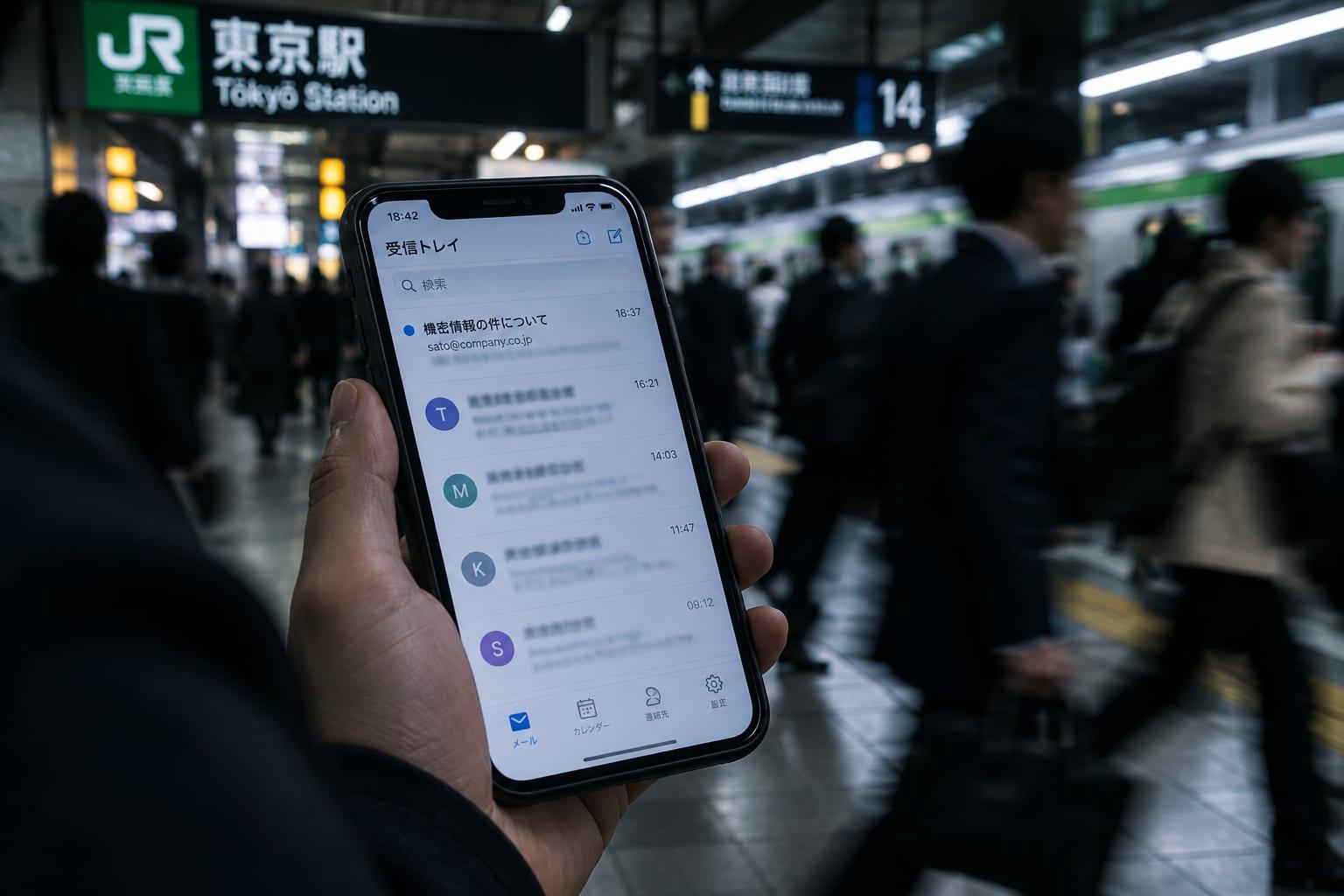
Tokyo Metro says a data breach may have exposed the email addresses of 59,000 of its customers, according to a claim circulating across social media and aggregated by financial news accounts.
The claim was carried by the account @FirstSquawk, which posted that "Tokyo Metro says data breach may have exposed 59,000 customer email addresses." The same figure appeared in a breaking-news item distributed roughly sixteen hours after the initial claim, reporting that Tokyo Metro says 59,000 customer email addresses may be compromised.
The claim arrived against the backdrop of a separate breach in Singapore, where coverage of a Simba data breach reported that personal data belonging to 23,549 customers had been exposed. That incident, per the coverage, included names, identification numbers, birth dates, mobile numbers and email addresses. Tokyo Metro has not been connected to the Simba incident in any of the material circulating.
What is known at this stage is narrow: Tokyo Metro, the operator of the Tokyo subway system, is said to be the subject of the breach claim, and the number 59,000 is the figure attached to it. The account @FirstSquawk carried the claim in a one-line post, and the breaking-news item repeated the same number. Neither the post nor the coverage named a cause, a timeline, a suspected actor or a geographic scope beyond Tokyo Metro itself.
The breach is characterized throughout as what is being claimed and alleged, not as an established event. No independent confirmation has been offered by Tokyo Metro through a public statement that Next News Network has been able to review, and no third-party security firm has been identified in the material as having assessed the claim. Readers should treat the 59,000 figure as an allegation at this point.
The comparison to the Simba breach in Singapore is instructive less for what it proves than for what it does not. In that case, coverage specified the categories of data exposed — names, ID numbers, birth dates, mobile numbers and email addresses — for 23,549 customers. In the Tokyo Metro claim, only email addresses are mentioned. If the claim is accurate, the exposure would be significantly narrower in type than the Simba incident, though 59,000 is more than double the 23,549 customers named in the Singapore case.
What the sequence shows is a claim moving through aggregation channels rather than through an official disclosure. The @FirstSquawk post is a social media post, not reporting, and it functions as a headline-level alert rather than a sourced account. The breaking-news item that followed repeats the same figure without adding detail. That is the pattern of a claim spreading: one account posts it, another picks it up, and the number travels while the underlying documentation does not.
For Tokyo Metro customers, the practical question — whether their email addresses were in fact exposed and what they should do about it — remains unanswered in the material available. It is not yet known whether the breach affected current customers, former customers or a subset of either group. It is not yet known when the alleged breach occurred, how it was detected or whether anything beyond email addresses was involved. It is not yet known whether Tokyo Metro has notified affected individuals, regulators or law enforcement.
Email addresses occupy a particular place in the hierarchy of breached data. They are not passwords, payment card numbers or government identification numbers. But they are durable identifiers that are frequently reused across services, and they are the raw material for phishing campaigns — messages that arrive looking official, asking a recipient to click a link or confirm a credential. A list of email addresses alone can be used to target individuals, even without additional personal details attached.
Tokyo Metro runs one of the busiest subway systems in the world, serving millions of riders daily across its network in the Japanese capital. Its customer-facing services include ticketing, commuter passes and account-based programs, any of which would plausibly involve the collection of email addresses. None of the material circulating specifies which of those services, if any, was involved in the claimed breach.
The Simba breach coverage, by contrast, described personal data exposed for 23,549 customers of the Singapore telecommunications company. That breach is a separate matter with a separate company in a separate country, and it has not been linked to the Tokyo Metro claim. The two appear together in the material because they surfaced in proximity to one another, not because any connection has been established.
Next News Network could not independently verify the Tokyo Metro breach claim or the figure of 59,000 customer email addresses. The underlying claim is not independently confirmed, and it is reported here as what is being alleged by the account carrying it and by aggregators repeating it. Readers should weigh it accordingly.
The arrival of the claim in English-language aggregation channels also raises the question of what has been published in Japanese-language outlets closer to the company. None of the material available to Next News Network indicates whether Tokyo Metro has responded publicly, declined to comment or issued any statement at all. The absence of that detail is itself a gap in the record, not evidence that no response exists.
For now, the headline is a number and a company: 59,000 email addresses, Tokyo Metro, a claim attributed to the transit operator and repeated across aggregation feeds. Whether the claim holds up under scrutiny — and whether the number grows, shrinks or disappears — depends on disclosures that have not yet materialized.
Our Take
Here is the part the aggregation feeds will not tell you: a breach claim attributed to a major foreign transit operator, repeated by anonymous financial-alert accounts in English, with no primary documentation attached, is not a news story yet. It is a placeholder. Tokyo Metro carries millions of riders, and if it genuinely lost the email addresses of 59,000 customers, the response should come from the company itself — a statement, a notification to affected riders, a filing with Japanese regulators. Until that appears, the 59,000 figure is an allegation wearing a headline's clothing. The Simba breach next to it is a reminder of what an actual disclosure looks like: categories of data named, a customer count specified, a company on the record. We are not there with Tokyo Metro. Our advice to readers is the same as it always is when a number flies past you with no source under it: note it, do not act on it, and wait for the entity that owns the data to speak. If Tokyo Metro confirms, this becomes a serious story about infrastructure security in one of the world's most densely used transit systems. If it does not, the claim deserves to be retired. Either way, the burden is on the company — and on the accounts amplifying the number to show their work.