
The Federal Reserve Board on Monday announced its approval of an application by Peoples Bancorp Inc., the Ohio-based holding company that is in the process of acquiring Maryland's Capital Bancorp in a $728 million deal. The approval clears the single largest regulatory hurdle standing between the two banks and a combined institution that would hold roughly $14 billion in assets across eight states.
According to the Fed's notice, the Board approved the application without elaborating on the terms or the vote. The central bank maintains its standard practice of publishing approvals through its Washington headquarters; the announcement was first posted on the Federal Reserve Board's official news page.
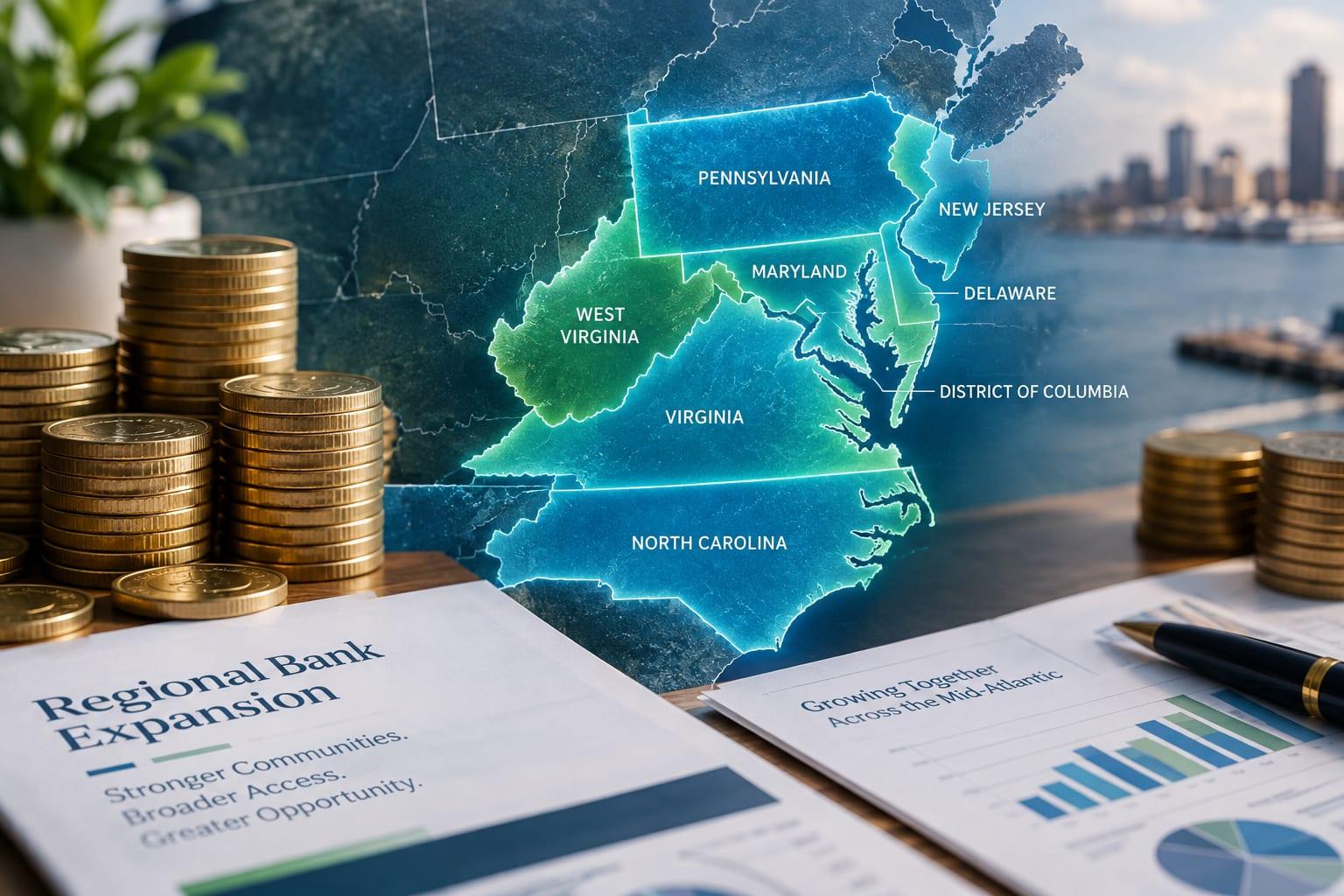
The proposed combination, reported by other outlets covering the deal, will see Peoples Bancorp — a regional operator headquartered in Marietta, Ohio — absorb Capital Bancorp, the Rockville, Maryland-based parent of Capital Bank. The merged entity would stretch from the Ohio Valley into the mid-Atlantic, giving Peoples a footprint in Maryland, Virginia, and Washington, D.C., markets where it has historically had little presence.
Regional bank mergers of this size have drawn heightened scrutiny in the years since the 2023 collapse of Silicon Valley Bank and Signature Bank, when federal regulators faced bipartisan criticism for missing warning signs. The Fed's approval signals that, at least in this case, the Board did not identify competitive or financial-stability concerns serious enough to block the transaction.
The deal still requires approval from Capital Bancorp shareholders and the satisfaction of customary closing conditions. Neither company has announced a revised timeline for the closing, and it is not yet known whether other federal or state banking regulators must also sign off before the merger can be completed. Attempts to reach representatives for both banks for comment were not immediately successful.
For customers of both institutions, the practical effects are unlikely to arrive overnight. Branches generally continue operating under their existing names until systems and signage are converted after a deal closes. Deposits remain insured by the FDIC up to applicable limits throughout the transition, as they would at any federally insured bank.
The approval lands amid a broader consolidation wave in American banking. Smaller regional lenders have faced compressed margins, rising compliance costs, and stiff competition from money-center giants — pressures that have pushed dozens of community and regional banks to sell in recent years. The Fed's green light is one more data point in that trend.
Shares of both companies traded in the days surrounding the announcement as investors weighed the likelihood of completion. Analysts quoted by other outlets covering the deal have characterized the combination as a geographic expansion play rather than a cost-cutting merger, though neither company has confirmed specific plans for branch closures or staffing.
Our Take
Here's the thing about this one, folks: it never should have required a permission slip from Washington in the first place.
Two private banks, owned by private shareholders, want to combine their operations. That's it. That's the whole transaction. And yet the deal sat waiting on a blessing from the Federal Reserve Board — the same institution that spent the last several years telling Americans that inflation was "transitory," that the banking system was rock-solid right up until three major banks imploded, and that it needs sweeping new powers over the financial lives of everyday people.
Ask yourself: what exactly is the Fed protecting here? If the merger created a monopoly that would jack up rates on depositors, that would be one thing — but a $14 billion bank is a minnow in an industry dominated by institutions holding trillions. The competitive concern is laughable. What this approval really demonstrates is the administrative state's routine, casual authority over the free market, exercised in press releases most Americans never see, on a timeline no business can control.
And notice what the Fed did not disclose: the vote count, the deliberations, or the reasoning behind the decision. The Board approved the application and moved on. No transparency. No accountability. Just a stamp of approval from an unelected body that answers to no voter.
There is a legitimate conversation to be had about banking consolidation — small community institutions disappearing, branch deserts in rural counties, the slow strangulation of local lending. But that conversation belongs to the customers, the shareholders, and the communities affected by this merger. It does not belong to a central bank that has shown time and again it cannot competently manage the power it already has.
End the regulatory permission slip. Let banks compete. Let the market — and the people — decide what survives.
