Brazilian financial markets are signaling confidence after right-wing Senator Flávio Bolsonaro finished ahead of incumbent President Luiz Inácio Lula da Silva in the first round of the country's presidential election, according to accounts tracking the reaction. The Brazilian real surged against the dollar as investors processed a result that put the senator ahead of the veteran left-wing president and forced the race into a runoff scheduled for October twenty-fifth.
The first-round outcome, as described in multiple accounts, showed Bolsonaro taking forty-seven point zero three percent of the vote — roughly fifty-six point one million votes — while Lula da Silva finished with forty-five point one six percent, or approximately fifty-three point nine million votes. Neither candidate crossed the fifty percent threshold required to win outright, sending the contest to a second round.
According to the account @visegrad24, Lula da Silva characterized the first-round result as "unexpected," an acknowledgment that the incumbent's camp had not anticipated trailing a challenger who is the son of former President Jair Bolsonaro. The @washingtonpost account reported that the two men finished first and second in Sunday's opening round and will meet again when Brazilians return to the polls in three weeks.
The @CBSNews account described Flávio Bolsonaro as an ally of President Trump and noted that he and Lula da Silva will face off on October twenty-fifth for the top job of what it called Latin America's powerhouse economy. That framing — Bolsonaro as a Trump-aligned figure — has been central to how American outlets have covered the race.
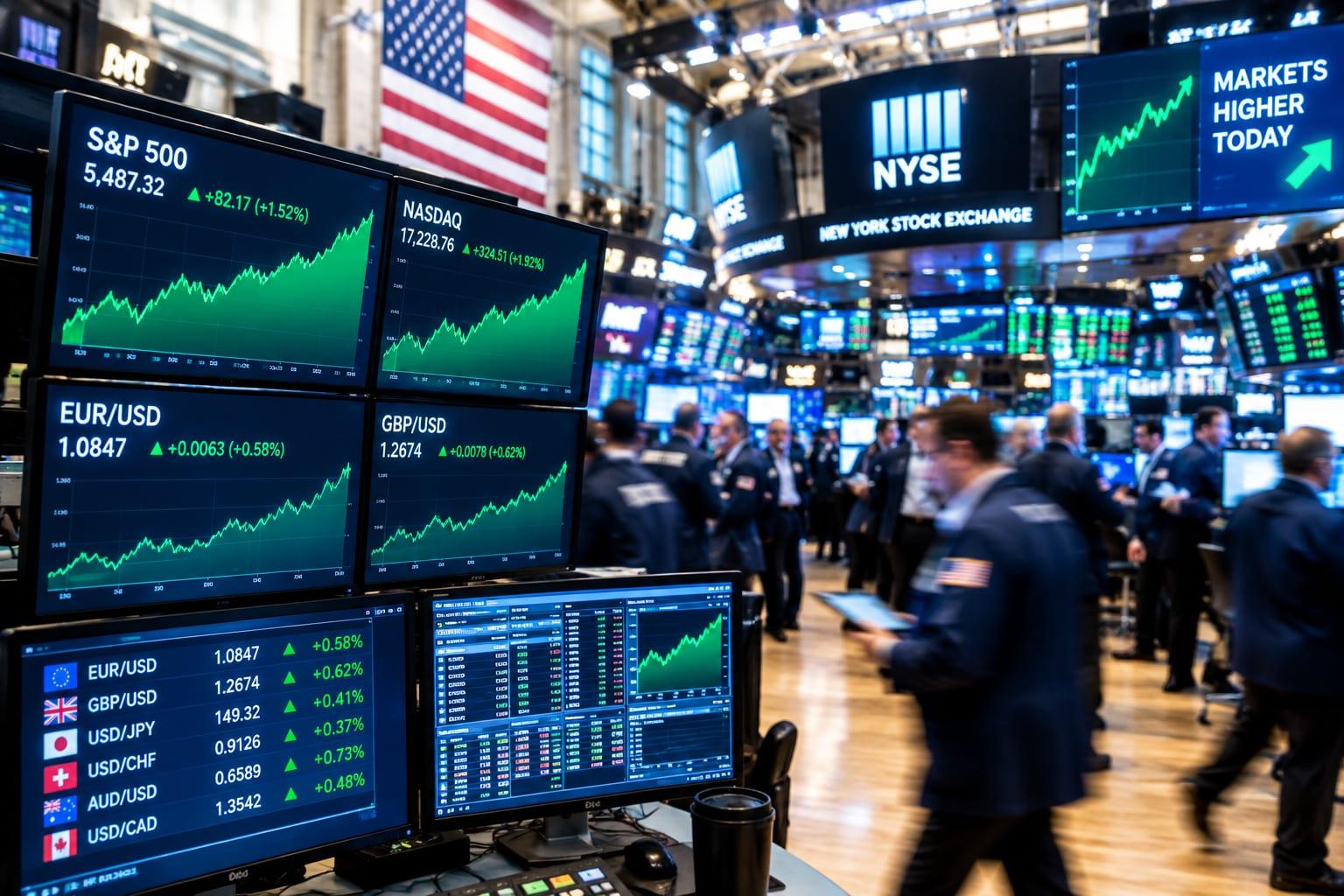
According to the account @MarioNawfal, the market reaction was immediate and forceful. That account described the Brazilian real as "surging against the dollar" as investors digested the surprise first-place finish, calling the market movement a "powerful signal." The post frames the currency's jump as a direct response to the political result, though the underlying claim about what is driving the real's movement is not independently confirmed.
Market expectations had been building before the vote. According to coverage from Bloomberg, Brazilian assets were "set to jump" after Bolsonaro came in ahead of Lula da Silva, a showing that Bloomberg described as "far better than investors were positioned for." That language suggests the financial community had expected a weaker performance from the right-wing senator — and had to reprice Brazilian assets quickly when the actual numbers came in.
Reuters, in reporting carried by outlets including The Daily News and AOL, quoted analysts saying Brazilian markets were expected to rally on Monday after Bolsonaro outperformed polls. The Reuters coverage, attributed to reporters Oliver Griffin, Luciana Magalhaes and Marcela Ayres, datelined São Paulo and Brasília, emphasized that the senator's stronger-than-expected showing caught forecasters off guard.
The sequence of events unfolded over several hours. The @visegrad24 account was among the first to post the raw numbers, reporting Lula da Silva's "unexpected" comment alongside the vote tallies. The @CBSNews account followed with the runoff date and the Trump-ally framing. The @washingtonpost account confirmed the first-and-second finish and the three-week timeline to the second round. Then the @MarioNawfal account shifted focus to the markets, describing the real's surge as investors reacted to the political earthquake.
The broader coverage echoed that arc. The Guardian described Flávio Bolsonaro as a "far-right challenger" and the son of "disgraced ex-president Jair Bolsonaro," noting that he put in a "stronger than expected showing" — while also reporting that Lula called the result "unexpected." Another outlet reported simply that the election "goes to a run-off as right-wing Flávio Bolsonaro wins first round," with neither candidate getting more than fifty percent.
For American readers, the stakes extend beyond Brazil's borders. Flávio Bolsonaro's alignment with President Trump — noted explicitly by @CBSNews — positions the runoff as another front in the global contest between populist-nationalist movements and the established left. Brazil's status as Latin America's largest economy means its political direction carries weight across the hemisphere and in global markets.
The runoff is scheduled for October twenty-fifth, three weeks after the first round. Between now and then, both candidates will court the voters who backed eliminated candidates in the first round, and markets will continue to weigh the possibility of a Bolsonaro victory against the prospect of a Lula comeback. The real's movement on Monday will be watched closely as a real-time indicator of investor sentiment.
Next News Network could not independently verify the vote totals, the market movements or the characterization of Lula da Silva's reaction as described in the accounts and coverage cited above.
Our Take
The Brazilian real's surge tells you everything the pollsters got wrong. For months, the smart money and the legacy media told us Lula da Silva was the safe bet — the seasoned incumbent who would cruise to another term. Instead, Flávio Bolsonaro walked away with forty-seven percent of the vote and a first-round lead, and the markets responded like a coiled spring finally released.
This is what happens when voters reject the narrative. The same international press that spent years demonizing the Bolsonaro name had to report that the son outperformed expectations. The same analysts who positioned themselves for a Lula landslide had to scramble. And the Brazilian people — fifty-six million of them — sent a message that they are not interested in a return to the old ways.
The runoff on October twenty-fifth is now a referendum on two futures: one that embraces national sovereignty and economic freedom, and one that clings to the stale socialism of the past. If the markets are any indication, the money is betting on the former. The real is surging, investors are optimistic, and Lula's own admission that the result was "unexpected" says more than any poll ever could.
Conservatives around the world should watch Brazil closely. What happens there in three weeks will echo far beyond South America. The tide is turning — and the establishment knows it.