
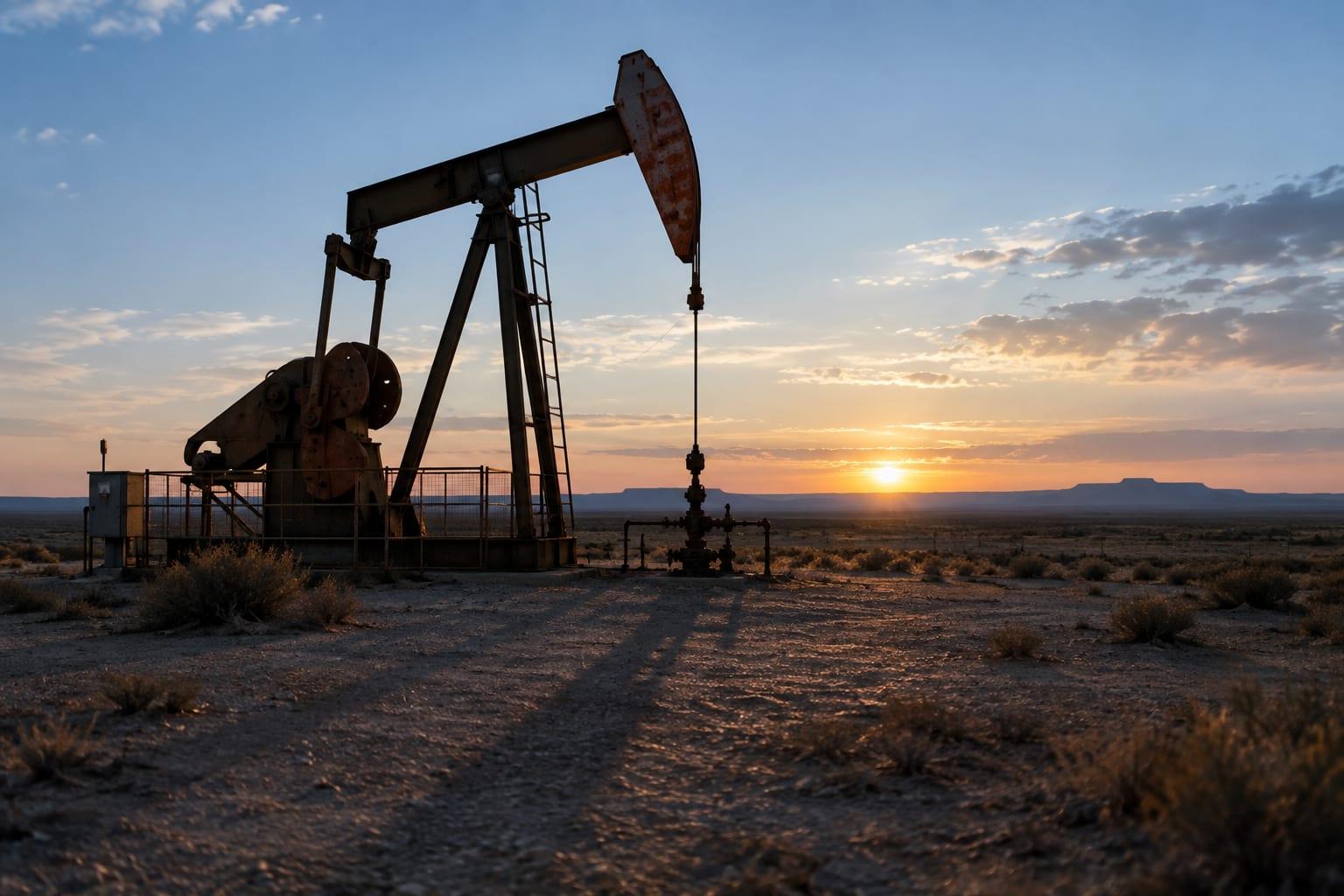
West Texas Intermediate crude futures declined one percent to $90.17 a barrel, according to market data circulated early Monday by the financial headline account @FirstSquawk. The post, published at 1:47 a.m. Eastern, carried no attribution, no exchange confirmation and no accompanying commentary — a bare price line of the kind the account posts throughout the trading day.
That single line is the whole of what has been reported. No wire service, no exchange notice and no government release accompanied it. It is not yet known what drove the move, whether it reflected a specific headline, a shift in positioning, or ordinary overnight volatility in a market that has spent the past several weeks swinging on supply expectations and geopolitical risk.
What the post establishes is narrow: a one percent decline, a settlement-style figure of $90.17, and a timestamp in the dead of night before the New York session opens. One percent on a barrel of crude is a move of roughly ninety cents — meaningful on a trading desk, unremarkable in a market that has moved several dollars in a session more than once this year. Ninety dollars a barrel remains an elevated level by the standards of the past two years, and a pullback of that size does not, on its own, signal anything about where prices go next.
Retail gasoline prices, which lag crude moves by weeks, would not be expected to show any effect from an overnight decline of this size. Diesel and jet fuel contracts track crude closely but respond to their own seasonal and refinery dynamics. Neither refined product pricing nor any futures curve data accompanied the post.
The account @FirstSquawk is one of a small number of automated financial headline feeds that traders and reporters monitor for rapid market updates, typically republishing exchange data and breaking financial wires in condensed form. Posts from such accounts move fast but carry no editorial apparatus — no sourcing line, no verification chain, no correction policy visible to the reader. They are, in effect, an alert rather than a report, and they are treated as a starting point by desks that then confirm against primary market data.
Whether any desks acted on this particular line is not known. There is no public record of a halt, a spike in volume, or a follow-on move tied to the timestamp. Financial markets trade around the clock, and overnight action in crude is routinely thin, which can magnify small price changes and make them harder to attribute to any single cause.
The broader context is a crude market that has been unusually sensitive to headlines. Traders have spent months pricing in competing forces: production decisions from the OPEC-plus group, the pace of American shale output, the trajectory of Chinese demand, and the persistent risk premium attached to conflict in the Middle East and along key shipping lanes. Each of those factors can move the front-month contract a dollar or more on a single news item, and each has done so repeatedly.
A one percent overnight decline, absent a stated cause, fits the pattern of routine position adjustment rather than a reaction to any identified event. Crude contracts roll, funds rebalance, and algorithmic strategies take profits or cut losses at hours when human traders are asleep. Those flows show up as price changes without any news behind them at all.
Next News Network could not independently verify the price figure or the decline reported in the post.
The absence of corroboration is not unusual for this class of market headline, but it matters for anyone reading the number and drawing a conclusion about the economy. A single unverified quote line is not the same as a settled price, and an overnight move is not the same as a trend. Readers who see ninety-dollar crude cited in the coming days should look for confirmation from exchange settlement data.
What is known is what the post said, when it said it, and that it stood alone. What is not known is what, if anything, produced the move — and whether the ninety-dollar threshold holds through the session or gives way to something else before the closing bell.
Our Take
Here is the thing about a single unverified price line getting dressed up as news: it isn't news, it's a data point, and there is a difference. Ninety dollars a barrel is a number that lands on kitchen tables in the form of gasoline prices and heating bills, and it deserves better sourcing than an anonymous overnight alert with no exchange confirmation attached.
But notice what the reaction to a figure like this tells you. The financial press ecosystem has been primed for months to treat every commodity twitch as a verdict on the American economy — bad news for the administration one day, vindication the next, depending entirely on which direction the number moves. That is not analysis. It is a mirror held up to whatever the political mood happens to be at 1:47 in the morning.
The honest posture is the one we have taken here: report what was said, name who said it, and decline to pretend a lone headline feed is a market authority. If the ninety-dollar figure holds when the exchanges publish settlement data, that is a story. If it evaporates by the opening bell, that is also a story — one about how quickly unverified numbers travel and how rarely anyone goes back to check them.
American energy producers and consumers have spent years living with volatility that the political class treats as a talking point. The market does not care which party occupies the White House. It cares about supply, demand and risk. Readers deserve numbers they can trust, and they should demand them from whoever is selling the next headline.
