
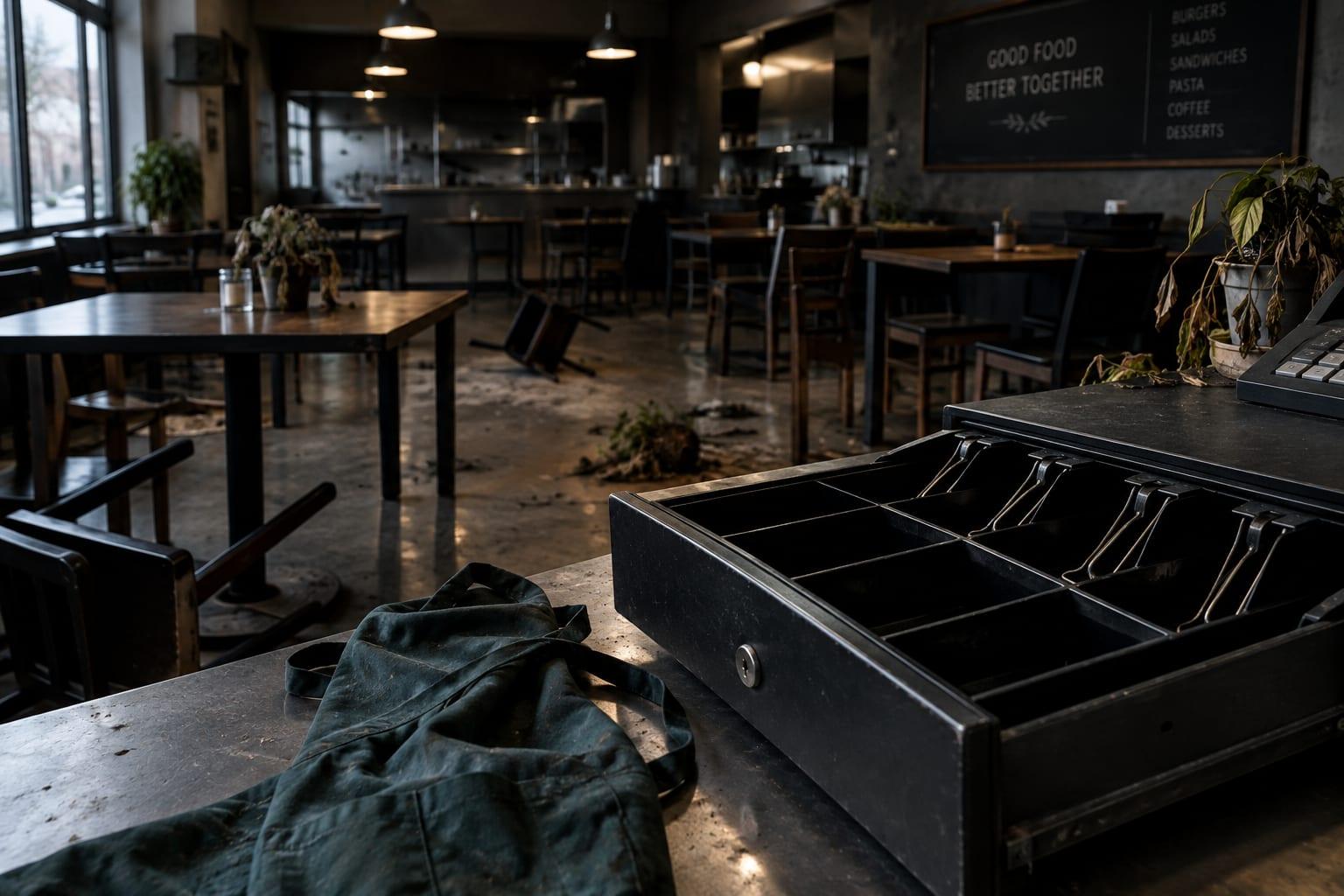
True Food Kitchen, the "health-focused" restaurant chain backed by Oprah Winfrey and former Starbucks CEO Howard Schultz, filed for Chapter 11 bankruptcy protection Sunday and closed 12 locations across the country, the company confirmed to FOX Business.
The Phoenix-based chain told FOX Business it is closing restaurants in Century City, El Segundo and San Diego UTC in California; Miami; Chicago; New Orleans; Bethesda, Maryland; Edison and Hackensack, New Jersey; Garden City, New York; Columbus, Ohio; and Reston, Virginia. Thirty-four locations across 14 states remain open while the company searches for a buyer.
The numbers in the filing are brutal. The company entered bankruptcy with approximately $1.6 million in unrestricted cash — enough to cover operations and bankruptcy expenses for only about two weeks without access to new financing, according to financial adviser George N. Koutsonicolis. Chief Restructuring Officer Nathan Cook listed roughly $42.1 million in funded debt obligations. If approved, the company says it has secured $20 million in financing to carry it through the sale process.
What Went Wrong
Cook's court declaration puts the blame on leadership, not the menu. "The Company experienced significant management turnover, which resulted in frequent changes to expansion strategy, brand direction, and menu offerings," Cook said.
According to Cook, successive leadership teams pushed new products and restaurant concepts that flopped and drifted from the chain's health-focused mission. The company also experimented with ghost kitchens and opened a separate delivery-only kitchen as in-person dining collapsed during the pandemic — moves Cook said damaged staffing and service. Those experiments have since ended. Some locations simply couldn't draw enough traffic; others saw profits erode as their markets changed.
The closure notices went up fast. In New Orleans, the only Louisiana location — open since 2019 at Julia and St. Charles streets — was shuttered by Sunday. WVUE/Fox 8 reported a sign on the door reading "This True Food Kitchen location is now closed," with chairs flipped onto tables and workers carrying out boxes the next day. It is not clear whether employees at that location received advance notice; a window sign pointed workers to HotSchedules, the industry scheduling app, for more information.
$100 Million Later
The embarrassment isn't the bankruptcy by itself. It's the math.
Winfrey made an equity investment in True Food Kitchen in 2018. Then-CEO Christine Barone declined to disclose the amount at the time but called it "a very significant amount for our future," and said Winfrey would join the company's board as the chain planned to double in size over three years. Outlets covering the collapse, including Inside Retail US, put the raise at $100 million. Winfrey remains a minority investor, the company told FOX Business, but she no longer has a representative on the board.
Read that again: a celebrity-branded chain with a nine-figure war chest, a Starbucks veteran at the helm, and a board seat for Oprah Winfrey could not make casual dining work in 2026.
What It Means for Workers and Diners
For the roughly 12 shuttered locations, the immediate casualty is jobs — and this is the second gut punch for restaurant workers in a year that has already seen high-profile chains restructure under debt loads. For the 34 surviving locations, the message is blunt: the company is for sale, and the $20 million debtor-in-possession financing is designed to keep the lights on long enough to find a buyer, not to grow.
The closure list spans blue states and red states alike — California, Illinois, Louisiana, Maryland, New Jersey, New York, Ohio, Virginia. Chapter 11 does not care how you voted.
True Food Kitchen was founded in 2008 and grew into a fixture of upscale shopping districts. Its collapse follows a pattern across casual dining: expansion financed on optimistic projections, a pandemic that scrambled the sit-down model, and leadership churn that left no coherent strategy behind.
The company says it will continue operating its remaining restaurants through the bankruptcy process.
Our Take
This was not a failure of resources. It was a failure of management — and the court filing says so in plain English. Frequent strategy changes, menus drifting from the brand's whole premise, ghost-kitchen experiments that wrecked service. That's not bad luck. That's a board and a succession of CEOs treating a restaurant chain like a venture-capital pitch deck.
And note who gets hurt. Not Oprah — she's a minority investor who already got her headlines. Not the executives who cycled through and moved on. The people flipping chairs onto tables in New Orleans and hoping for answers on a scheduling app are the ones who pay for somebody else's failed expansion bets.
The deeper lesson is one small-business owners have known forever: a brand built on a famous name is not a business model. You can raise $100 million, you can put a media icon on the board, and you can still go broke in two weeks without cash flow. Restaurants live and die on repeat customers, not press releases.
Which raises the question every investor and every worker should be asking: how many other celebrity-backed chains are one bad quarter away from the same courthouse steps — and who's going to be honest about it before the doors close?
