
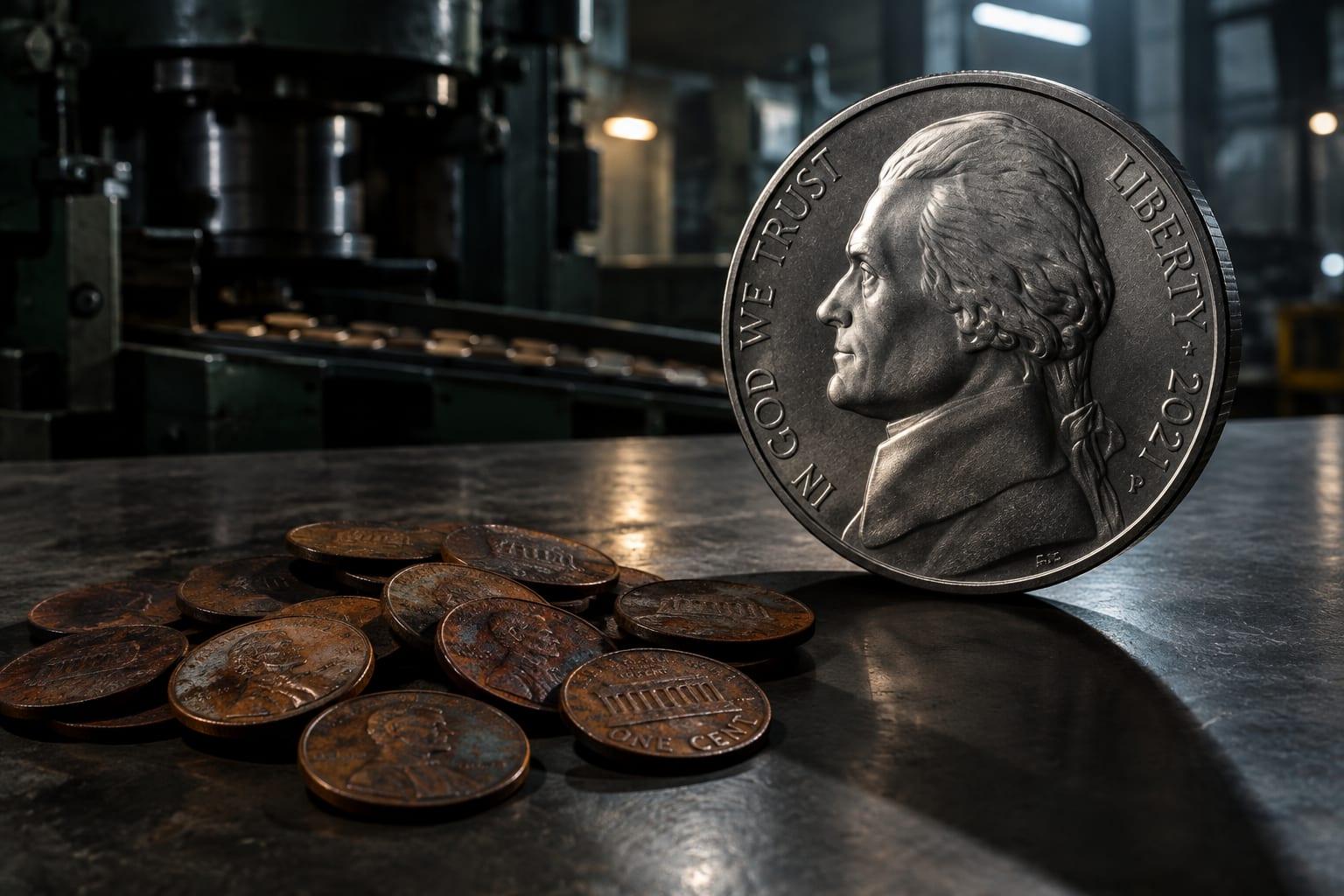
Congress isn't finished with your pocket change. After moving to eliminate the penny, lawmakers are now pressing the Treasury Department to find cheaper ways to produce the nickel — a coin that costs taxpayers nearly 13 cents to make, according to Fox News Politics.
The push follows passage of the Common Cents Act, the legislation that already targets the one-cent coin. Now the same cost-cutting logic is being applied to the five-cent piece, which is minted from a copper-nickel alloy that has grown steadily more expensive as metal prices have climbed.
The math is simple, and brutal for the federal balance sheet: the government spends more to produce both coins than they are worth. The penny has been the poster child for that absurdity for years. The nickel, at roughly 13 cents per coin, is arguably the worse offender — and it has escaped serious scrutiny until now.
Details on the specific legislative mechanism, timing, and which members are leading the nickel effort were not included in Fox News Politics' reporting. It is not yet known whether the proposal would change the nickel's metal composition, alter its size, or take some other approach. Treasury has not publicly outlined a preferred option.
The broader fight over Washington's spending habits is already in full swing. Sen. Rand Paul, R-Ky., used the moment to argue that coin-level tinkering is window dressing next to the real problem.
"Our budget deficit is out of control. Congress must pass my Six Penny Plan," Paul posted on social media 18 hours ago.
Paul's proposal, which he says he will force a vote on later this year, would balance the budget within five years by setting a maximum spending level — exempting Social Security from cuts — and leaving the specific priorities to Congress. He noted that the national debt has surpassed $40 trillion and that the government now spends more than $1 trillion annually on interest, more than it spends on national defense.
"This enormous debt is contributing to rising interest rates and inflation, hurting every American," Paul posted. "It's a blinking red warning light — just as bright and red as the ink on our budget documents."
Paul also criticized Congress for passing a continuing resolution earlier this summer to extend the status quo, with another extension expected before the end of the year.
The coin fight carries an obvious symbolic weight. For years, critics of federal waste have pointed to the penny as proof that Washington will keep doing something even when it loses money on every transaction. Nickels make that case even more starkly: a coin worth five cents that costs nearly three times that to produce.
What remains unclear is how quickly any change could take effect, and whether altering the nickel's composition would create headaches for vending machines, transit systems, and retailers that calibrate equipment to the current coin. Those practical questions have stalled coin reform efforts in the past.
For everyday Americans, the immediate impact is minimal — nickels will keep circulating, and no one is being asked to turn them in. But the longer-term stakes are about whether Congress can apply the same scrutiny to the rest of the federal budget that it is now applying to the change in your pocket.
Paul's warning about the debt is not a fringe position. Interest costs alone now rival major federal programs, and both parties have avoided the kind of structural reforms that would change the trajectory. A nickel that costs 13 cents is a small thing. But it is also a perfectly readable symptom.
Our Take
Good. It's about time someone in Washington pointed at the nickel and asked why we're minting a coin at a loss.
But let's be honest about what this is. Fixing the nickel — or killing the penny — saves real money, and every dollar matters when the federal government is borrowing trillions. Yet compared to a $40 trillion national debt and more than $1 trillion a year in interest payments, coin reform is a rounding error. It is the easiest possible version of fiscal responsibility, and Congress knows it.
The reason the penny and the nickel get attention is that they are visible. You can hold them. You can see the absurdity with your own eyes. The same cannot be said for the billions in duplicated programs, bloated agencies, and overseas adventures that never make it onto a coin flip chart.
That is why Rand Paul's Six Penny Plan matters more than any minting reform. It forces an actual vote on an actual balanced budget — the kind of vote politicians on both sides of the aisle have spent decades avoiding. If someone claims to support fiscal sanity but votes against the only balanced budget that reaches the floor, voters deserve to know it.
Patriots, watch what your representatives do, not what they say. Ask them one question: will you vote to balance the budget, or will you keep kicking the can — and the nickel — down the road?