
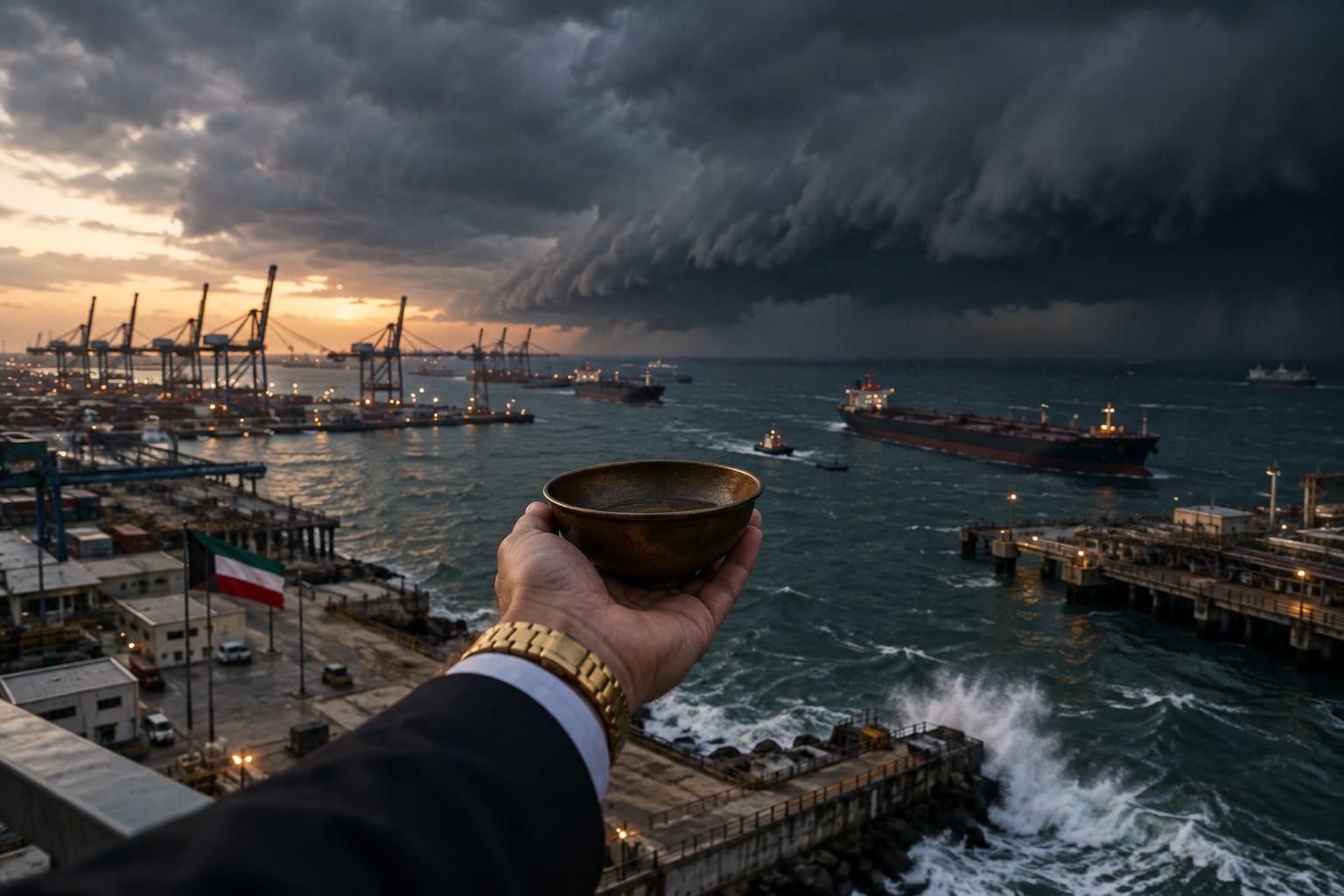
SoftBank is seeking up to one hundred billion dollars from Gulf investors, according to reporting by the Financial Times cited by the account @zerohedge, with founder Masayoshi Son spending recent weeks in talks with senior figures in the United Arab Emirates.
The same account, @zerohedge, described the pitch as a private-equity roll-up with a robotics twist: a vehicle that buys companies and then uses artificial intelligence and other advanced technology to run them more efficiently. SoftBank's robotics and physical AI unit, Roze, is expected to play a central role, and Son reportedly hopes to take it public at a valuation press reports have floated at one hundred billion dollars. The talks carry no guarantee of success, and SoftBank declined to comment.
If completed at that size, the raise would roughly match the original one hundred billion dollar Vision Fund that Saudi Arabia's PIF and the UAE's Mubadala anchored in 2017. That fund has generated about twenty-nine billion dollars in cumulative investment gains through June, while Vision Fund 2, backed primarily by SoftBank itself and home to its OpenAI stake, is up twenty and a half billion dollars.
The timing is not incidental. In the nine months leading up to the talks, Son tapped bridge loans, margin loans against Arm and OpenAI shares, Japanese retail savers, and most recently the largest junk bond on record. SoftBank has committed some sixty-five billion dollars to OpenAI. According to @zerohedge, now that the usual spigots have been opened all the way, it is time to call the sovereigns.
The Gulf has quietly become the AI trade's lender of last resort, and the OpenAI revenue picture is the reason the balance sheet math matters. Hours before the FT's Gulf fundraising report, the same paper reported that OpenAI's annualized revenue is roughly twenty billion dollars lower than the figure that had been making the rounds previously. Against a backdrop of one and a half trillion dollars in projected 2027 capital expenditure, that gap is the difference between ambition and arithmetic, @zerohedge wrote, arguing that the AI buildout runs on debt and that SoftBank has spent most of 2026 as the poster child for that thesis.
The fundraising chatter is not the only thing moving through the financial wires. @FirstSquawk flagged mid-afternoon that Chevron had evacuated personnel and shut in five facilities in the Gulf of America, with production continuing at four platforms and the company deploying technology to protect Gulf Coast operations during Hurricane Isaias.
Minutes later, @FirstSquawk relayed a figure attributed to MMA: the U.S. Gulf shutting in one and a half billion barrels per day, or seventy-two percent of oil production. Other coverage of the same subject, from OilPrice.com, put the shut-in at one and twenty-eight hundredths million barrels per day, up from just one hundred eighty-five thousand one hundred twenty barrels per day two days earlier, as operators cleared personnel from the storm's path.
The spread between those figures is not a rounding matter. Seventy-two percent of Gulf output, if accurate, is a genuine supply event. One and twenty-eight hundredths million barrels per day is a significant but more contained disruption, and it is the number the trade press has been carrying since the storm's track firmed up.
What the wires show is a market absorbing two shocks at once: a physical one in the Gulf of America, where Chevron and its peers are pulling crews and shutting in platforms ahead of Isaias, and a financial one in the Gulf states, where the world's most aggressive AI investor is asking sovereign wealth for the kind of check that built the first Vision Fund.
The two stories share a geography and a phrase. The Gulf of America is where the barrels come from. The Gulf, in the fundraising sense, is where the dollars come from. Neither is a small number, and both are being discussed on the same afternoon by the accounts that move this kind of information fastest.
Next News Network could not independently verify the reported shut-in figures or the status of SoftBank's fundraising talks.
Our Take
There is a reason Masayoshi Son is calling Abu Dhabi instead of a New York syndicate desk. He has already maxed the junk bond market, pledged his Arm and OpenAI shares, and gone to Japanese retail savers. When an investor of his profile runs out of conventional spigots and starts ringing sovereign wealth funds, that is not ambition. That is a capital structure telling you what it needs.
And notice where the money is being sought. Not Silicon Valley, not Wall Street. The Gulf. The same Gulf that, on this same afternoon, is watching seventy-two percent of its American oil output go offline ahead of a hurricane. The people who own the barrels are being asked to fund the artificial intelligence buildout, because the people building it have run out of other people's money.
The OpenAI revenue clarification is the tell. Twenty billion dollars in annualized revenue that does not exist, against one and a half trillion dollars in planned 2027 capital expenditure, is not a growth story. It is a leverage story. And when a leverage story gets this large, the last lender standing is always a government.
Conservatives have been saying for two years that the AI boom is being financed like a boom, not like a business. SoftBank's fundraising tour is the clearest confirmation yet. The Gulf states will decide whether to write the check. The American ratepayer and the American investor will decide what happens when it comes due.
Watch the shut-in numbers, too. A hurricane is a temporary event, and production comes back. A sovereign wealth fund anchoring a hundred billion dollar AI roll-up is a structural event, and that does not unwind on a weather map.
