
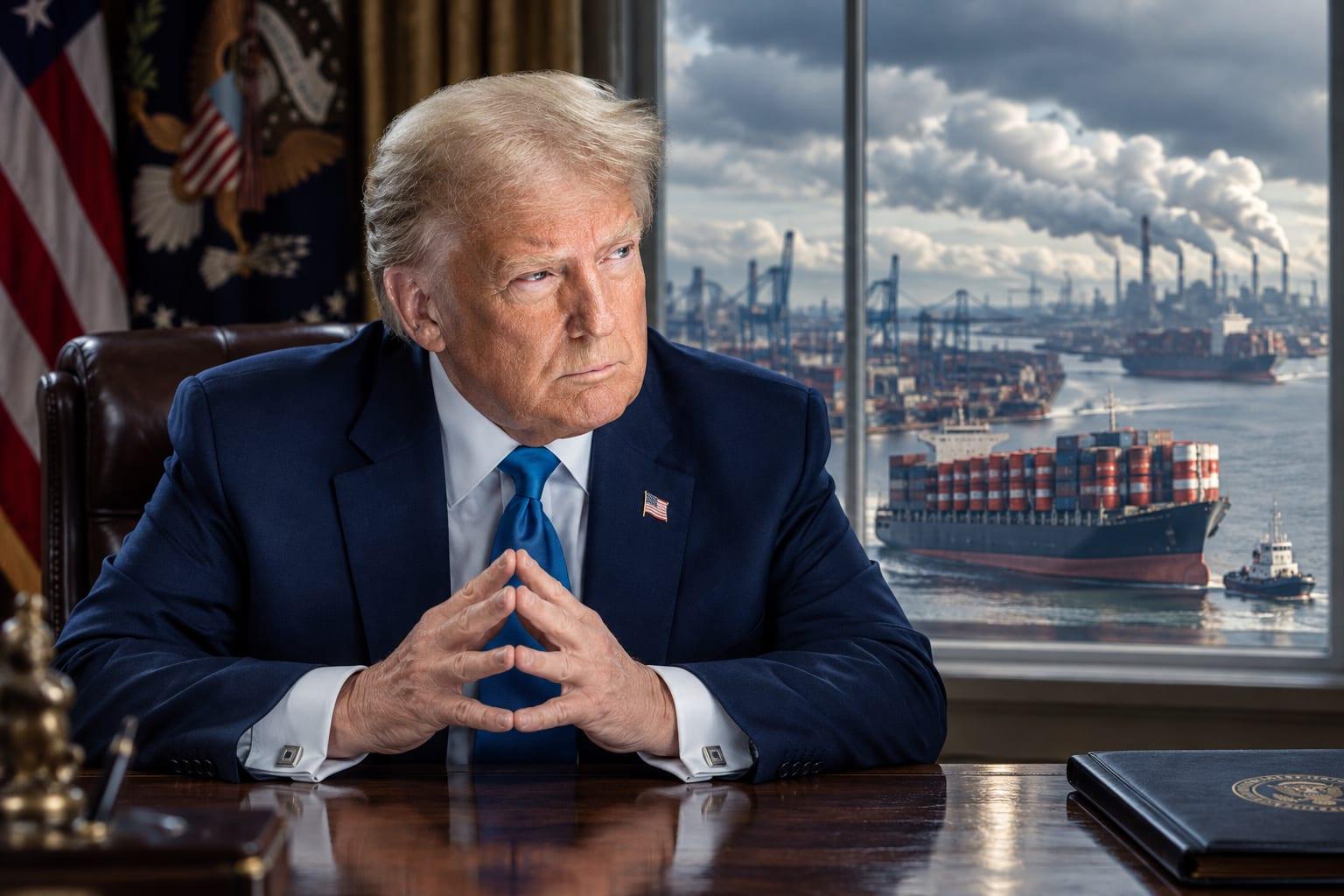
President Trump has ruled out a ban on diesel exports, according to the Washington Times, a move he floated to reduce domestic prices but which faced doubts about its effectiveness and fears it would backfire.
The reversal follows a days-long international scramble touched off when the administration signaled it was considering restricting U.S. diesel exports and pressed European allies to tap their emergency fuel stockpiles. The Washington Times reported that Trump has now taken the ban off the table.
The episode began as a threat. As reported by OilPrice.com, the Trump administration pressed Germany and France to release emergency diesel stocks while it weighed restricting U.S. diesel exports amid record domestic prices. The same outlet reported that the United States threatened a diesel export ban unless Europe released its stockpiles.
According to the New York Times, the threat alone was enough to set off alarms abroad. The paper reported that a reduction in refineries has already driven the price of diesel to record highs, threatening economies, and that a U.S. export ban would be a "tremendous shock and blow." That framing is attributed to the New York Times' reporting, not independently confirmed by Next News Network.
Other coverage described the same pressure campaign. One report said the administration asked European allies to release diesel from their emergency stockpiles to increase global supplies and tamp down on soaring prices. Another said Trump threatened to ban diesel exports in a bid to ease prices in the U.S. ahead of the November elections.
The pressure did not stay contained to Washington and Brussels. G7 nations moved to release diesel stocks as wars in Europe and the Middle East constrained fuel supplies, according to reporting roughly fifteen hours after the initial threat. EU countries were set for crisis talks on soaring diesel prices, with officials warning a U.S. export ban could hurt Europe's economic outlook.
That warning cut to the core of the administration's dilemma. A ban on exports would keep more diesel at home, but it would also remove a major source of supply from global markets at a moment when refineries are already strained and two wars are disrupting energy flows. The New York Times reported that the reduction in refineries has already driven diesel to record highs, meaning the underlying shortage predates the export threat.
The Washington Times reported that the ban was floated to reduce domestic prices but faced doubts about its effectiveness and fears it would backfire. Those doubts were not attributed to a specific official or faction in the available coverage, and it is not yet known which advisers or agencies raised them.
What is known is the sequence. The administration first pressed Germany and France to release emergency diesel stocks. It then held out the possibility of restricting U.S. exports. European officials warned of economic harm. G7 nations moved toward releasing stocks. EU countries scheduled crisis talks. And then, according to the Washington Times, Trump ruled the ban out.
The pressure campaign against Europe was reported across multiple outlets. OilPrice.com, the New York Times, and other coverage all described the same ask: release emergency diesel reserves to increase global supplies and bring down prices. The New York Times characterized the potential ban as a "tremendous shock and blow" to economies, a phrase that describes the anticipated effect rather than a confirmed outcome.
It is not yet known whether the European releases, or the promise of them, played any role in the decision to drop the ban. It is also not known whether the administration secured any specific commitment from Germany, France or other G7 members in exchange for standing down. The available coverage does not say whether the export threat was intended as leverage to force the releases, or whether the releases were sought as an alternative to a ban the administration preferred to avoid.
What the coverage does establish is that the threat was taken seriously abroad. EU officials warned it could hurt Europe's economic outlook. G7 nations moved to release stocks. Crisis talks were scheduled. Those are concrete responses to a stated possibility, not to a ban that took effect.
The November elections were cited in one report as context for the push to ease prices. The Washington Times reported that the ban was floated to reduce domestic prices, and one account said it was threatened ahead of the November elections. The administration has not been quoted in the available coverage explaining its reasoning beyond the price concern.
The diesel market backdrop is central to the story. According to the New York Times, a reduction in refineries has already driven the price of diesel to record highs. That means the administration was weighing an export restriction against a market that was already tight, not one that had just turned. An export ban would remove U.S. supply from global markets, which is why foreign governments treated it as a threat to their own economies.
The Washington Times reported the reversal as a ruling out of the ban. That reporting is the basis for the account here. Other outlets documented the pressure campaign and the international reaction that preceded it. Taken together, the sequence runs from a floated threat, to European resistance and G7 emergency action, to a decision in Washington to drop the idea.
Next News Network could not independently verify the underlying claim that the export ban was formally considered and then ruled out.
What remains unclear is what happens next on diesel prices. The European stockpile releases, if they proceed, would add supply to global markets. Whether that is enough to bring down prices in the U.S. is not known. The administration has not said what further steps, if any, it is considering.
Our Take
Trump was right to drop the diesel export ban, and the fact that it was floated at all shows how much pressure the White House is under on prices. An export ban is the kind of policy that sounds tough in a briefing room and backfires in a supply chain. Diesel is not a consumer gadget you can redirect with a tweet. It moves through global markets, and when you pull U.S. barrels off the board, you do not just keep them home. You drive up prices everywhere else, invite retaliation, and hand a gift to every foreign producer who can fill the gap. Europe's panic was not theater. It was a preview of what the ban would have done.
The better play was the one the administration actually ran: lean on Germany and France to open their emergency stockpiles. That adds supply without choking off American exports. It puts the burden on allies who have been happy to talk about energy solidarity while sitting on reserves. And it keeps U.S. refiners selling into the world market, which is where they make their money and where American leverage actually lives.
The lesson here is that the threat was useful right up until it was not. It got Europe's attention. It got G7 nations moving. And then it was retired before it could do real damage. That is not weakness. That is knowing when to stop. The administration should remember it the next time someone proposes a quick fix that would cost more than it saves.
