
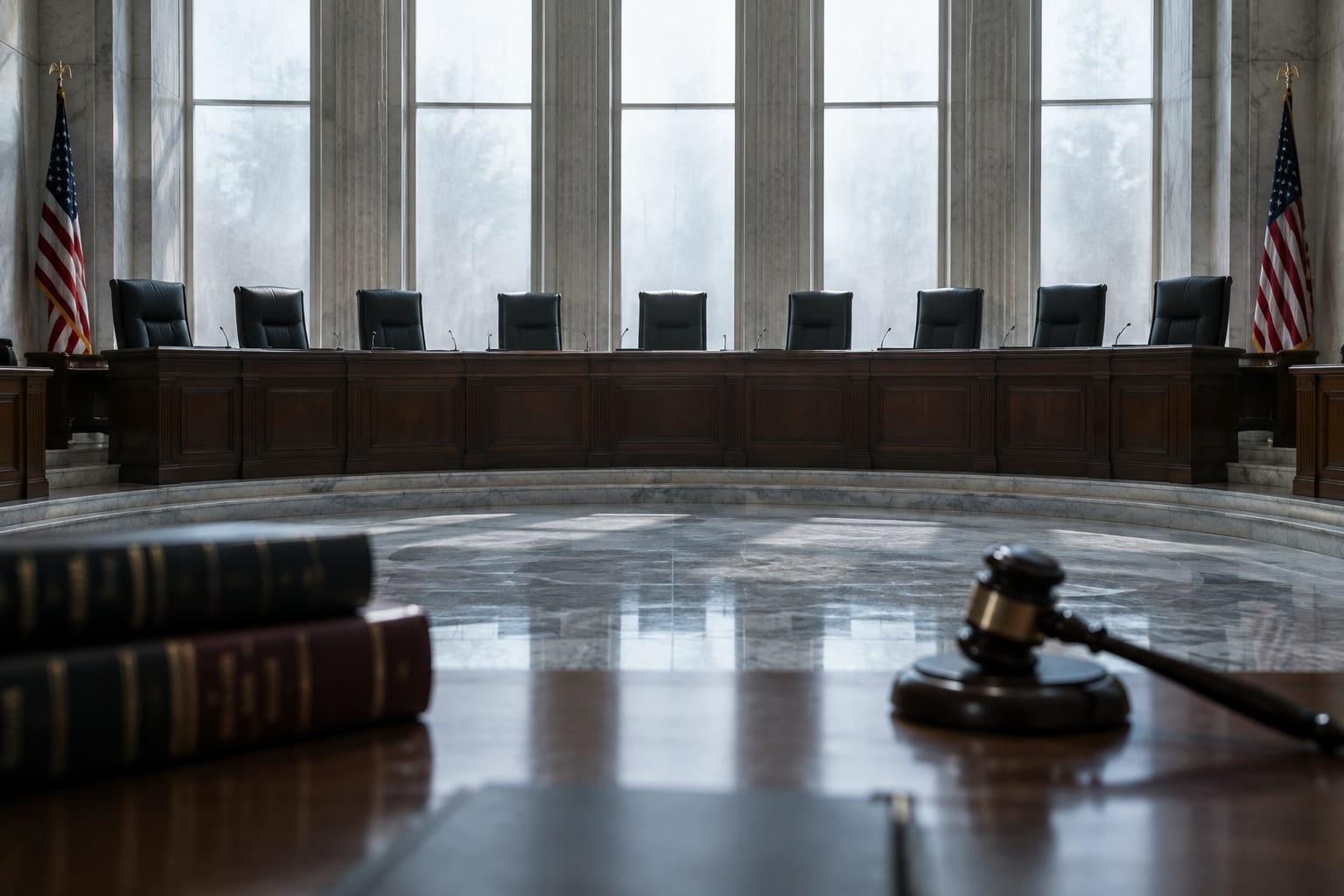
The Supreme Court opened its new term Monday with a case that could decide whether a single county — or eventually every county in America — gets to put the energy industry on trial.
The justices heard nearly two hours of argument on a procedural gateway question in Boulder County's lawsuit against Suncor Energy and ExxonMobil: does the case belong in state court, where Boulder filed it, or in federal court, where similar suits have been thrown out? Eight justices participated. Justice Samuel Alito recused himself last week after calls for him to step aside over his stock holdings in oil companies — though not the two companies at the center of Monday's appeal, according to Fox News.
The stakes stretch far beyond Boulder. Local and state governments across the country are seeking civil damages totaling billions of dollars, arguing the money is needed to rebuild after wildfires, rising sea levels and severe storms they attribute to fossil fuel pollution. The companies counter that emissions are a national and international issue that cannot be litigated county by county — a position backed by the Trump administration, which argues the litigation is a power grab aimed at imposing emissions regulations through the courts rather than through Congress.
Alito's absence leaves the court with a live possibility of a 4-4 tie. A tie would leave the underlying legal questions unresolved while allowing the Boulder case to proceed in state court — precisely the outcome the companies are fighting. That puts Chief Justice John Roberts in the spotlight, and he pressed both sides hard.
"There are a lot of familiar situations where conduct outside of the state has broad effects among other states, and yet we allow state courts in a particular state to bring litigation," Roberts said. "I guess I'm not quite sure what makes this situation different from all those other ones, where we've allowed them to proceed in state court."
Roberts also raised the practical question of what happens next if Boulder prevails. According to NBC News, he asked Boulder's lawyer: "Presumably, if you prevail, the next day a municipality in every single state will file a lawsuit."
Justice Elena Kagan pushed the other way, questioning where the companies' legal theory even comes from.
"This is the same kind of lawsuit against the same kind of actors for the same kind of harm," Kagan said. "Where does this principle come from, that states can't regulate in the air and water space?"
Justice Brett Kavanaugh, according to Fox News, seemed to speak for several of his conservative colleagues in focusing on what it would mean to let multi-jurisdictional lawsuits play out in courts around the country.
Boulder's complaint, brought under state law, alleges Exxon and Suncor misled consumers about the climate impact of greenhouse gases produced by their products. The companies deny the allegations and warn that if this suit and the roughly two dozen others like it reach trial, energy companies could face crippling damages in the billions. They also argue climate change is inherently a national and international matter that state courts are not equipped to adjudicate.
According to Fox News, the court specifically asked both parties to address at argument whether it should even hear the dispute — a jurisdictional question layered on top of the venue fight. POLITICO reported that Alito's recusal has scrambled the case and created the real prospect of a tied ruling in a battle over oil companies' liability to pay for climate impacts.
Monday's session was the first of the term, which also puts religious rights, gun rights and President Trump's immigration crackdown on the docket. About a dozen states have banned semiautomatic rifles like the AR-15, and the court is set to take up whether those bans violate the Second Amendment in December, according to the Associated Press. The conservative majority has expanded gun rights in recent years, and four justices had signaled the issue was coming.
As of Monday afternoon, it was not clear from the public session how the court will rule on the Boulder case, or whether the justices will resolve it on jurisdictional grounds without reaching the broader venue question.
Our Take
Understand what Boulder County is actually asking for here. Not a regulation. Not a law passed by elected representatives. A damages award, extracted through litigation, designed to punish energy producers for the lawful sale of a product that every American depends on — and to set a template that every other municipality in the country can copy the next morning. That is not environmental policy. That is regulation by lawsuit, laundered through a county courthouse because the people's representatives never voted for it.
Roberts asked the right question and Kagan answered it honestly: this is the same lawsuit, against the same companies, for the same alleged harm, filed over and over until one jurisdiction somewhere hands over a verdict big enough to matter. A national energy policy set by whichever state judge draws the friendliest jury is not how a republic governs itself, and it is not what the Constitution's structure allows.
The Alito recusal handed the Left a gift it did not earn. A 4-4 tie would not vindicate Boulder's legal theory — it would simply let the case proceed while leaving the law unsettled, guaranteeing years more of copycat filings and billions in litigation costs that get passed straight to consumers at the pump and on the power bill. That is the price of letting one justice's stock portfolio, and a pressure campaign against him, determine the outcome of a case this consequential.
The Trump administration is on the right side of this fight, backing the companies and calling the litigation what it is: a power grab. The question now is whether four justices will say so clearly enough to end it — or whether the country gets a decade of courtroom climate policy because the court deadlocked.
Patriots, watch this docket. If a single county can bankrupt the companies that keep the lights on, every county will try.
